
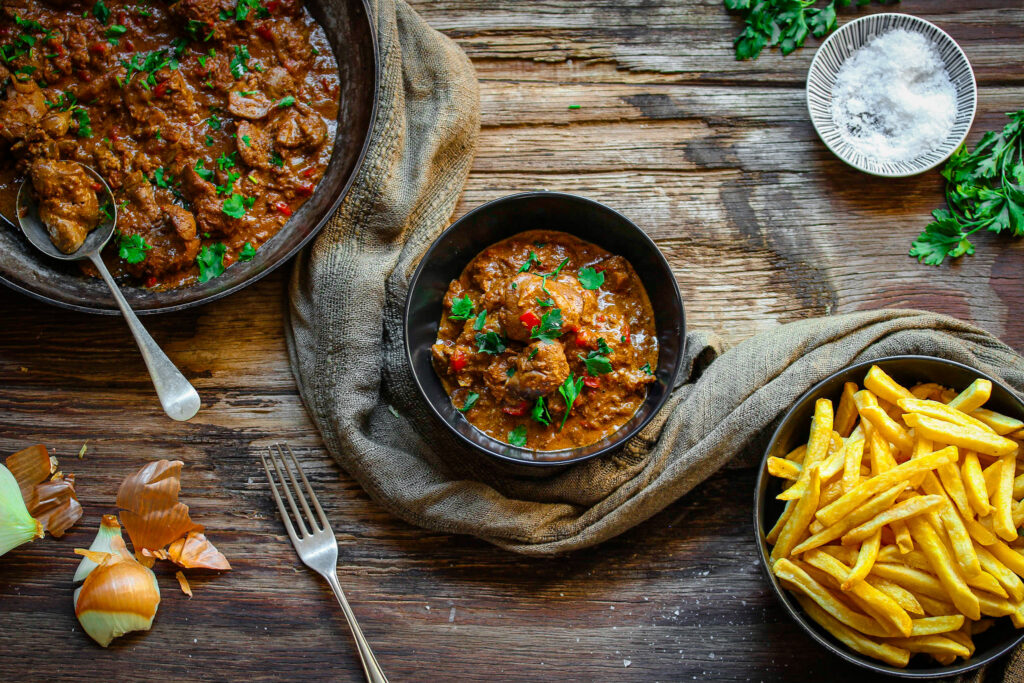
If you love chicken livers, this Easy Spicy Chicken Livers recipe is one of those simple meals that delivers far more flavour than the effort involved.
Chicken livers are cooked with caramelised onions, red peppers, garlic and warm spices in a rich tomato-based sauce, then finished with a little cream.
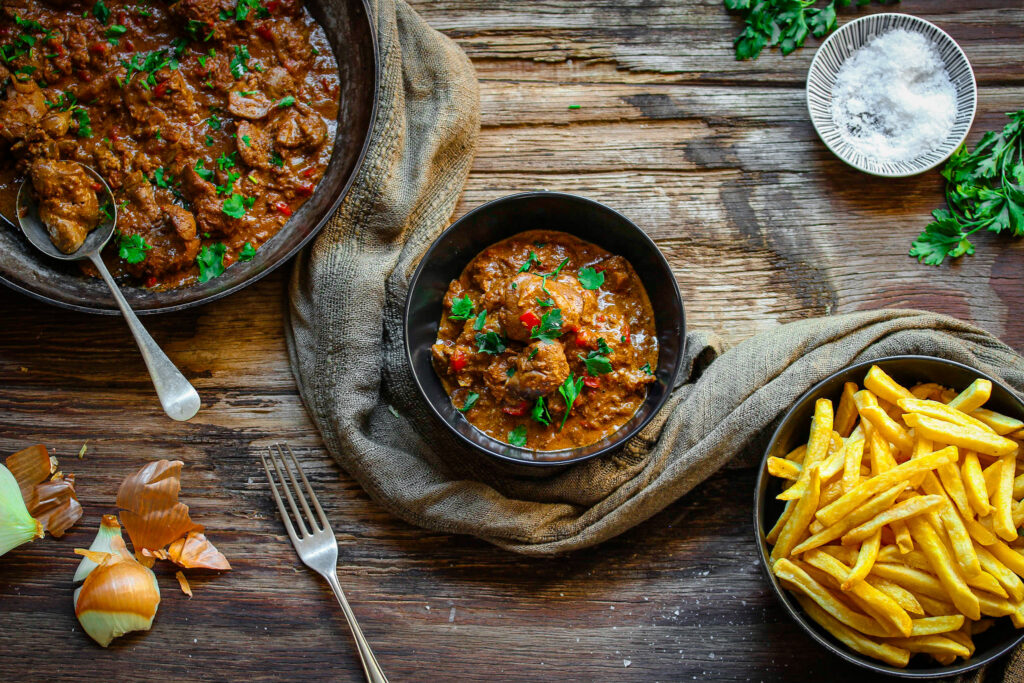
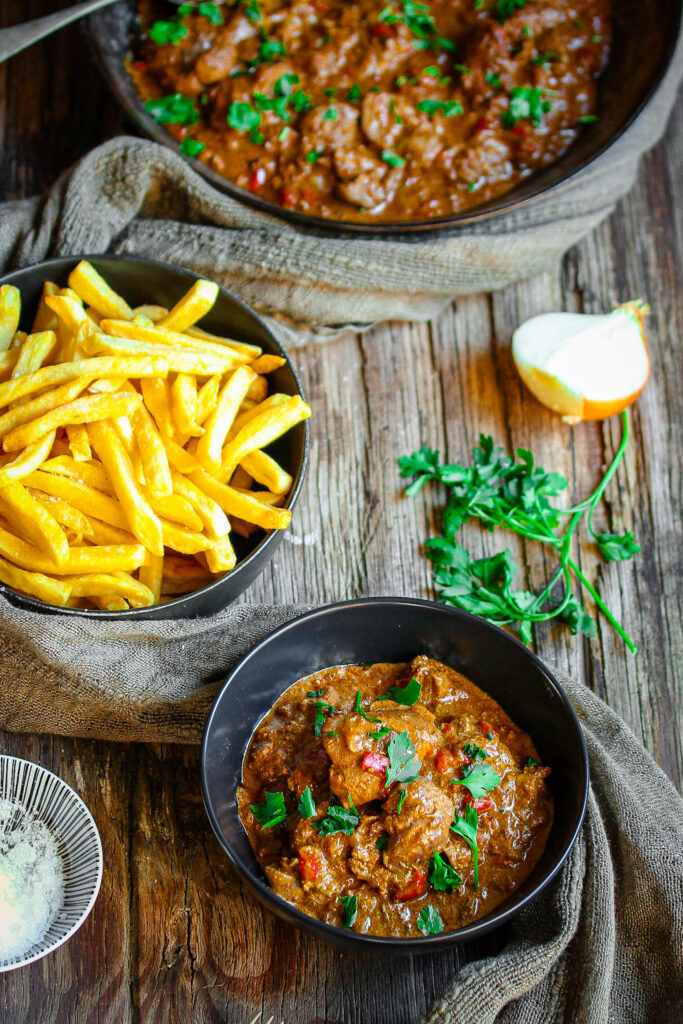
The result is spicy, creamy and deeply savoury, with plenty of sauce for mopping up with fresh crusty bread or serving alongside a generous portion of hot chips.
And the whole thing comes together surprisingly quickly.
Chicken livers can sometimes be intimidating if you don't cook them often. How do you clean them? Should you rinse them? How do you know when they're properly cooked? And why do they sometimes turn tough?
They're actually incredibly easy to cook once you know a few basics, so I've included all my tips below.
It's also a recipe that doesn't need a long ingredient list. Onions, peppers, garlic, a few spices, tomato paste, stock and cream turn a kilogram of chicken livers into a generous family meal.
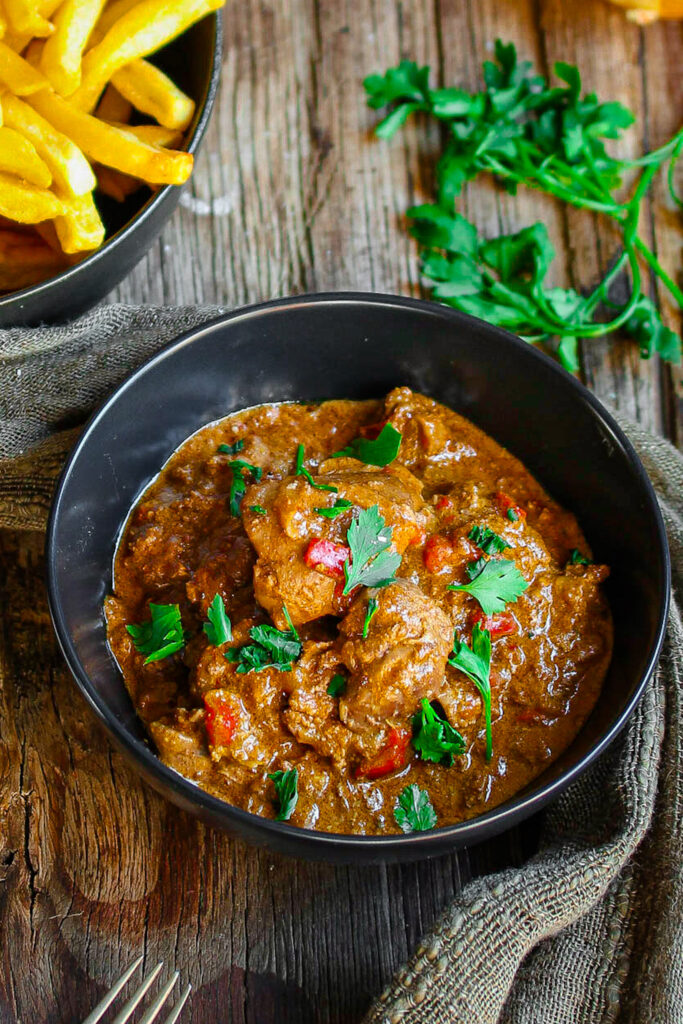
Chicken livers have a rich, savoury flavour, but they're generally milder than many other types of liver.
They also have a wonderfully soft texture when cooked correctly.
The important words there are when cooked correctly.
Overcook chicken livers and they can become dry, firm and slightly grainy. Cook them properly and they remain much more tender.
That's one of the reasons I like cooking them in a sauce like this. They spend only a relatively short time cooking before the cream is added at the end.
Chicken livers usually need very little preparation, but it's worth spending a few minutes checking them before cooking.
Place them on a clean board or plate and inspect each piece. Trim away obvious connective tissue, sinew and any tough-looking white sections with a small sharp knife.
If some of the livers are particularly large, cut them into more evenly sized pieces so that they cook at roughly the same rate.
I don't recommend washing raw chicken livers under running water.
Just as with raw chicken, splashing water can spread bacteria around the sink and nearby kitchen surfaces.
Instead, trim the livers as necessary and pat away excess moisture with paper towel before cooking. Wash your hands, knife, board and anything else that has come into contact with the raw livers thoroughly afterwards.
Drying the surface also helps the livers cook better rather than immediately releasing lots of water into the pan.
Occasionally you may notice a green or greenish-yellow patch on a chicken liver.
This can be caused by bile staining from the gallbladder during processing. Bile is extremely bitter, so I prefer to trim away and discard any noticeably green-stained sections rather than allowing that bitterness into the finished dish.
This is another good reason to look over your chicken livers individually before cooking them rather than tipping the entire container straight into the pan.
One of the most common complaints about liver is that it becomes tough.
The biggest culprit is usually overcooking.
Chicken livers cook relatively quickly. They don't need the kind of long simmering time you might give a tougher cut of meat.
There are a few other things that help:
Remember that the livers continue cooking in the hot sauce for a short while after you remove the pan from the stove.
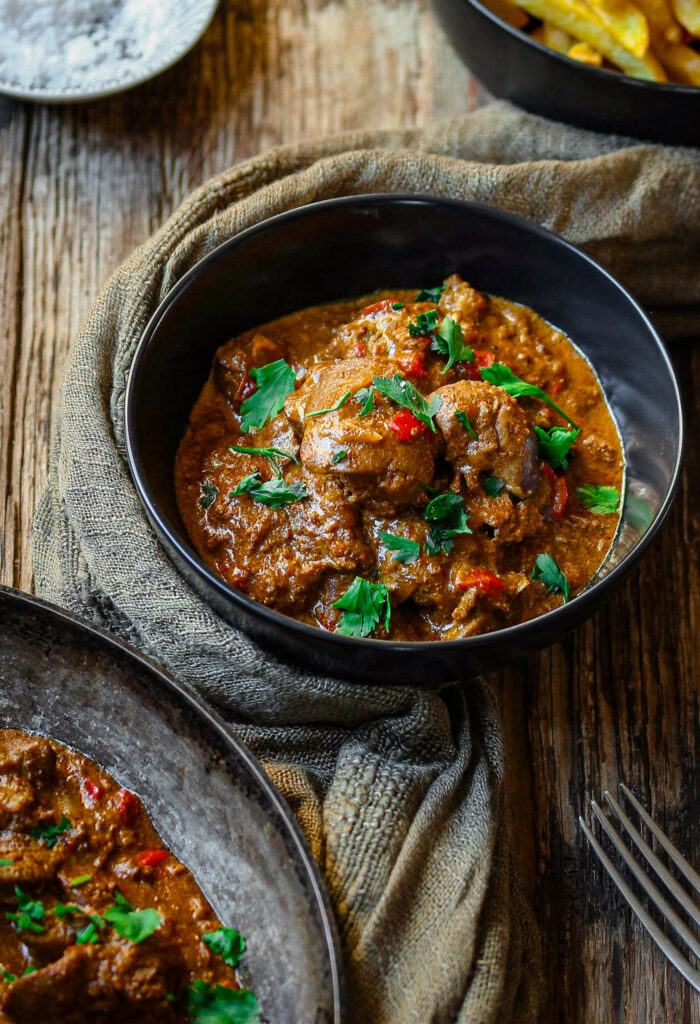
Because chicken livers are poultry, they need to be properly cooked for food safety.
The most reliable way to check is with a food thermometer. Chicken livers should reach an internal temperature of 74°C in the thickest part.
This is particularly useful with livers because judging doneness purely by colour can be unreliable.
The aim is to cook them safely while avoiding the unnecessary extra cooking that turns beautifully tender livers dry and grainy.
The sauce is simple, but the order in which you add the ingredients makes a difference.
Start by cooking the onion until it softens and begins to caramelise. That gives you a naturally sweet base for all the spice that's coming later.
The red peppers go in next, followed by the garlic.
Then add the chilli powder, paprika, cumin and bay leaf.
The spices only need a short time in the oil to become fragrant. Keep them moving because you don't want the paprika or chilli to burn.
This is one small step I think is worth doing.
Instead of adding the tomato paste later with the liquid, cook it directly with the onions, peppers and spices for a minute or two.
Cooking tomato paste removes some of its raw sharpness and allows its flavour to deepen before you add the chicken livers and stock.
It's a small change, but those little layers of flavour make a difference to the finished sauce.
They're meant to have a proper kick, hence the name, but you have complete control over the heat.
If your family prefers milder food, reduce the chilli powder and allow the paprika, cumin, garlic and peppers to provide most of the flavour.
If you like things hot, increase the chilli or add some finely chopped fresh chilli.
Just remember that different brands and varieties of chilli powder can vary enormously in heat, so use your own chilli powder as your guide.
You can always add more heat. It's considerably harder to take it back out. 😂
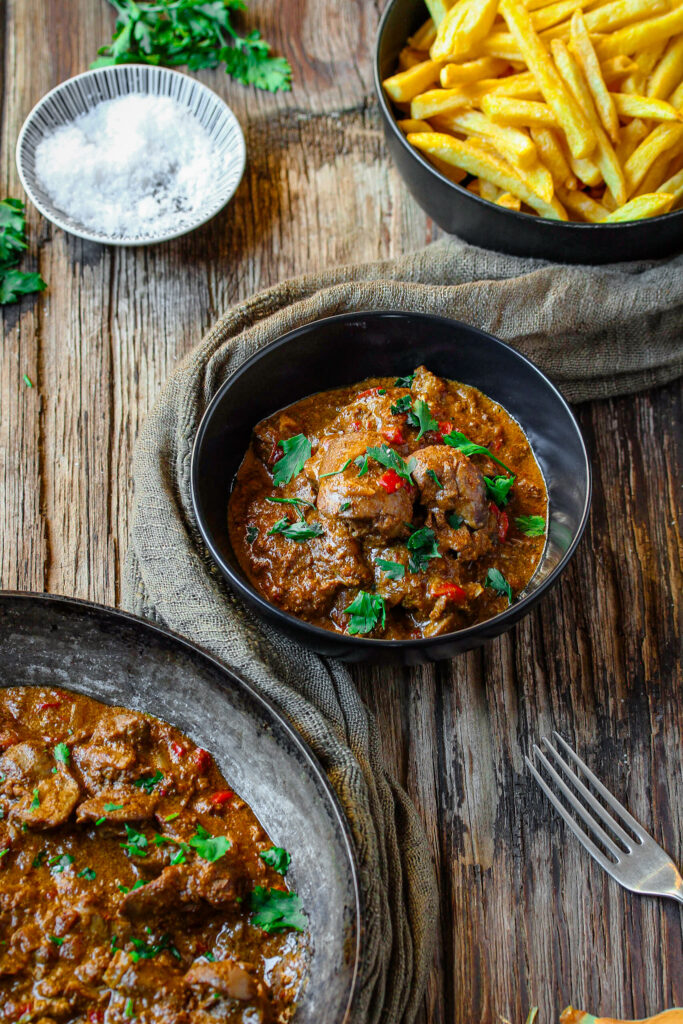
The cream does two things here.
It gives the sauce a lovely richness and it softens the sharper edges of the tomato and chilli.
You don't need a huge amount. Just enough to turn the spicy tomato sauce creamy without completely changing its flavour.
Add the cream right at the end and keep the heat gentle. Once it's incorporated and the sauce is hot, there's no need to aggressively boil it.
Check the chicken livers individually and trim away connective tissue, sinew and any green-stained sections.
Cut particularly large livers into similar-sized pieces and pat away excess moisture with paper towel.
Heat the oil in a large pan or pot.
Add the diced onion and cook until softened and beginning to caramelise.
Don't rush this part. Those onions form the base of the sauce.
Add the diced red peppers and cook for a few minutes until they begin to soften.
Add the crushed garlic and cook briefly until fragrant.
Add the chilli powder, paprika, cumin and bay leaf.
Stir the spices through the onions and peppers for about 30 seconds, keeping everything moving so the spices don't burn.
Add the tomato paste and cook for another minute or two.
Stir it through the onion and spice mixture until everything is beautifully coated and the tomato paste has had a chance to cook out.
Add the prepared chicken livers and gently stir them through the spicy tomato mixture.
Cook for approximately 4 to 5 minutes, turning the pieces so they begin to colour.
Pour in the chicken stock and season with salt and black pepper.
Bring everything to a gentle simmer and cook until the chicken livers are cooked through but still tender.
If you're unsure, check the thickest pieces with a food thermometer. They should reach 74°C internally.
Reduce the heat and stir in the cream.
Allow everything to simmer gently for another minute or two until the sauce is creamy and beautifully combined.
Taste and adjust the salt, pepper or chilli if necessary.
Finish with fresh parsley and serve while hot.
For me, one of the best things to serve with spicy chicken livers is fresh crusty bread.
You want something that can mop up all that creamy, spicy sauce left at the bottom of the bowl.
They're also delicious with:
Or serve a smaller portion on toast for an easy lunch.
Yes.
If you prefer a tomato-based spicy chicken liver sauce, simply leave the cream out.
You may want to let the stock and tomato mixture reduce slightly longer so that you still have a rich sauce.
Alternatively, if you're avoiding dairy, you can experiment with an unsweetened dairy-free cream that is suitable for cooking.
Reduce the chilli powder while keeping the paprika and cumin for flavour.
Add extra chilli powder, fresh chopped chilli or a spoonful of your favourite hot sauce.
Add a little more cream at the end if you prefer a richer, milder sauce.
If you're serving the chicken livers with plenty of bread, rice or mash, you can add a little extra stock and cream to give yourself more sauce for mopping up.
Sliced mushrooms work beautifully with chicken livers. Cook them with the peppers before adding the garlic and spices.
Chicken livers are at their best freshly cooked, particularly if you want to preserve their tender texture.
If you do have leftovers, cool them promptly and store them in a covered container in the refrigerator.
Reheat them thoroughly but gently. Repeated or aggressive heating can make the livers tougher and may cause a cream-based sauce to split.
If the sauce has thickened considerably in the fridge, add a small splash of stock or water while reheating.
They have most likely been overcooked. Chicken livers cook quickly and become progressively firmer and more grainy when cooked for too long.
No. Some people soak liver in milk to soften its flavour, but chicken liver is already relatively mild and it isn't necessary for this recipe.
Yes, provided they are properly thawed before cooking. Thaw them safely in the refrigerator, drain away excess liquid and pat them dry before preparing the recipe.
Yes, but use a sufficiently large pan. If you crowd too many cold chicken livers into a small pan, they'll release liquid and steam rather than cook properly.
Yes. I love the sweetness and flavour they bring to the sauce, but the recipe will still work without them.
Chicken livers are one of those ingredients that don't need much fuss.
A good onion base, plenty of garlic, a few spices and a rich sauce are really all they need.
And because they cook so quickly, this is the kind of recipe you can make when you want something comforting without having a pot simmering on the stove for hours.
Keep the livers tender, adjust the chilli to suit your taste and don't forget something for mopping up that sauce.
Because leaving that sauce behind would be a terrible waste. 😂❤️
A quick and easy spicy chicken livers recipe cooked with caramelised onions, red peppers, garlic and warm spices in a rich tomato and cream sauce.
Chicken livers cook quickly and can become tough and grainy if overcooked.
Trim away connective tissue and any green-stained sections before cooking.
Do not rinse raw chicken livers under running water. Pat away excess moisture with paper towel instead.
Chicken livers should reach an internal temperature of 74°C.
Different chilli powders vary considerably in heat. Reduce or increase the amount according to your preference.
For a milder version, use less chilli powder.
For extra heat, add fresh chilli or your favourite hot sauce.
For a richer sauce, add a little extra cream.
For a dairy-free version, omit the cream or use a suitable unsweetened dairy-free cooking cream.
Sliced mushrooms can be added with the red peppers.
Serve with fresh crusty bread, hot chips, toasted rolls, rice, mashed potatoes or pap.


