
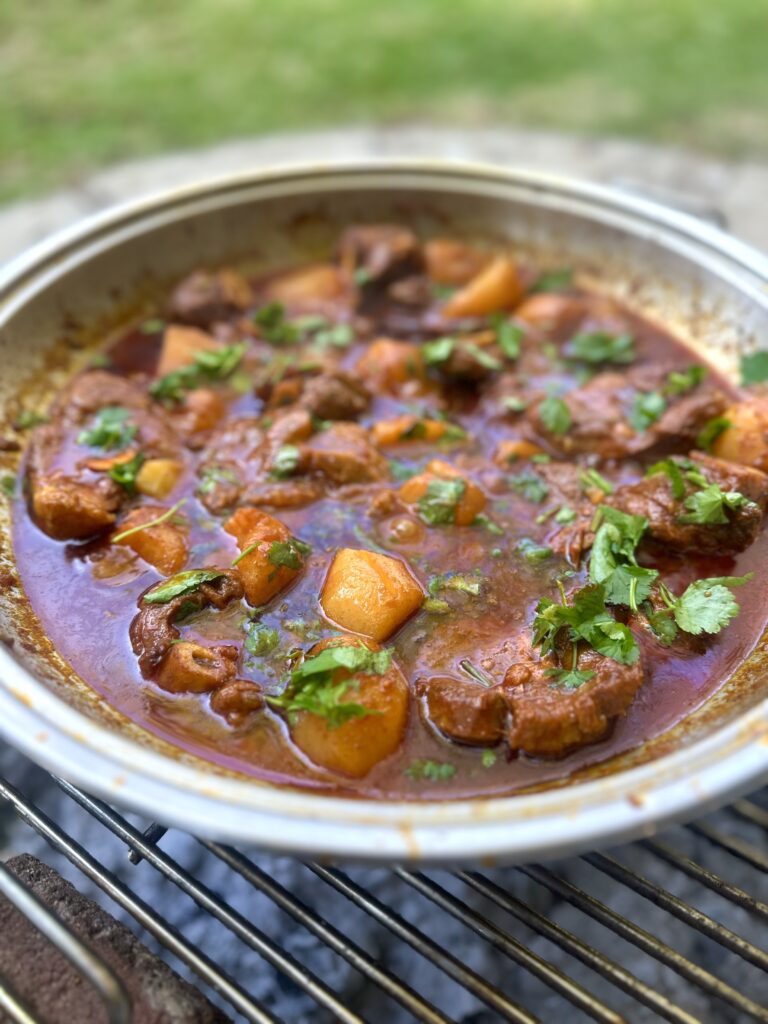
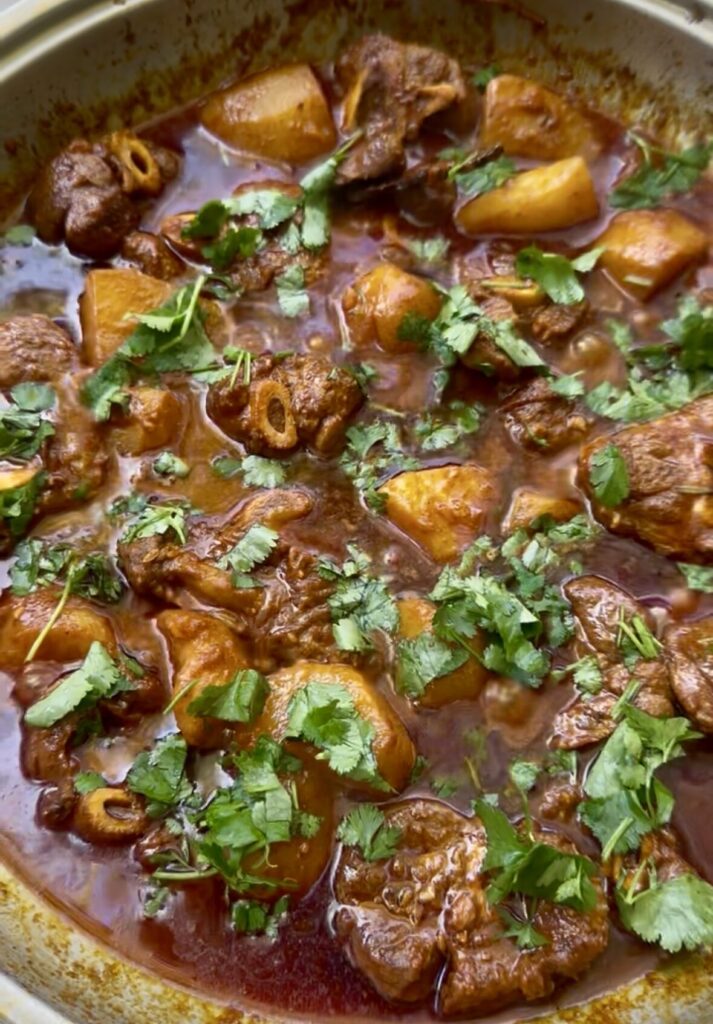
There is curry cooked on the stove, and then there is curry cooked outside over a wood fire, like this Wood-fire Durban Lamb Curry.
For me, they aren't quite the same thing.
I made this Wood-fire Durban Lamb curry on a Sunday, which somehow made the whole experience even more nostalgic. There was nowhere to rush off to. My husband helped me build the perfect fire, we got the pot going and I spent the afternoon cooking outside.
It was slow, relaxed and honestly so enjoyable.
And somewhere between the smell of the wood burning and the onions and curry leaves sizzling in the pot, I found myself thinking about our childhood Sundays.
Growing up in a Durban Indian family, outdoor cooking was part of life. Family gathered around, pots sat bubbling over fires and somebody was always keeping an eye on the wood.
And, if we're being completely truthful about those old family gatherings, our dads probably would have been standing around the fire with a glass in hand. 😂
There was always conversation. Someone checking the curry. Someone checking the fire. Someone offering an opinion about both.
"It's too hot."
"Put another piece of wood."
"Move the pot a little."
There was always somebody appointed fire manager, whether anyone had actually appointed them or not. 😂
This time, that person was my husband.
And he got the fire just right.
The smell alone took me back.
Wood burning. Onions frying. Curry leaves hitting hot oil. Masala cooking in the pot.
Those smells belong together in my memory.
Cooking outside in our Durban Indian homes was never about fancy outdoor kitchens or specialised equipment. You made a fire, found a sturdy grid, put a big pot on it and cooked.
This Wood-Fire Durban Lamb Curry is made very much in that spirit. Lamb knuckles are slowly cooked with onions, curry leaves, ginger and garlic, Durban curry powder, tomato and potatoes until the meat is tender and the gravy is rich.
The ingredients themselves are uncomplicated.
The real skill is learning to cook the curry while also learning to cook with the fire.
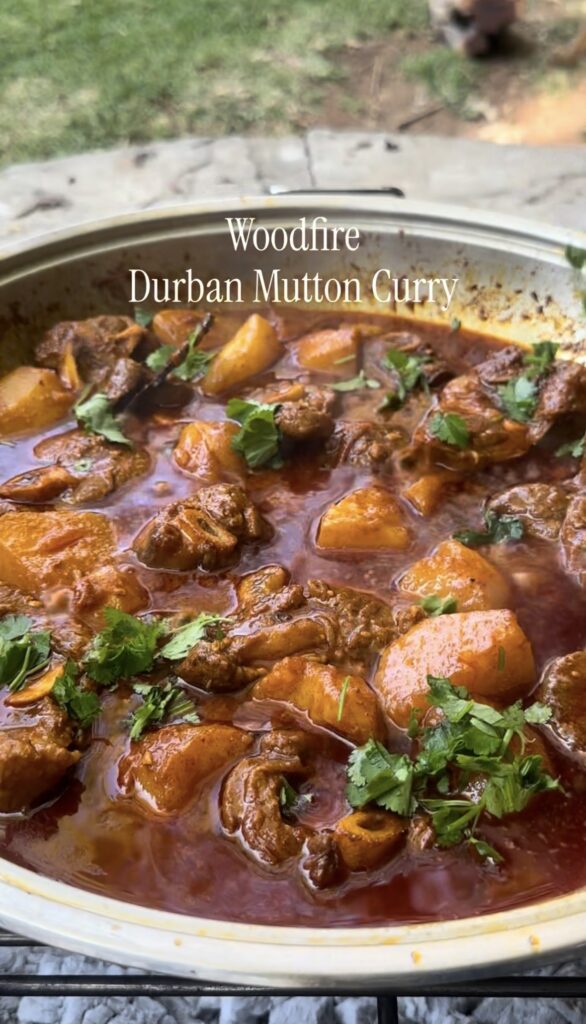
Cooking over a wood fire is very different from cooking on a stove.
On a stove, if the heat is too high, we simply turn a knob. With a wood fire, the heat takes a little more planning and attention.
Your fire becomes another part of the recipe.
You need enough heat to properly caramelise the onions, braise the lamb and cook the masala, but you don't want such fierce heat that your spices begin burning before you have time to react.
The beauty of wood-fire cooking is learning to watch what is happening in the pot rather than relying only on exact cooking times.
Start with a decent fire and keep extra wood nearby. You want enough heat to carry you through the cooking process without suddenly losing temperature halfway through.
As the fire settles, you can add more wood, move the embers or shift your pot slightly depending on how much heat you need.
You don't necessarily want flames constantly licking the bottom of your pot.
A good bed of hot coals with controlled flames will give you much more manageable heat.
A heavy-based pot works particularly well because it handles uneven heat better than a thin pot.
Make sure the pot also sits securely on your grid before you begin cooking.
I always keep hot water ready when cooking curry outside.
If your masala begins catching or the liquid in the pot evaporates more quickly because your fire is running hot, you can add a small amount as needed.
Add the water gradually. You can always add more, but it is much harder to rescue a curry that has become too watery.
This is especially important once the Durban curry powder goes into the pot.
You want the spices to fry gently and release their flavour without scorching. If the masala begins catching, add a small dash of hot water and adjust the position of your pot or the fire.
This is one of those little traditions that immediately takes me back.
Before putting the pot over the wood fire, I rub Handy Andy on the outside of the pot.
It is something I remember from Durban Indian outdoor cooking. The idea is that the layer on the outside of the pot helps make the black soot left behind by the fire easier to clean afterwards.
Is it glamorous? Absolutely not. 😂
But these are exactly the little traditions I love documenting because they are the things that rarely make it into formal recipes.
Important: the cleaning product goes only on the outside of the pot. It should never come into contact with the inside of the pot, the rim or any surface that touches the food.
And suddenly this recipe becomes about more than lamb, potatoes and curry powder.
It is also a record of how we cooked.
Build your wood fire and allow it to establish itself before you begin cooking.
You want a good source of sustained heat rather than relying on only a few small pieces of burning wood.
Place a sturdy grid securely over the fire and make sure your heavy-based pot sits safely on it.
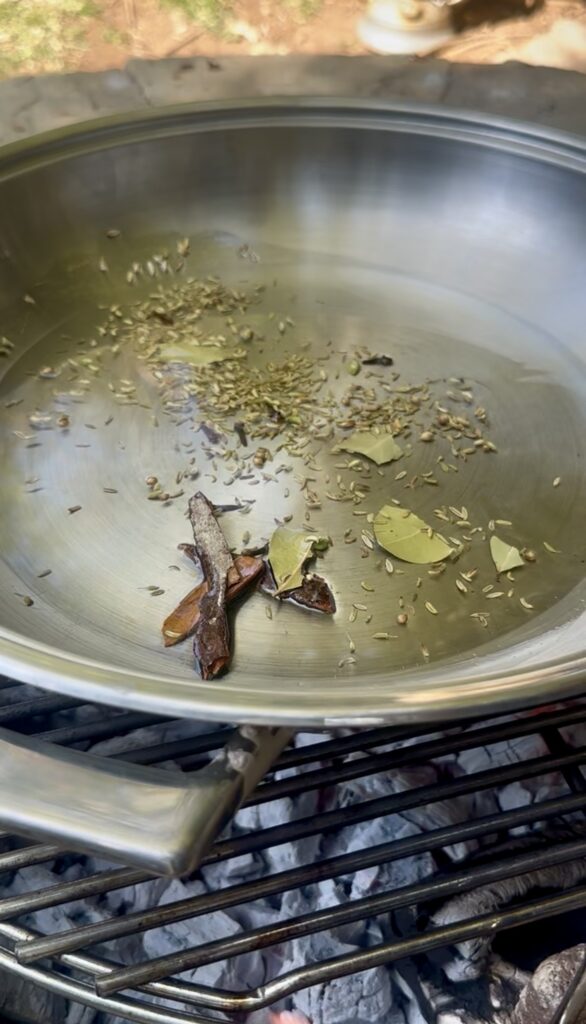
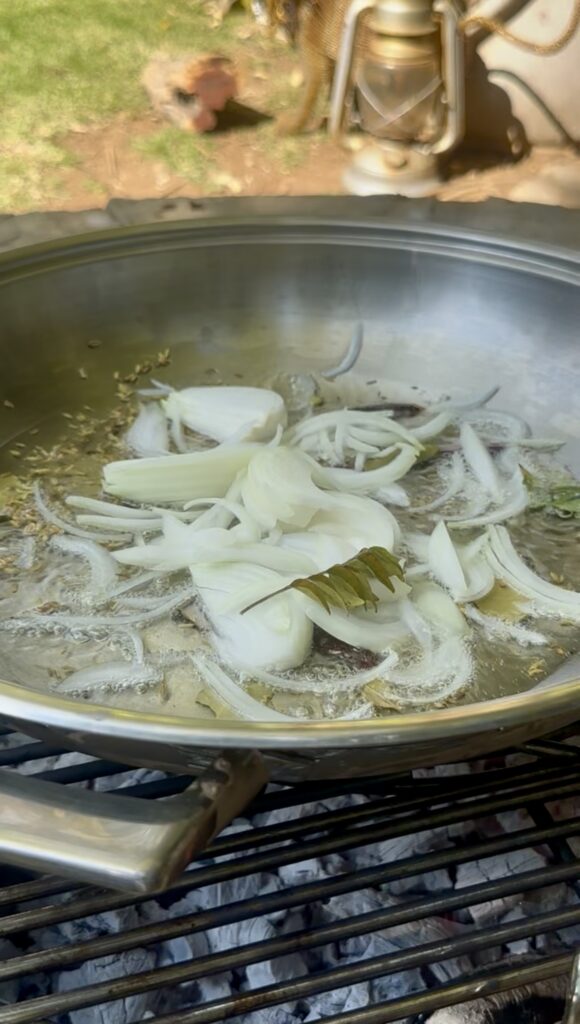
Place the pot over the fire and heat the oil.
Add the biryani mix or whole spices.
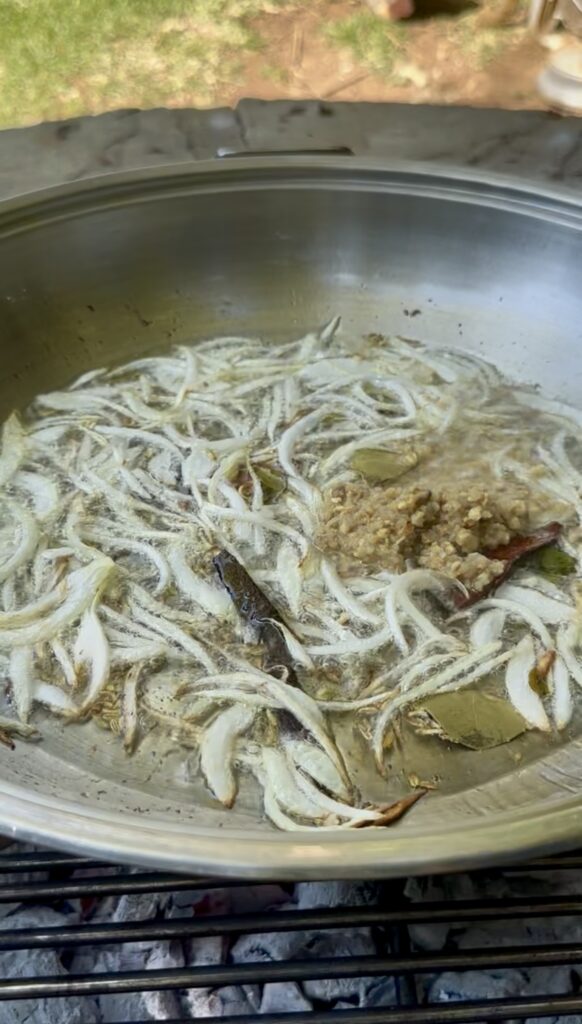
Once the spices begin to crackle and release their aroma, add the sliced onion and half of the curry leaves.
Allow the onions to cook until softened, caramelised and nicely browned.
PriMade Tip: Don't rush the onions. Good caramelisation creates the foundation for a deeply flavoured curry.
Add the crushed ginger and garlic and fry for approximately one minute.
Keep stirring so the garlic doesn't catch on the bottom of the pot.
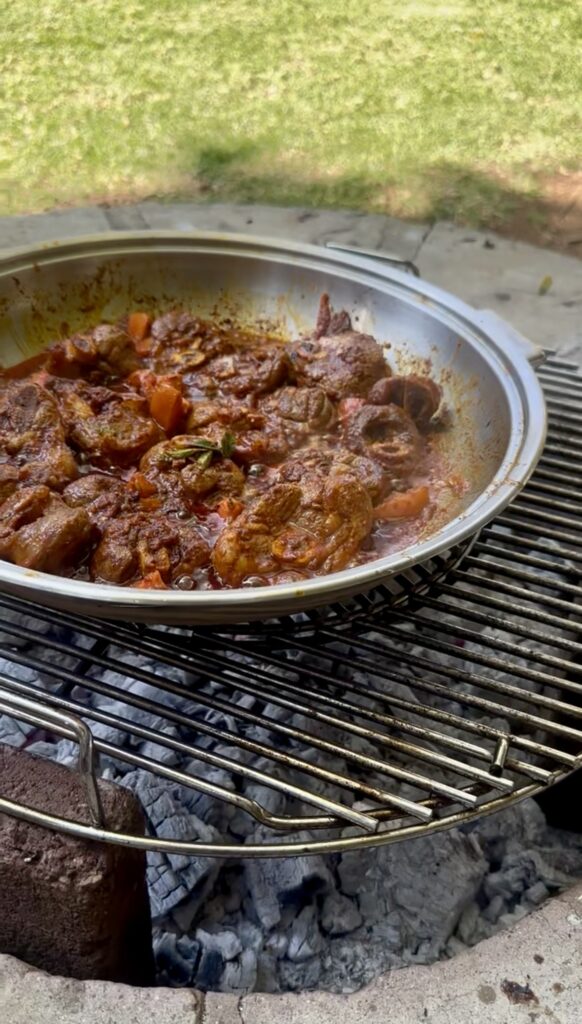
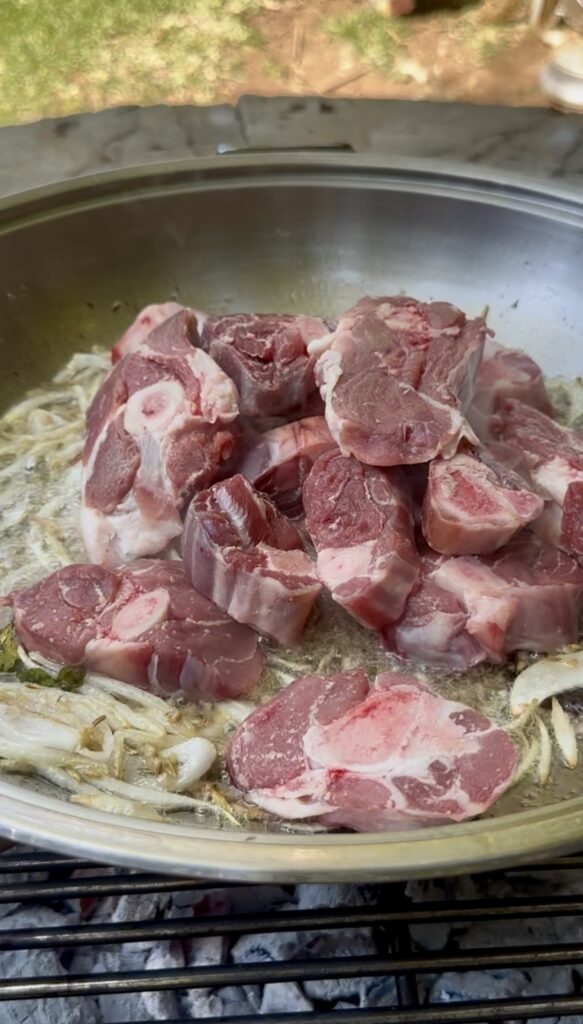
Add the lamb knuckles to the pot and season with coarse salt according to taste.
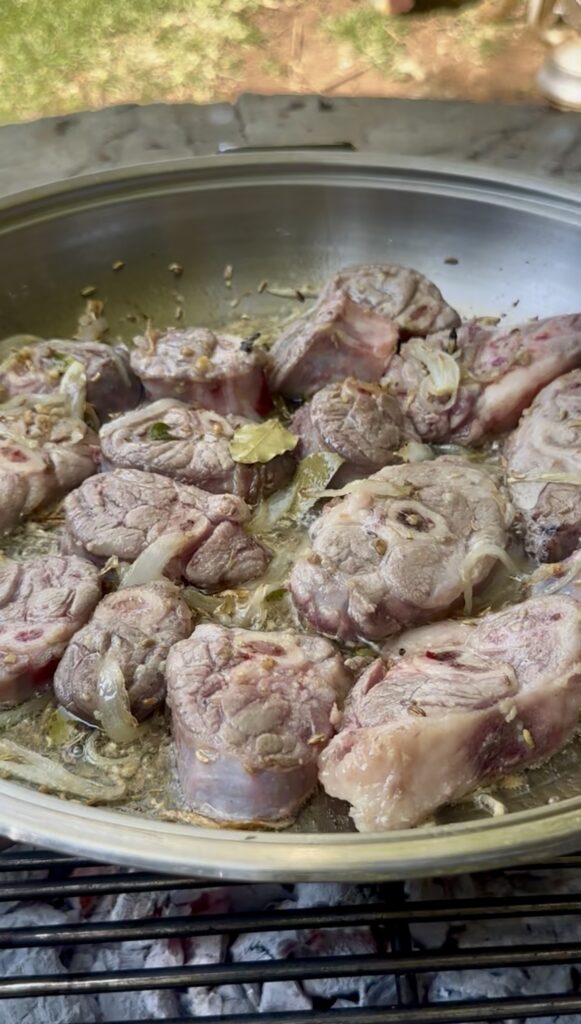
Mix everything together well and allow the lamb to cook for approximately 15 to 20 minutes.
As the lamb cooks, it will begin releasing its own juices.
Don't rush to add water at this stage.
Allow the meat to cook in its own juices first.
If your fire is particularly hot, those juices may evaporate more quickly. Add a splash of hot water only if necessary.
Add the Durban curry powder and mix thoroughly so that every piece of lamb is beautifully coated in the masala.
Add a small dash of hot water if needed.
Allow the curry powder to cook with the lamb for approximately 3 to 5 minutes.
Keep stirring and watch the heat carefully so the masala doesn't burn.
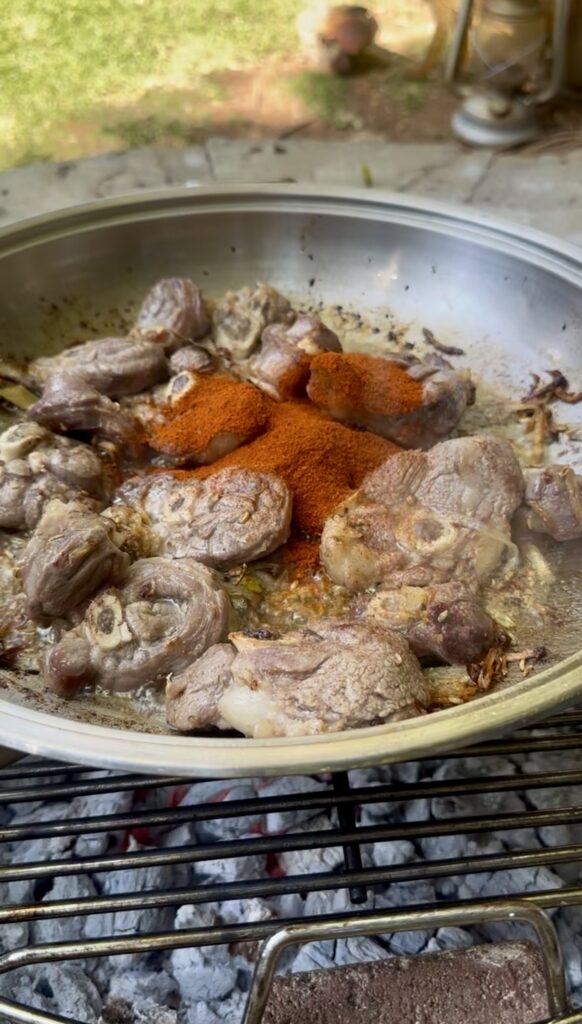
Add the chopped tomato together with the remaining curry leaves.
Mix well and cook for approximately 2 minutes.
Add about 1 cup of hot water, cover the pot and allow the lamb to cook for another 15 to 20 minutes.
Keep checking your fire and adjust the wood or position of the pot as necessary.
I don't rely entirely on a timer when cooking meat like this.
I use a knife.
Poke a piece of lamb with the tip of a knife and feel how much resistance there is.
Once the meat is beginning to soften, you know you are getting close to the point where the potatoes can be added.
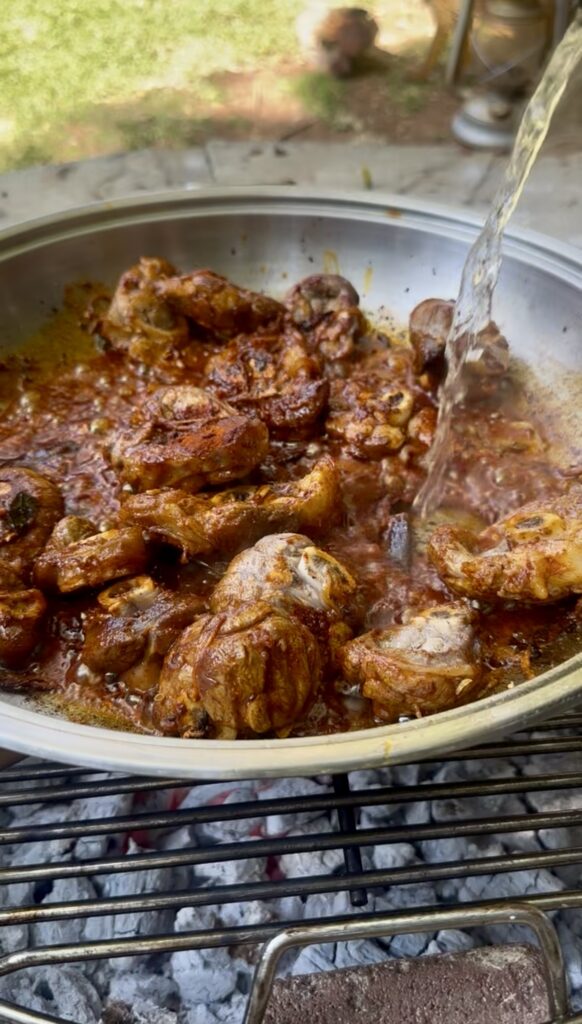
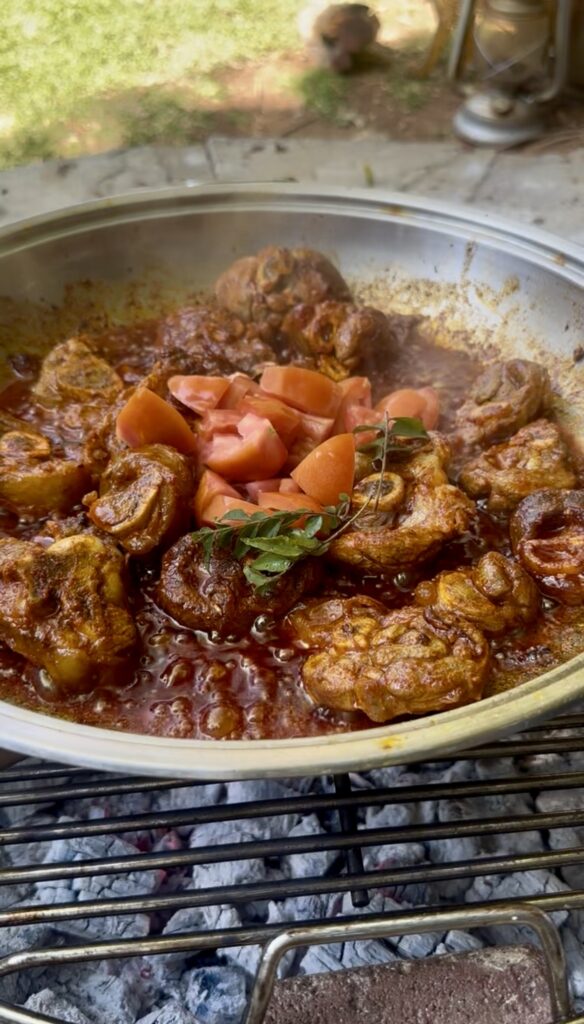
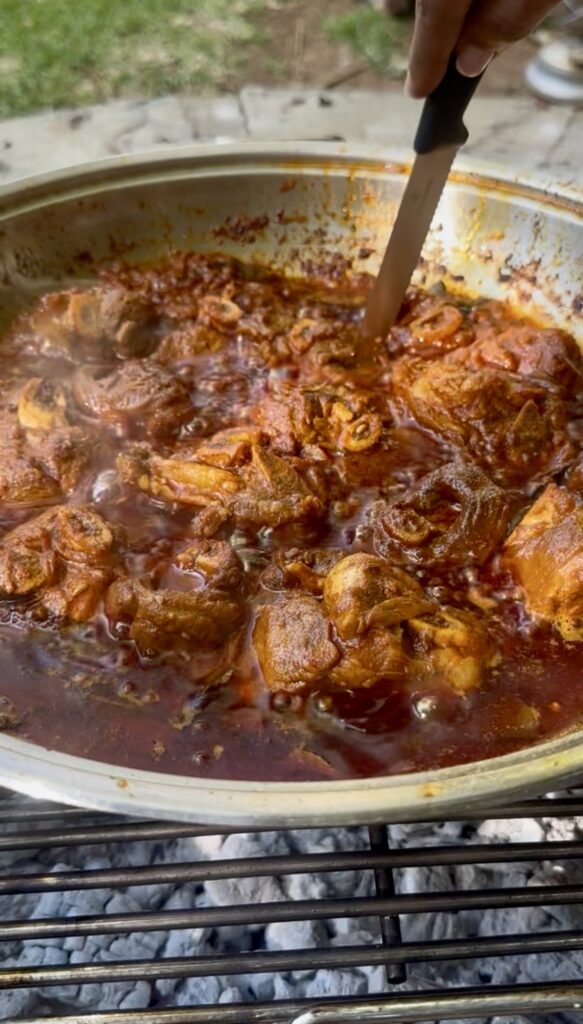
Add the peeled and cubed potatoes once the lamb has begun to soften.
Add approximately another cup of hot water, or slightly more depending on how much liquid has evaporated from your pot.
Cover and continue cooking until the potatoes are soft and the lamb is beautifully tender.
This can take approximately 25 to 40 minutes depending on the type of potatoes you are using, the size of the pieces, the temperature of your fire and the altitude at which you are cooking.
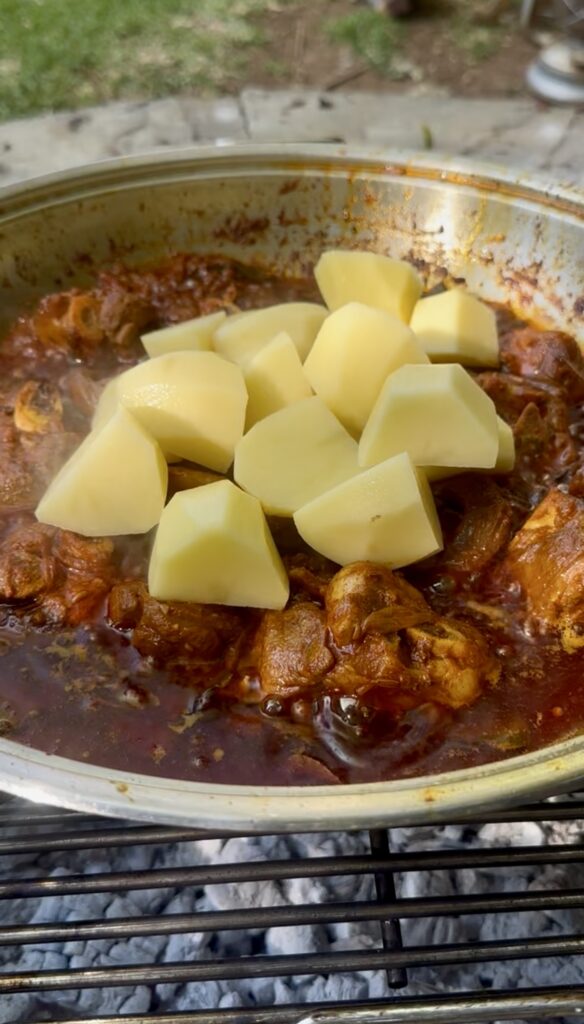
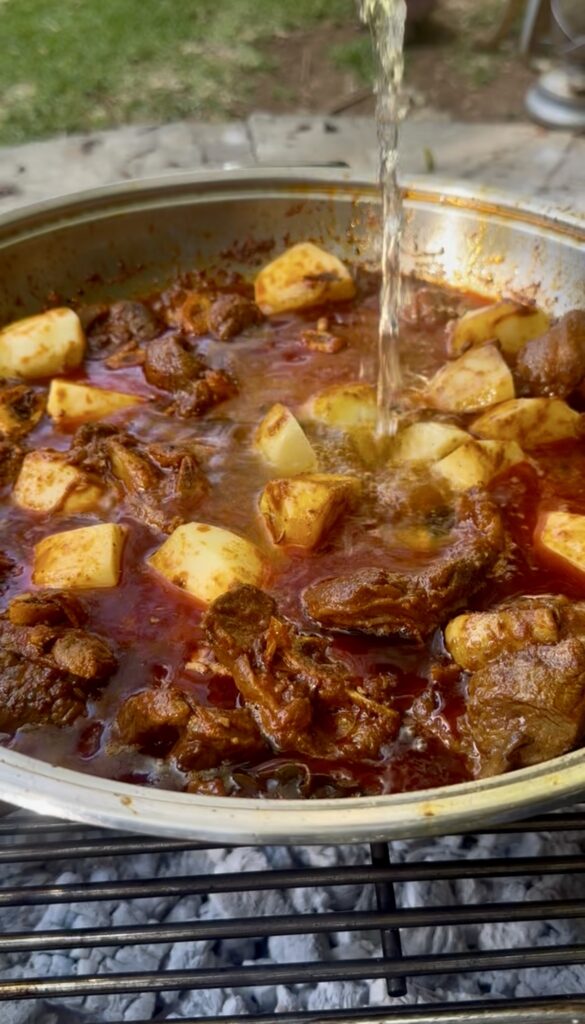
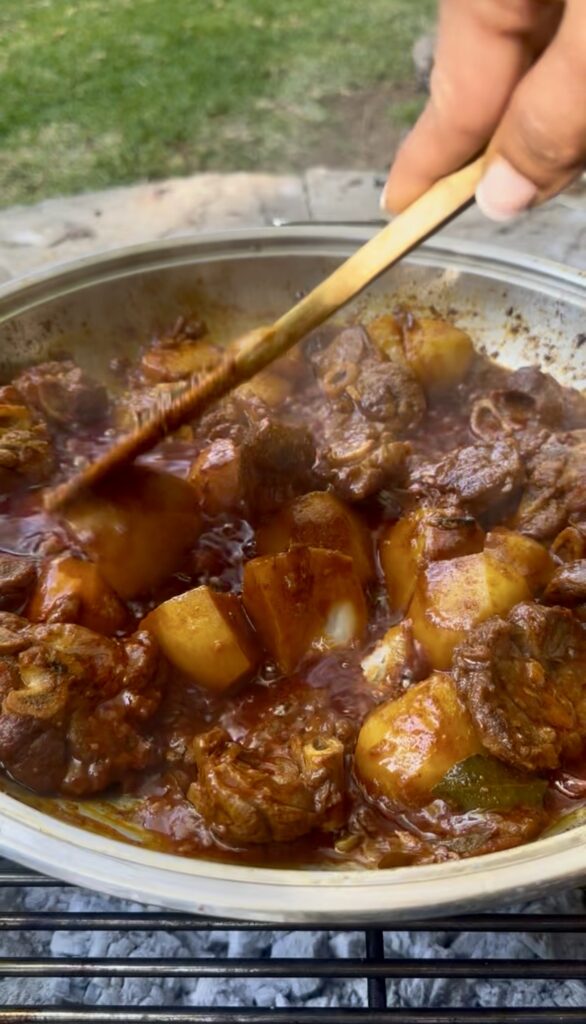
Once the lamb and potatoes are tender and the gravy has reached the consistency you like, check the seasoning.
Finish generously with freshly chopped dhania.
Sprinkle over a little garam masala if you like.
Serve hot and preferably with everyone already standing around the pot waiting. 😂
Absolutely.
Mutton works beautifully in this recipe, but it will generally require a longer cooking time than lamb.
If you use mutton, allow the meat to cook until it is beginning to soften before adding the potatoes.
If you add the potatoes too early, they may become very soft or begin falling apart while you are still waiting for the mutton to tenderise.
This is why I prefer checking the meat with a knife rather than relying entirely on a set cooking time.
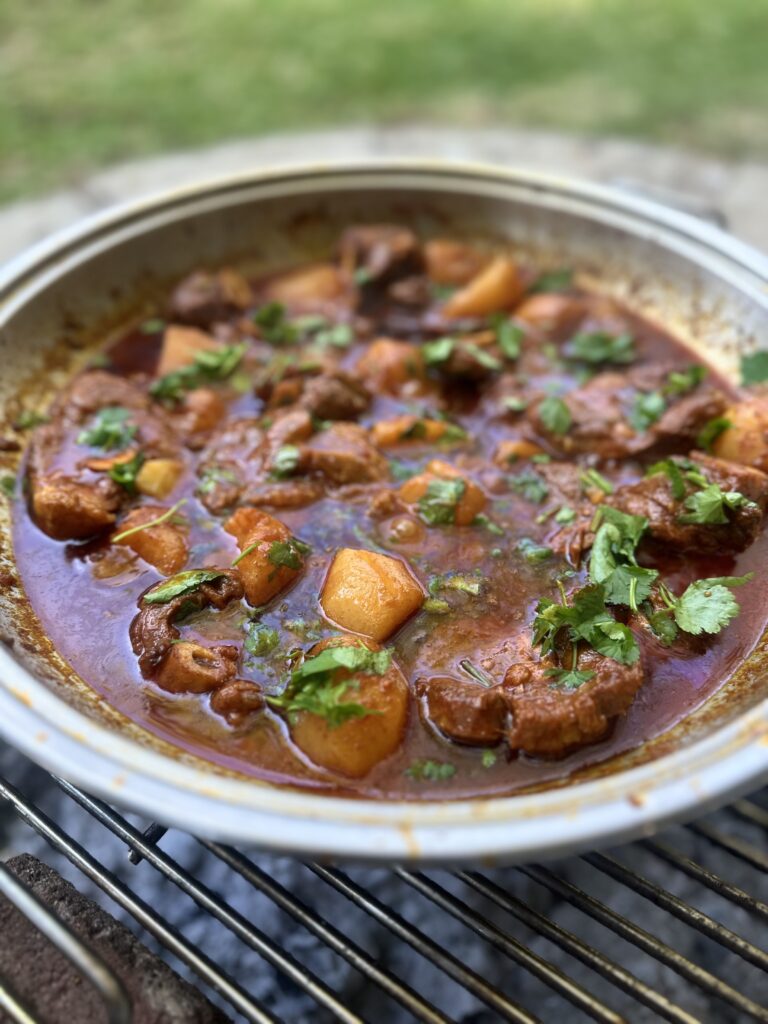
Add the potatoes only once the meat has begun to soften.
Depending on the variety of potato, the size of your pieces and the altitude where you are cooking, they can take approximately 25 to 40 minutes to become tender.
Altitude matters because water boils at a lower temperature at higher elevations, which can make foods cooked in water or liquid take longer to soften.
So use the suggested cooking time as a guide and allow the texture of the food to tell you when it is ready.
There is no exact amount that will work every single time when cooking over a wood fire.
Your fire, pot, meat and weather can all affect how quickly liquid evaporates.
I begin with approximately one cup after adding the tomatoes, then add another cup or slightly more when adding the potatoes.
The important thing is to use hot water and add it gradually.
You want enough liquid to cook the meat and potatoes while still allowing the gravy to become rich and concentrated.
This curry is hearty enough to serve simply, especially with those soft potatoes soaking up the gravy.
You can serve it with:
And if you're already cooking outside, eating it outside somehow feels right too.
There is something about Sunday cooking that makes you slow down.
Add a wood fire to it and somehow you slow down even more.
You can't simply turn a knob and walk away. You tend the fire. You watch the pot. You stir the curry. You add another piece of wood when you need it.
And people naturally gather around.
Making this curry with my husband helping me tend the fire reminded me how much of our food memories aren't actually just about the food.
They're about everything happening around the pot.
The conversations. The laughter. The smell of smoke on your clothes. Someone lifting the lid to see how the curry is doing.
And, in our memories at least, our dads standing nearby with their glasses in hand while the Sunday cooking carried on.
It made me think about my parents, our aunts and uncles and those old Durban family traditions that seemed completely ordinary when we were children.
You don't necessarily recognise them as traditions while you're living them.
They're simply Sunday.
Then years pass, and one afternoon you're standing beside your own fire, cooking your own pot of curry with your husband beside you, and suddenly you're right back there.
That's what food does.
You can absolutely make a beautiful Durban lamb curry on the stove.
But every once in a while, if you can, light the fire.
Put the pot outside.
Don't rush.
And make a Sunday of it.
Because sometimes the best part of a recipe isn't what's in the pot. It's everything you remember while you're cooking it.
If you love traditional Durban Indian cooking, you may also enjoy my Traditional Durban Mutton Curry.

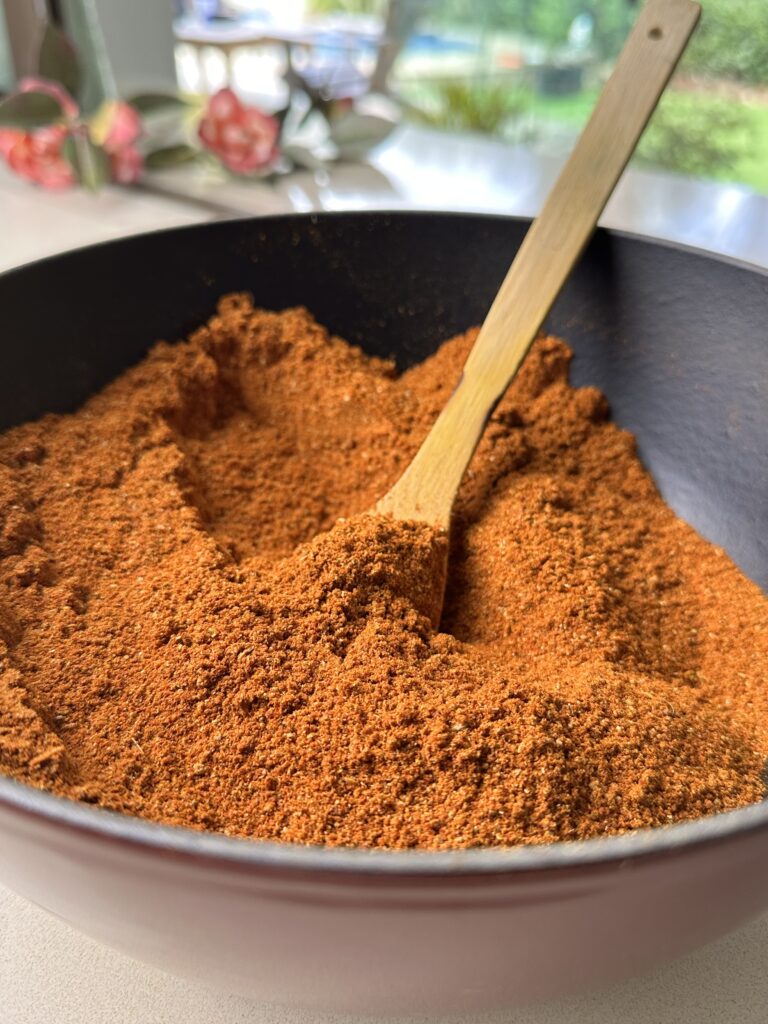
You can also use my homemade Durban Curry Powder for this recipe. Click on the image for the recipe
A rich Durban lamb curry cooked slowly over a wood fire with lamb knuckles, potatoes, curry leaves, Durban curry powder and fresh dhania. A nostalgic South African Indian Sunday curry with practical tips for controlling an outdoor fire.
Lamb and mutton can both be used. Mutton generally takes longer to become tender, so add the potatoes later when using mutton.
Do not add the potatoes according to time alone. Check the meat first and add them once it has begun to soften.
Potatoes generally take approximately 25-40 minutes to soften, depending on the variety, size of the pieces and altitude.
Wood-fire temperatures vary considerably. Keep extra wood nearby so you can increase the heat if necessary and move the pot or embers if the fire becomes too hot.
Keep hot water nearby while cooking. Add only small amounts as needed because a very hot fire can cause the curry liquid to evaporate more quickly.
Watch the curry carefully after adding the curry powder because masala can burn quickly over a strong fire.
For easier cleaning after wood-fire cooking, I rub Handy Andy on the outside of my pot before placing it over the fire. Apply it only to the exterior and keep it completely away from the inside, rim and any food-contact surfaces.


