
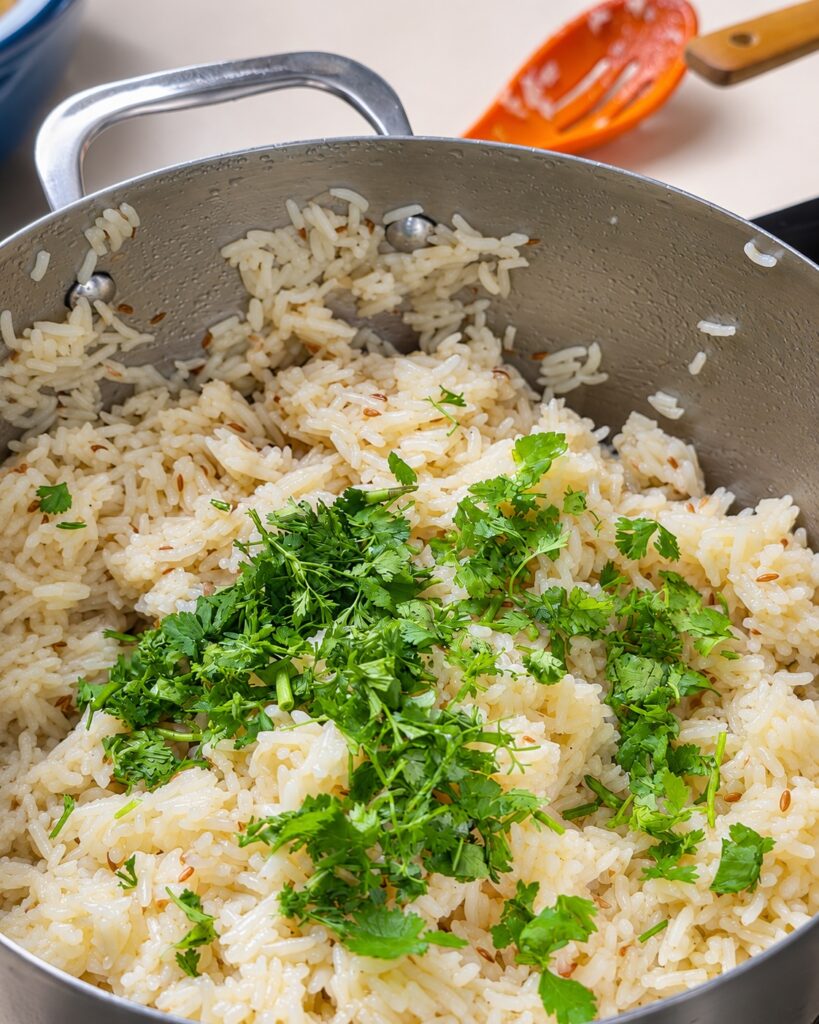
This easy jeera rice with coriander is the simple rice I make when I want something a little more flavourful than plain basmati, but I don't want to spend time frying onions or building a more complicated spiced rice.
It uses just a handful of ingredients – ghee, whole cumin seeds, basmati rice, chicken stock and fresh coriander – and cooks using the absorption method.
The finished rice is soft, fragrant and slightly moist rather than very dry and completely separated, which is exactly how I like it when serving it alongside a curry.
I first made this version as part of my 40-Minute Dinner Challenge, where I served it with my easy chicken and lentil curry and a fresh kachumber salad.
It was the perfect rice for that meal because I could get it onto the stove quickly and leave it to cook while I got on with the curry.
I already have another cumin and coriander rice recipe, but this one is intentionally different.
My other version includes onions and additional flavour-building steps. This is the quicker, simpler version I make when I need dinner on the table without another complicated side dish to prepare.
There are no onions to chop and fry and no turmeric or additional whole spices.
Instead, the flavour comes from cumin seeds gently fried in ghee, savoury chicken stock and plenty of fresh coriander added at the end.
Think of this as my easy weeknight jeera rice.
Jeera means cumin, so jeera rice is simply rice flavoured with cumin.
There are many versions of jeera rice across Indian cooking. Some contain onions, bay leaves, cinnamon, cardamom or other whole spices, while others are much simpler.
This version is deliberately straightforward.
I fry whole cumin seeds briefly in ghee, add the washed basmati rice, then cook it in stock using the absorption method.
Fresh coriander is added once the rice has finished cooking.
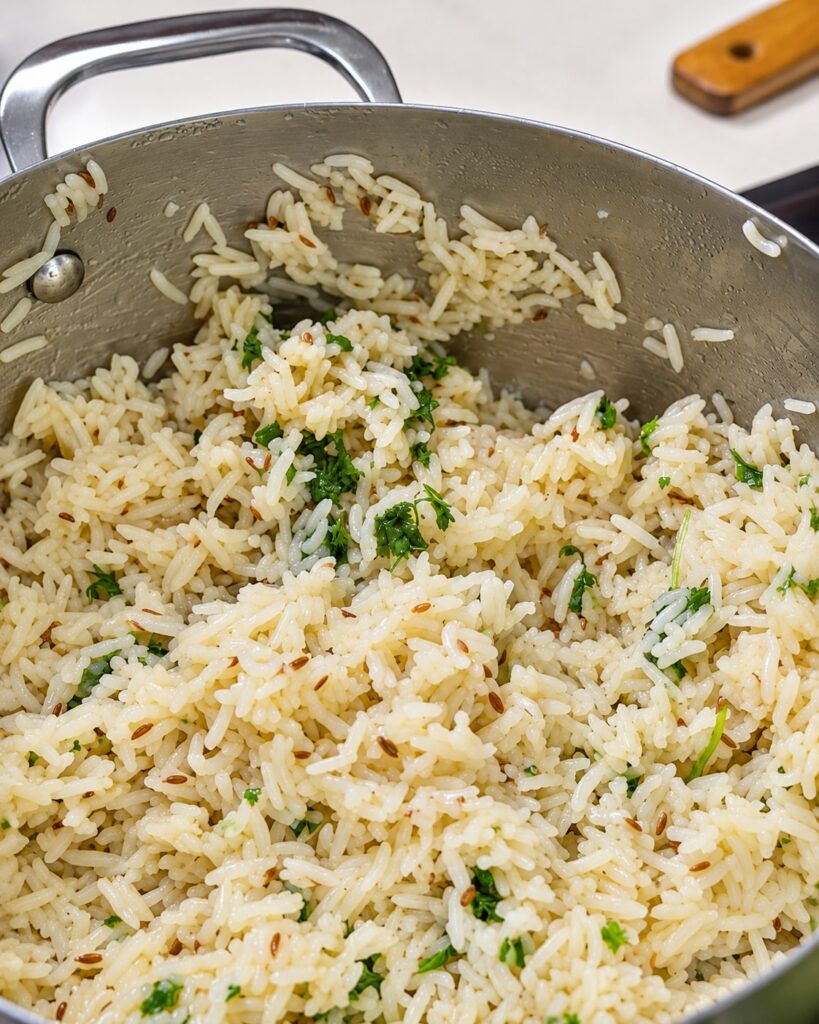
I use 1 tablespoon ghee.
It adds a lovely buttery richness and gives the cumin seeds something to bloom in before the rice is added.
You can use butter or a neutral cooking oil if you don't have ghee, but ghee gives the best flavour here.
You will need 1 teaspoon whole cumin seeds.
Frying the seeds briefly in hot ghee releases their aroma and gives the rice its characteristic warm, earthy flavour.
They only need a few seconds, so keep an eye on them and don't allow them to burn.
I use 300 g basmati rice, washed and drained.
Wash the rice several times under cold water, then drain it before adding it to the pot.
Basmati works particularly well because of its fragrance and long grains.
One chicken stock cube dissolved in boiling water gives the rice extra savoury flavour without needing lots of additional seasoning.
If you are serving the rice with a vegetarian meal, simply substitute vegetable stock.
A generous handful of chopped fresh coriander is folded through at the end.
I don't cook the coriander with the rice because I want it to stay fresh, bright and fragrant.
Wash 300 g basmati rice several times under cold water.
Drain it well and set aside.
Heat 1 tablespoon ghee in a medium saucepan over medium heat.
Add 1 teaspoon cumin seeds and allow them to sizzle gently for around 20–30 seconds.
As soon as they become fragrant, move onto the next step.
Add the washed and drained basmati rice to the pot.
Stir gently so that the grains are coated in the ghee and cumin.
You don't need to fry the rice until it becomes dry or toasted.
I only stir it briefly before adding the liquid. This contributes to the softer texture I like in this particular recipe.
Dissolve 1 chicken stock cube in 4 cups boiling water.
Pour the hot stock over the rice.
Stir gently and bring to the boil.
Once the water comes to the boil, reduce the heat.
Cook the rice gently until the liquid has been absorbed and the grains are tender.
The rice should be soft and slightly moist rather than very dry.
Once the liquid has been absorbed, remove the pot from the heat and allow the rice to rest briefly.
Gently loosen the cooked rice with a fork or spoon.
Fold through a generous handful of freshly chopped coriander.
Serve warm.
This is where my version is a little different.
I am not trying to make a very dry, restaurant-style jeera rice where every single grain is completely separate.
I like this rice soft, fluffy and slightly moist.
The basmati grains should still hold their shape, but the finished rice has a softer, more comforting texture that works particularly well with curry.
It shouldn't be mushy or wet. There should simply be a little more moisture and softness than you would expect from a very dry pilau-style rice.
No.
For this recipe I only stir the rice briefly through the cumin and ghee before adding the boiling stock.
I don't fry the grains until they become dry or toasted.
That is intentional.
I wanted this to be a quick, easy rice with a softer texture, rather than a more elaborate fried rice or pilau-style side dish.
The absorption method is ideal for a quick weeknight meal because once the liquid is added and the rice is cooking, it requires very little attention.
There is no need to cook the rice separately and drain it afterwards.
The rice absorbs the seasoned cooking liquid as it cooks, which also means the chicken stock and cumin flavour remain in the finished dish.
For my 40-minute dinner, this allowed me to put the rice on first and then concentrate on the chicken curry.
Whole cumin seeds release their flavour when heated in fat.
Frying them briefly in ghee gives the rice a much deeper cumin aroma than simply adding raw seeds to the cooking water.
It only takes 20–30 seconds, but it is probably the most important flavour-building step in this simple recipe.
Fresh coriander loses some of its bright flavour when it is cooked for too long.
Adding it at the end keeps the coriander fresh and gives the pale rice lovely little flecks of green.
You can add as much or as little as you like, but I prefer a generous handful.

This rice is deliberately mild and versatile, which makes it a good side for many different meals.
I originally served it with:
It would also work beautifully with:
Yes.
Simply replace the chicken stock cube with vegetable stock.
The rest of the recipe stays exactly the same.
Yes, although I purposely kept this particular rice very simple.
If you want to add peas, stir frozen peas into the rice towards the end of cooking so that they stay bright and don't become overly soft.
You could also add spring onions, spinach or other herbs, but at that point you are moving away from the simple weeknight version that I originally intended.
Whole cumin seeds are best here.
They give the rice little bursts of cumin flavour and are what make it feel like jeera rice.
If ground cumin is all you have, you can use a small amount, but the flavour will be more evenly distributed and the finished rice will taste slightly different.
I created this particular rice for my first 40-Minute Dinner Challenge.
The complete meal was:
The rice went onto the stove first.
While it cooked using the absorption method, I made the chicken and lentil curry. While the curry finished cooking, I chopped the vegetables for the kachumber.
That is really what made the whole 40-minute dinner possible.
Instead of making each dish one after another, the cooking times overlapped.
This simple jeera rice was perfect because once it was on the stove, it needed very little attention.
Yes. Jeera is the Hindi word for cumin, so jeera rice simply means cumin rice.
No.
I have another cumin and coriander rice recipe that includes onions and additional flavour-building steps.
This version is intentionally simpler and quicker, making it especially useful for busy weeknight dinners.
That is how I prefer this particular recipe.
I don't fry the rice until it is very dry before adding the cooking liquid, and I use the absorption method to create a softer, slightly moist finish.
The grains should still hold their shape, but the texture is intentionally more comforting than a dry restaurant-style jeera rice.
No.
This rice is cooked using the absorption method, so the cooking liquid is absorbed into the rice.
Yes.
Cook the rice, cool it promptly and refrigerate it in an airtight container.
Reheat until piping hot and add a little fresh coriander after reheating to bring back the fresh flavour.
This easy jeera rice is the kind of recipe I love having in my weeknight rotation.
It is simple enough to make while you are concentrating on the main dish, but it still brings much more flavour to the table than plain rice.
The toasted cumin seeds give it warmth, the stock makes it savoury and the fresh coriander lifts everything at the end.
And because I keep this version soft and slightly moist, it is particularly good with a rich curry spooned over the top.
Sometimes the simplest side dishes are the ones you end up making again and again.
A simple and fragrant cumin rice made with basmati, ghee, whole cumin seeds, chicken stock and fresh coriander. Soft, slightly moist and perfect for serving with curry.


