
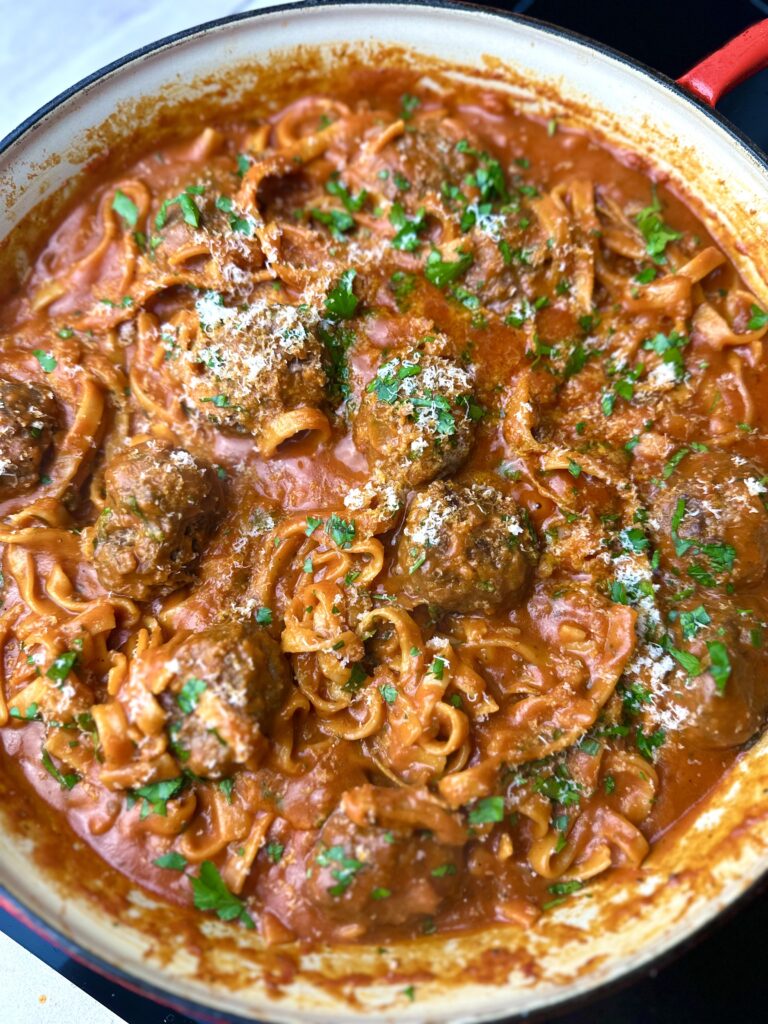
There is something particularly satisfying about a dinner, like this One Pot Meatball Pasta, that comes together in one pot, especially when that dinner involves pasta, meatballs and a rich tomato sauce.
But whenever I make a meal like this, I sometimes think about how different the food on my own family table looked when I was growing up in Durban in the 1980s.
Pasta was hardly part of it.
My mum very rarely cooked pasta. Our everyday meals were the foods she knew and had grown up cooking. There were curries, dhalls, vegetable dishes, rice, roti and the familiar flavours of a Durban Indian kitchen.
Pasta certainly existed, but in our home it wasn't the easy weeknight staple it has become in mine today.
And I find that interesting because somewhere between my mother's kitchen and my own, the definition of our everyday food changed.
Today I can put a pot of tagliatelle and meatballs on the table without giving it a second thought. My children know pasta as ordinary family food in a way that I simply didn't growing up.
Perhaps that is how home cooking evolves.
We keep the food that came before us. I still cook the curries, dhalls and vegetable dishes I grew up eating. I still reach instinctively for many of the spices and techniques I watched being used in our Durban kitchen.
But alongside them now sit pasta, noodles and all sorts of dishes that would rarely, if ever, have appeared on our table in the 1980s.
This One Pot Meatball Pasta with Tagliatelle belongs to that newer part of my family kitchen.
And it is an exceptionally good one.
The meatballs are browned first, then onions, thyme and garlic are cooked in all those lovely flavours left behind in the pot. Passata, herbs and a few simple seasonings create the tomato sauce before the tagliatelle goes straight into the same pot to cook.
No separate pot of boiling water. No draining pasta. And importantly, no washing an extra pot afterwards.
But convenience isn't actually my favourite thing about cooking the pasta this way.
As the tagliatelle cooks directly in the tomato sauce and stock, it releases some of its starch into the sauce. Instead of that starch disappearing down the sink with the pasta water, it helps create a sauce that becomes thick, glossy and beautifully coats every ribbon of tagliatelle.
A little cream goes in right at the end to soften the acidity of the tomatoes and bring everything together.
Finished with fresh Italian parsley and plenty of freshly grated Parmesan, this is proper comfort food from one pot.
Just perhaps not the kind of comfort food my eighties Durban kitchen would have recognized.
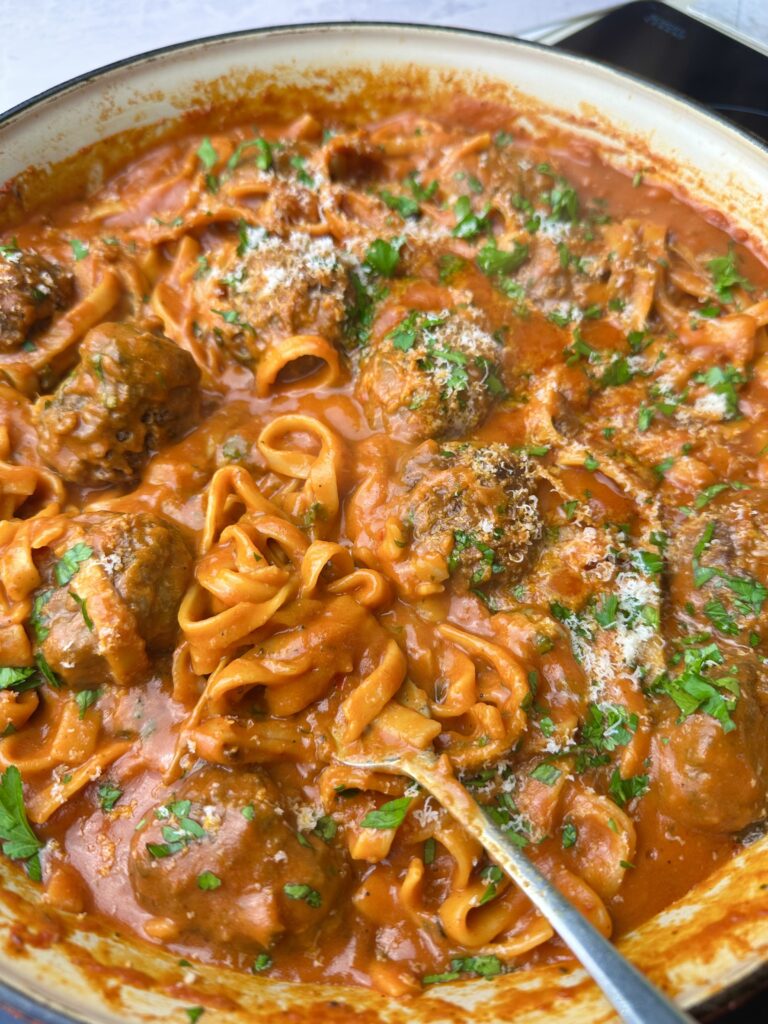
Food tells you quite a lot about how families change.
When I think about my mother's kitchen in Durban in the 1980s, pasta isn't one of the foods that comes immediately to mind. It was simply not something she cooked very often.
What I remember are pots of curry. Dhall. Beans. Vegetables cooked with meat. Rice. Roti. Chutneys. Food that came from the cooking traditions she knew.
My own kitchen looks different.
Those foods are still here. They haven't disappeared. But they've made room for other things.
My children have grown up eating pasta as casually as I grew up eating curry and rice. A bowl of tagliatelle on a weekday evening doesn't feel foreign or unusual to them. It's just dinner.
I think there is something lovely about that.
Food heritage doesn't necessarily mean cooking exactly as the generation before us did. Sometimes it means keeping those dishes alive while allowing new ones to become part of the family table too.
Perhaps one day my children will remember a pot of meatball tagliatelle with the same affection that I remember some of the dishes my mother cooked for me.
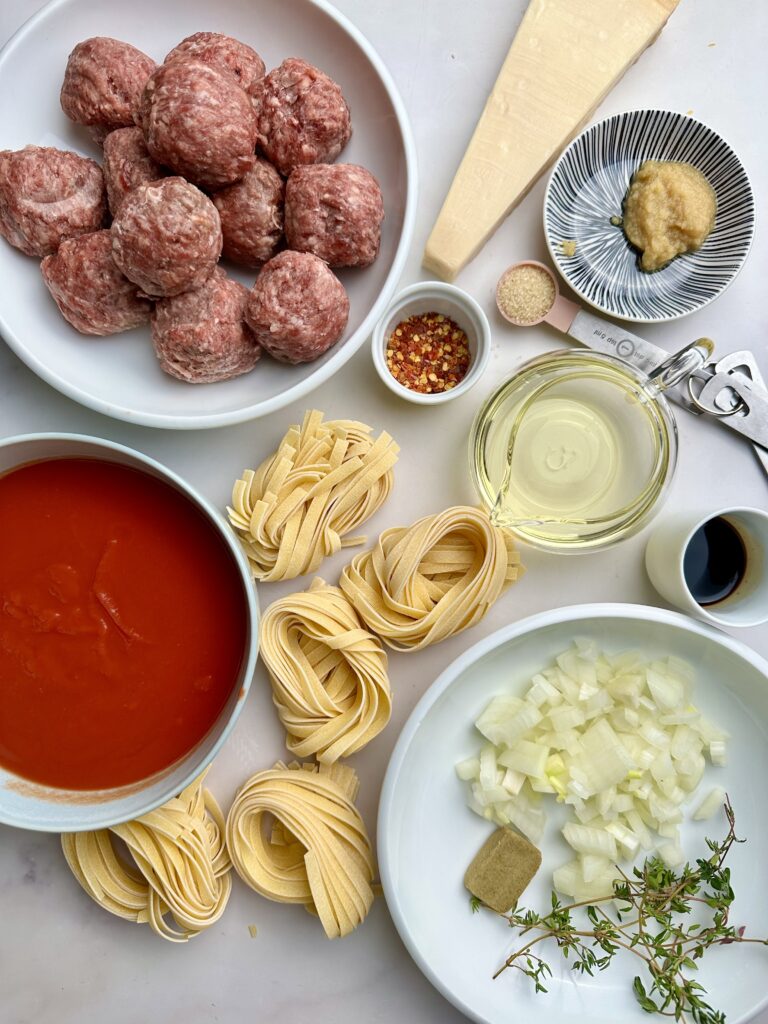
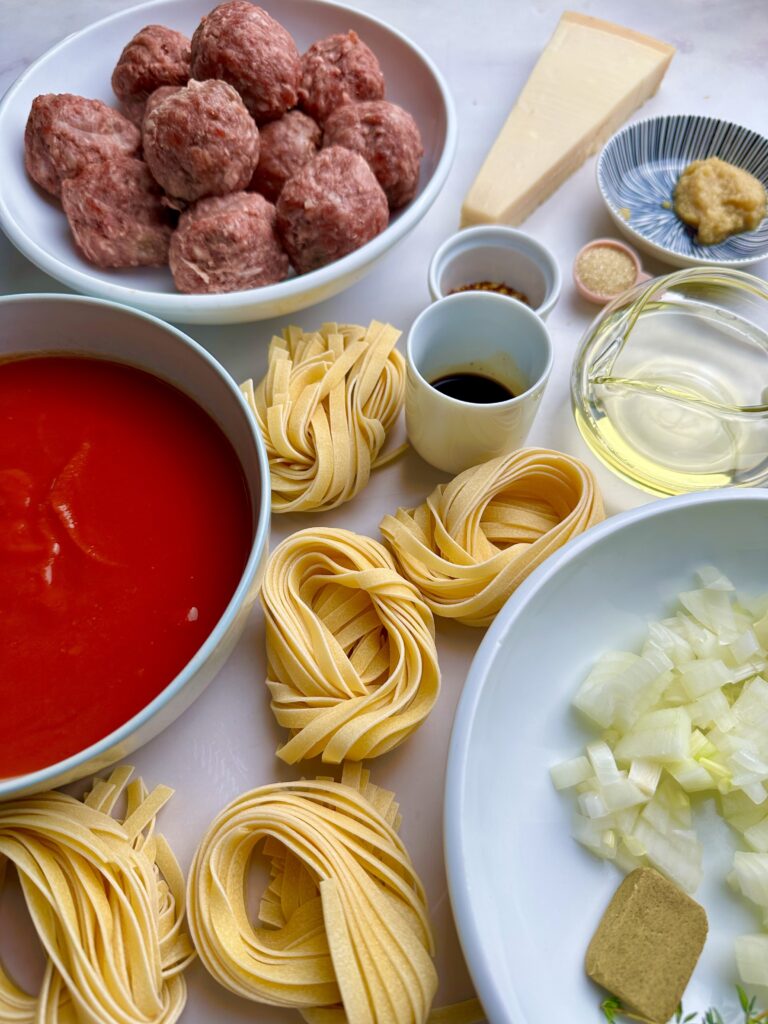
This one pot meatball pasta uses fairly simple ingredients, but each one plays an important role in building the finished dish.
Use good-quality meatballs that you enjoy. Beef meatballs work beautifully here, but lamb or chicken meatballs can also be used. Browning them first gives the finished sauce much more flavour.
I love tagliatelle for this recipe because the broad ribbons hold onto the creamy tomato sauce beautifully. The nests also work especially well in a one-pot pasta because they can soften directly in the sauce before being gently loosened.
Passata gives you a smooth, rich tomato base without needing to blend the sauce. It also cooks down beautifully with the herbs and Worcestershire sauce.
These form the aromatic base of the sauce. The thyme adds a gentle savoury flavour without overpowering the tomato.
This simple combination adds warmth and depth. The chilli flakes are easy to adjust depending on how much heat you enjoy.
Only a small amount is needed, but it adds lovely savoury depth and works particularly well with the meatballs and tomato.
The stock does more than simply loosen the sauce. It provides the liquid needed to cook the tagliatelle directly in the pot while adding flavour at the same time.
The cream goes in right at the end. It softens the acidity of the tomatoes and gives the sauce a smoother, silkier finish without turning this into a heavy cream pasta.
These are the finishing touches. Fresh parsley brings brightness while freshly grated Parmesan adds saltiness and richness.
Don't rush the first step.
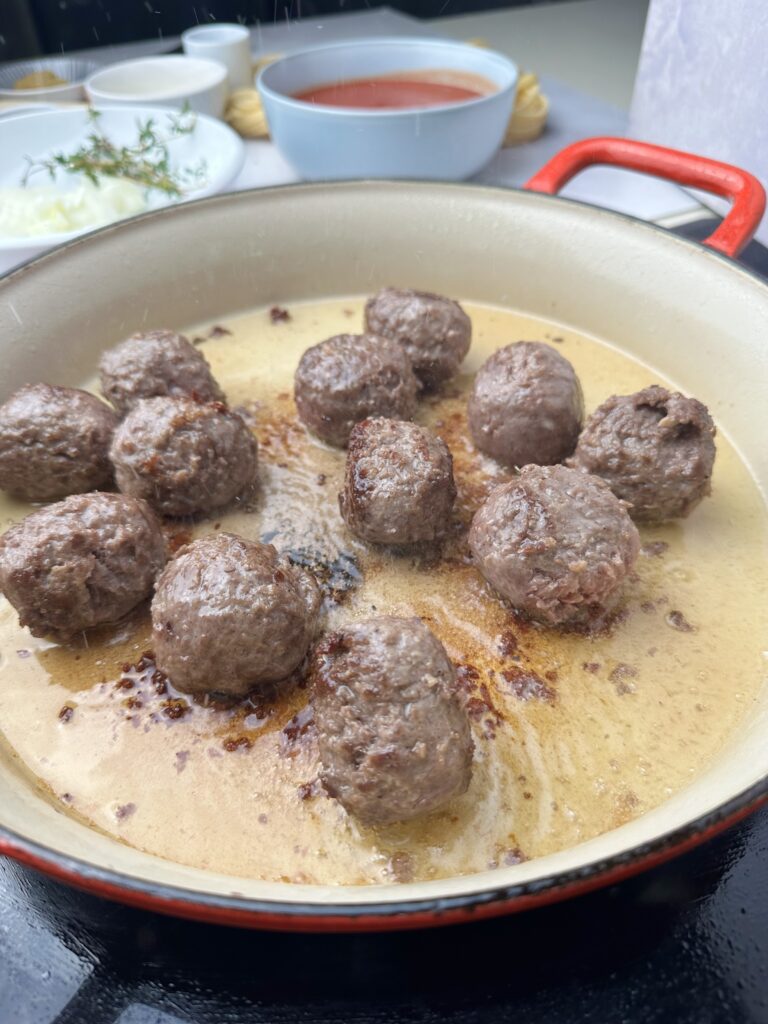
Heat the oil in a large, heavy-based pot over medium heat and brown the meatballs until they develop some colour on the outside.
They don't need to cook completely at this stage. They will finish cooking later when they are returned to the sauce.
What we want here is browning.
As the meatballs brown, little caramelised bits of meat and juices stick to the bottom of the pot. Those brown bits may not look particularly exciting, but don't clean them away.
They're flavour.
Remove the browned meatballs and keep them aside while you start building the sauce in the same pot.
This is one of those small cooking techniques that can make an enormous difference to a simple meal.
The browned bits left behind after searing the meatballs are called fond.
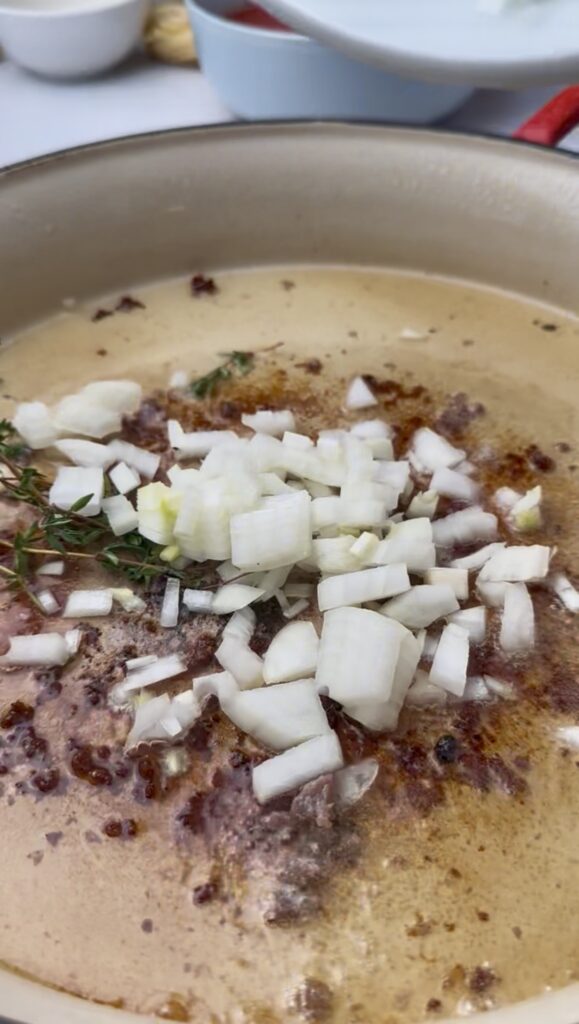
When you add the diced onion and thyme to the same pot, the onion begins releasing moisture as it cooks. Use your wooden spoon to gently scrape the bottom of the pot while the onions soften.
Those caramelised bits gradually lift from the base and become part of the sauce.
It's essentially flavour you've already created, so don't leave it behind.
Allow the onions about 5 minutes to soften and begin caramelising before adding the crushed garlic.
The important thing is brown, not burnt. If the bits on the bottom of your pot are black rather than deep golden brown, they can make the finished sauce bitter.
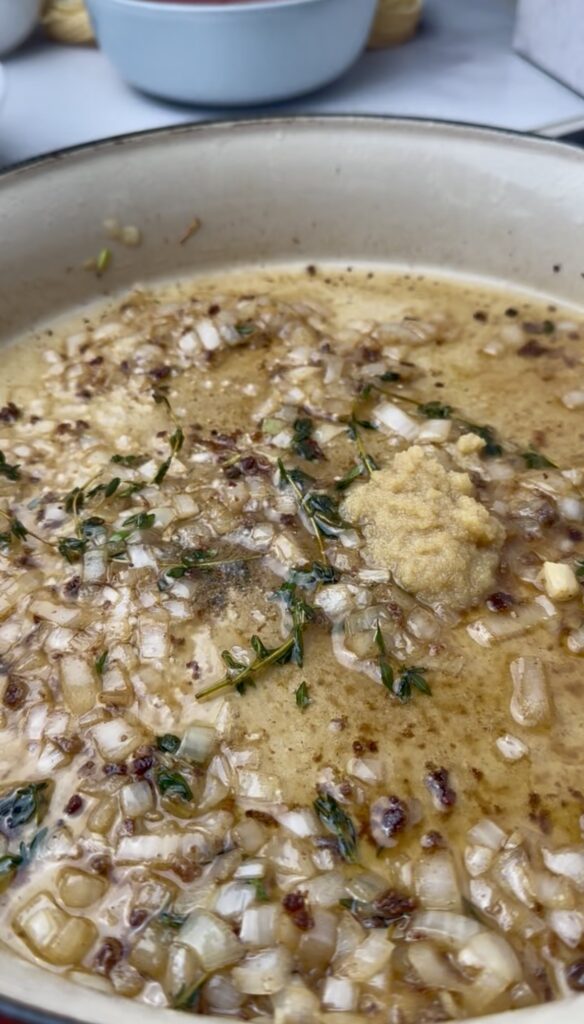
Once the onions have softened, add the crushed garlic and cook briefly.
Garlic doesn't need long. About a minute is enough to release its aroma without allowing it to burn.
Next comes the passata.
I like using passata here because its smooth consistency creates a lovely sauce for the tagliatelle.
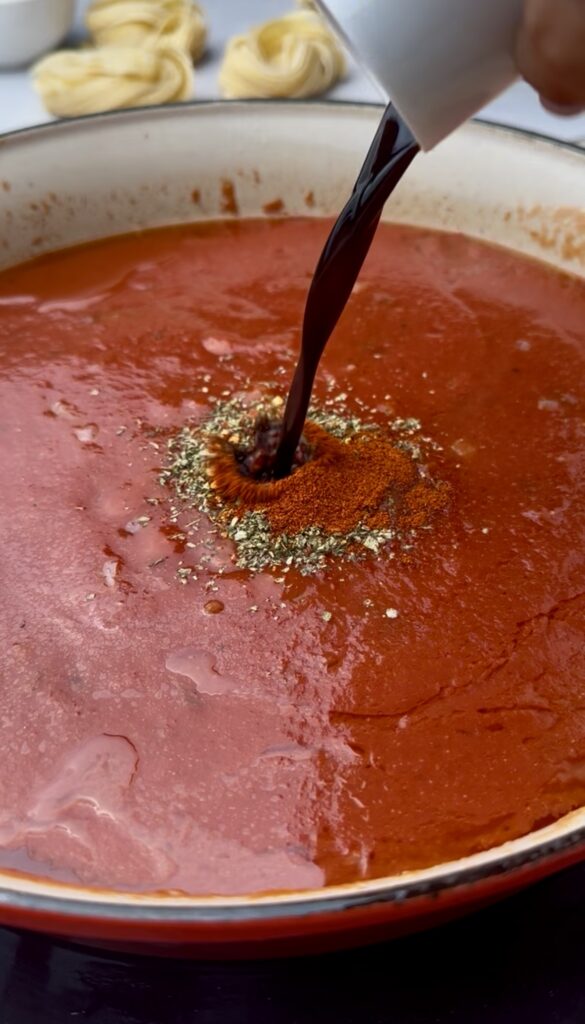
Add the chilli flakes, Italian herbs, paprika, Worcestershire sauce and brown sugar then season with salt and freshly ground black pepper.
The Worcestershire sauce might seem like a small addition, but it brings a lovely savoury depth to the tomato sauce, particularly alongside the meatballs.
The teaspoon of brown sugar isn't there to make the pasta sweet. It simply helps balance the natural acidity of the tomatoes.
Allow the tomato sauce to cook for about 8 to 10 minutes before adding the stock.
This little bit of cooking time matters. It allows the flavours to develop before the pasta goes in.
Heat 1 tablespoon of oil in a large, heavy-based pot over medium heat.
Add the 12 meatballs and fry until lightly browned on the outside.
They do not need to be completely cooked through at this stage because they will finish cooking in the sauce later.
Remove the meatballs from the pot and set aside.
Add the diced onion and fresh thyme to the same pot.
Cook for approximately 5 minutes until the onion has softened and started to caramelise.
As the onion cooks, use a wooden spoon to gently scrape the browned bits from the bottom of the pot.
Don't skip this step. That fond adds wonderful savoury flavour to the finished sauce.
Add the crushed garlic to the onions and mix well.
Cook for approximately 1 minute until fragrant.
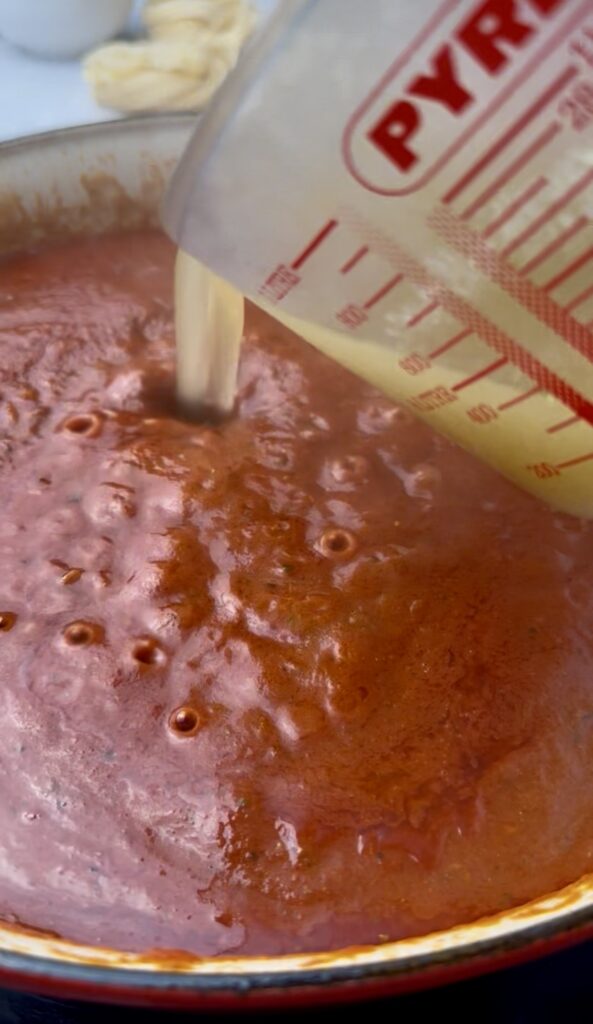
Pour in the passata and stir well.
Add the chilli flakes, Italian herbs, paprika, Worcestershire sauce and brown sugar.
Season with salt and freshly ground black pepper then mix everything together.
Allow the sauce to cook over medium heat for approximately 8 to 10 minutes.
Pour in the chicken stock and stir.
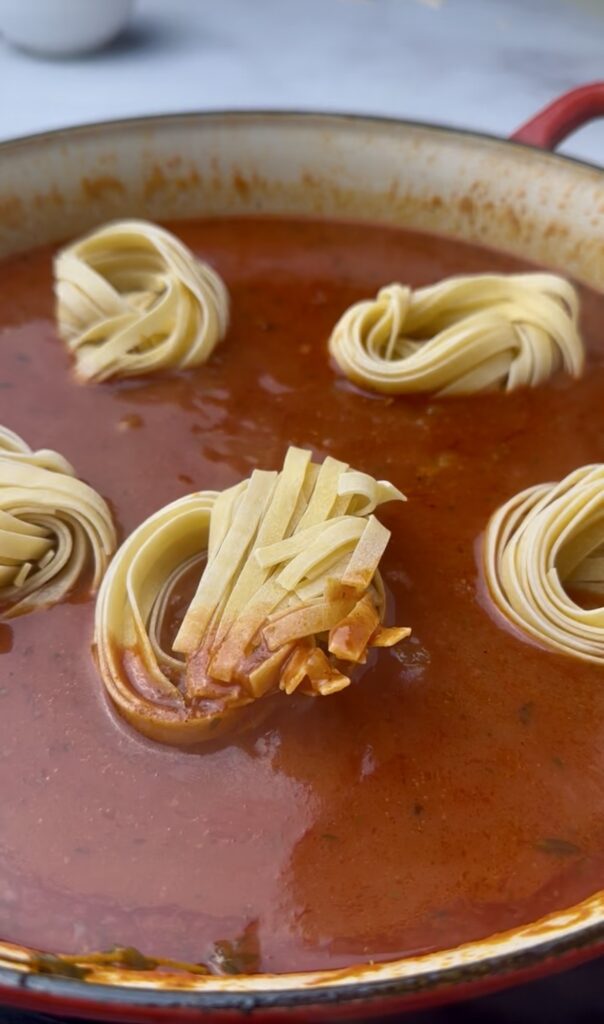
Place the 5 tagliatelle nests directly into the tomato sauce.
Make sure your pot is large enough to comfortably accommodate the pasta. The tagliatelle needs room to loosen and move through the sauce as it cooks.
Allow the nests to cook for about 5 minutes so they begin to soften.
Once the tagliatelle has started softening, use tongs to gently loosen the nests and move the strands through the sauce.
Don't aggressively pull apart dry or partially softened tagliatelle because the ribbons can break.
Give the pasta time to soften first and it will separate much more easily.
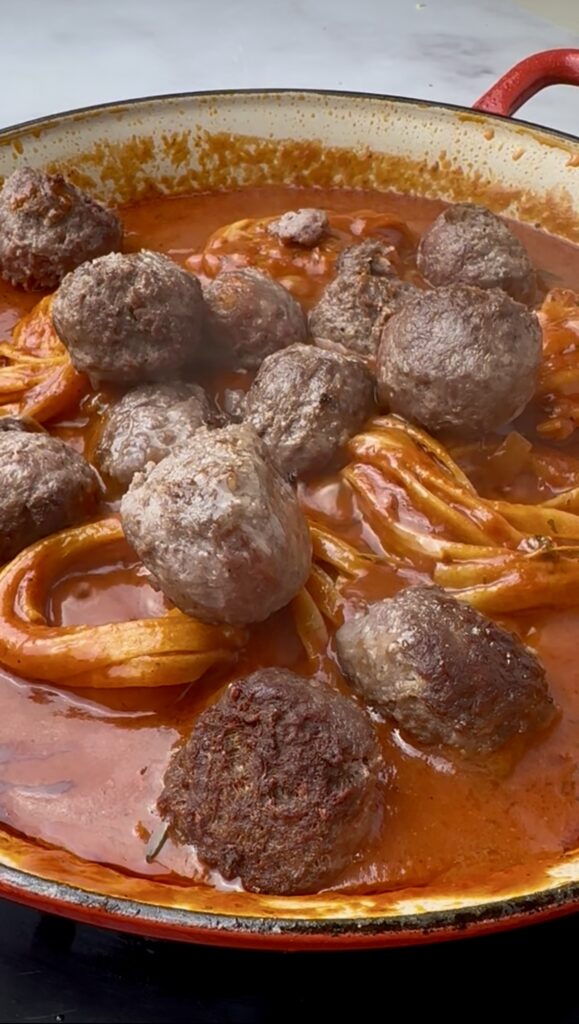
Add the browned meatballs back to the pot.
Gently toss everything together and continue cooking for approximately 8 to 10 minutes, or until the pasta is al dente and the meatballs are completely cooked through.
Keep checking the liquid during this stage.
If the sauce becomes too thick before the tagliatelle is cooked, add a small splash of hot water at a time.
Don't pour in lots of water at once. You can always add more, but you can't easily remove it.
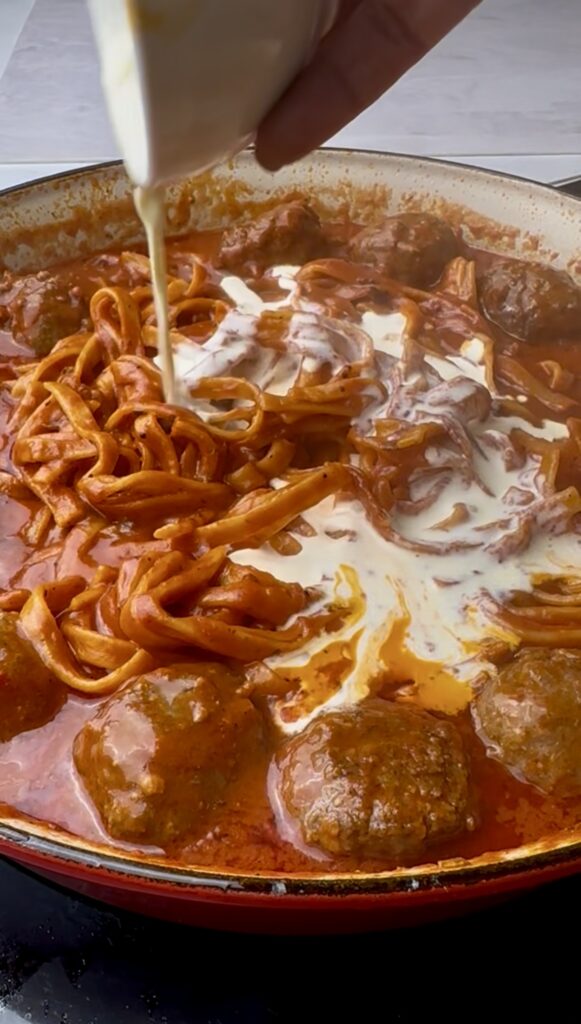
Once the tagliatelle is al dente, lower the heat and add the cream.
Gently toss until the cream is completely incorporated into the tomato sauce.
We're not trying to create a heavy cream sauce. The small amount of cream simply rounds everything off and gives the tomato sauce a softer, silkier finish.
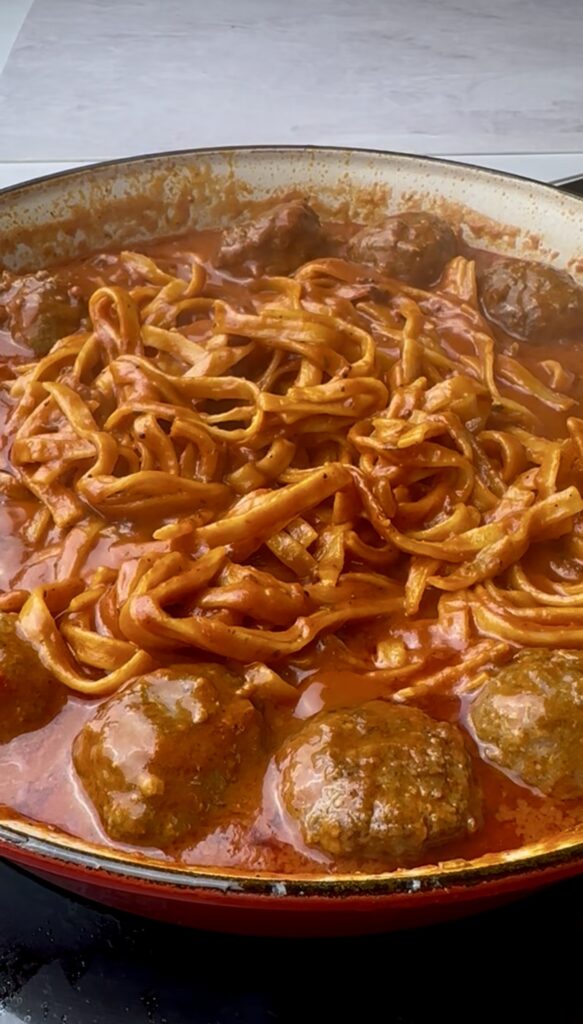
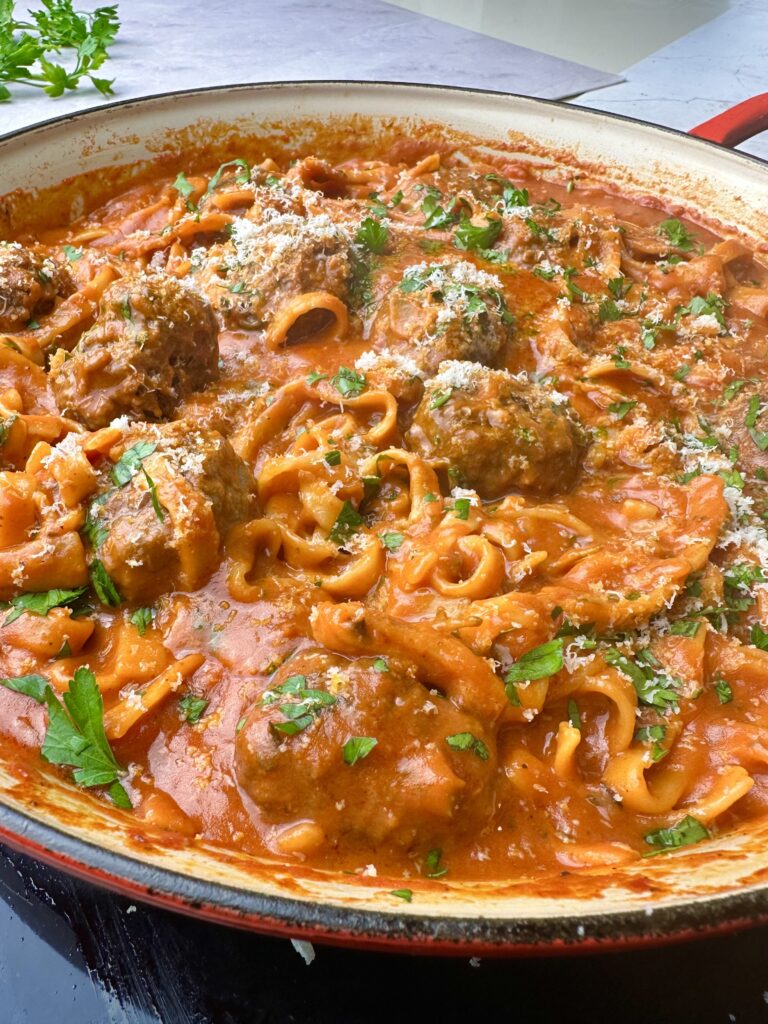
Finish with chopped Italian parsley and plenty of freshly grated Parmesan.
Serve immediately while the tagliatelle is hot, silky and saucy.
This is probably my favourite part of this one pot meatball pasta.
Normally pasta is cooked in a large pot of salted water and drained before being added to its sauce.
Here we're doing things differently.
The tagliatelle cooks in a combination of tomato sauce and chicken stock. As the pasta hydrates, it absorbs some of that flavour while simultaneously releasing starch.
That starch helps the sauce thicken and cling beautifully to the pasta.
It also explains why you need to watch the pot towards the end of cooking. The sauce will become noticeably thicker as the tagliatelle absorbs the liquid.
This is important.
Five tagliatelle nests don't look like much when they're dry, but once they soften and unravel they need considerably more room.
A wide, heavy-based pot is ideal because it allows you to gently toss the pasta without everything becoming cramped.
The purpose of the first fry is to develop colour and flavour.
The meatballs return to the sauce later and finish cooking there, which also allows them to flavour the sauce.
If you've browned your meatballs properly, there should be some caramelisation on the bottom of the pot.
Use it.
The onions help lift the fond and all that flavour ends up back in your dinner rather than being scrubbed off later.
It can be tempting to add extra stock because the tagliatelle initially looks as though it needs more liquid.
Wait.
The pasta softens and settles into the sauce surprisingly quickly. Add additional water only when necessary and in small amounts.
The difference between beautifully al dente tagliatelle and overcooked pasta can be just a few minutes.
Start checking the pasta before you think it's ready.
Cream doesn't need prolonged cooking here.
Add it once the pasta is al dente and gently toss it through. This gives you a lovely creamy finish without losing the tomato flavour.
This is especially important with one-pot pasta.
The tagliatelle will continue absorbing liquid while it sits. Straight from the pot, the sauce is loose, glossy and silky. Leave it standing for too long and it will continue to thicken.
Get everyone to the table before you finish it!
Absolutely.
Beef meatballs work beautifully, but you could also use lamb, chicken or your preferred meatballs.
The important thing to remember is that meatballs vary in size.
If you're using particularly large meatballs, they may need a little longer to cook through. Smaller meatballs will naturally cook more quickly.
Always make sure your meatballs are completely cooked before serving.
Yes, although cooking times and the amount of liquid required may change.
Fettuccine would be the closest substitute for tagliatelle. Other pasta shapes can work too, but I particularly like tagliatelle here because those broad ribbons carry the thick tomato and cream sauce beautifully.
Different pasta brands and shapes absorb different amounts of liquid, so use the recipe as your guide and keep checking as it cooks.
Whatever pasta you use, let the pasta tell you when it's ready rather than relying only on the clock.
Add a small splash of hot water or stock and gently toss everything together.
Do this gradually.
Remember that the cream is still going in at the end, so you don't want the tomato sauce swimming in liquid beforehand.
If you've accidentally added too much liquid, leave the pot uncovered and allow the sauce to simmer gently so some of the excess liquid can reduce.
This really is a complete one-pot meal, so it doesn't need much.
A simple green salad is plenty if you'd like something fresh alongside it.
Garlic bread is also perfect for scooping up any creamy tomato sauce left behind on the plate.
And if it's one of those days, add the garlic bread and call dinner done.
Yes. The important thing is having enough liquid for the pasta to absorb as it cooks. In this recipe, the passata and chicken stock provide the cooking liquid. Keep checking the pasta and add a small amount of hot water if it needs more before becoming al dente.
No. I brown the meatballs first for colour and flavour then remove them from the pot. They are returned later and finish cooking in the tomato sauce. Make sure they are completely cooked before serving.
Different pasta brands can absorb different amounts of liquid. Your cooking temperature and the size of your pot also affect evaporation. Simply add a small splash of hot water or stock at a time until the pasta is cooked and the sauce reaches the consistency you want.
If the pasta is already cooked but you still have too much liquid, leave the pot uncovered and allow the sauce to reduce gently. Remember that the sauce will also continue thickening slightly as it stands.
Yes. The cream gives the tomato sauce a softer, silkier finish, but the pasta can still be made without it.
You can, but I think this recipe is at its best served immediately. The tagliatelle continues absorbing the sauce as it stands, so freshly cooked pasta will have the best texture.
Absolutely. Reduce the chilli flakes or leave them out completely if you're cooking for someone who prefers a milder pasta.
This One Pot Meatball Pasta with Tagliatelle is everything I want from an easy family dinner. It is comforting, saucy and full of flavour without leaving a sink full of pots behind afterwards.
But I think what I love about it goes a little further than that.
It is also a reminder of how our family tables evolve.
The Durban Indian kitchen I grew up in during the 1980s looked very different from my kitchen today. Pasta hardly featured on our table. The curries, dhalls, rice, roti and vegetable dishes I remember from my mother's kitchen are still very much part of the way I cook, but my own family's food story has grown around them.
There is room now for both.
There is room for the food we inherited and the food we discovered for ourselves.
And perhaps one day my children will remember a pot of meatball tagliatelle with the same affection that I remember some of the dishes my mother cooked for me.
I rather like the thought of that.
Other recipes to try.
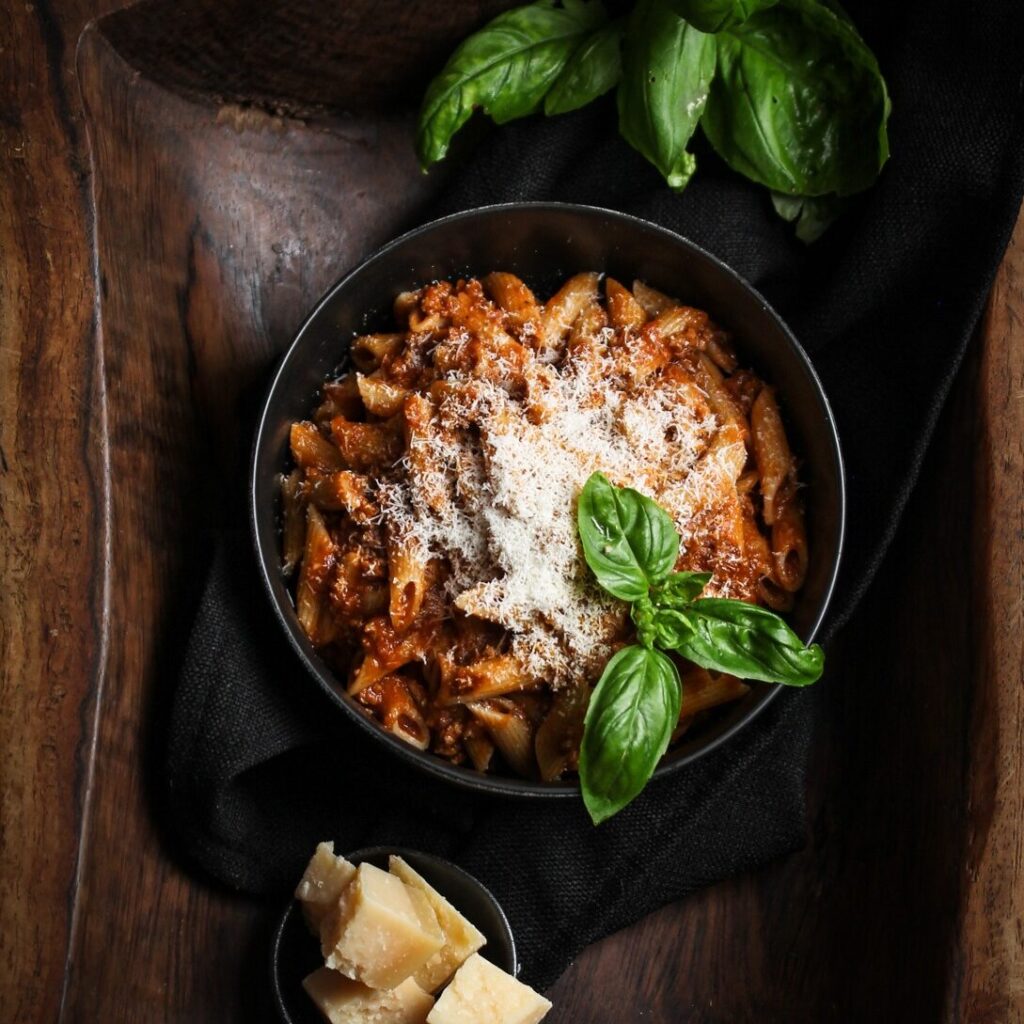
This easy One Pot Meatball Pasta with Tagliatelle combines browned meatballs, passata, herbs and tagliatelle in one pot. The pasta cooks directly in the tomato sauce and stock before a splash of cream, fresh parsley and Parmesan finish the dish.
Use a large, preferably wide, heavy-based pot because the tagliatelle needs room to loosen as it cooks.
Do not cook the meatballs completely during the first fry. Browning develops flavour and they will finish cooking when returned to the sauce.
Do not discard or clean away the browned bits left by the meatballs. This is the fond and it adds wonderful flavour to the sauce.
Different brands of tagliatelle absorb different amounts of liquid. Add a small splash of hot water only if needed.
Allow the tagliatelle nests to soften before gently separating them with tongs. Trying to pull them apart too soon can break the pasta.
Add the cream only once the pasta is al dente.
Serve immediately because the tagliatelle will continue absorbing the sauce as it stands.
Adjust the chilli flakes according to your preferred heat level.


