
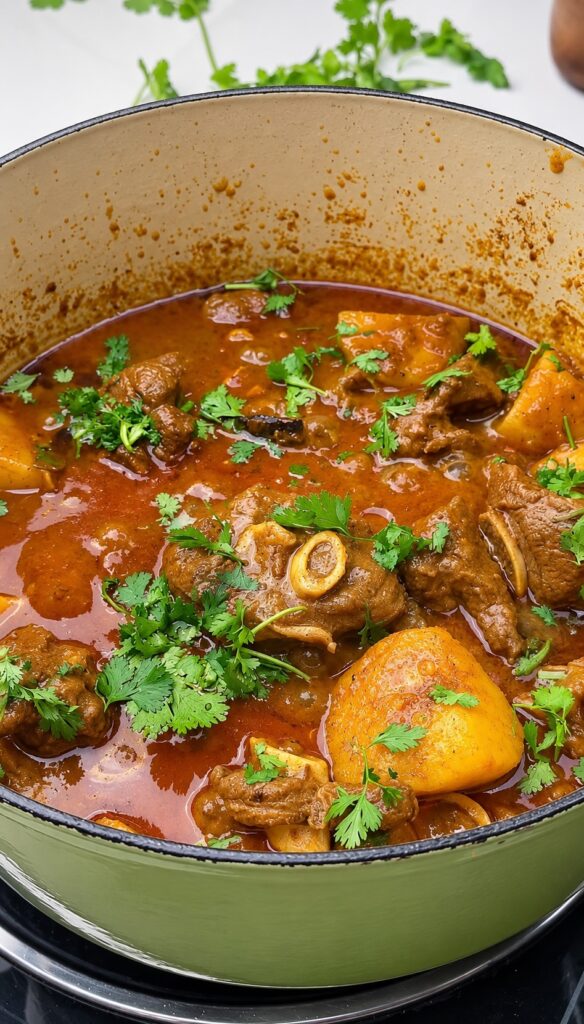
If there is one curry I think every Durban Indian cook learns to recognise by sight, smell and instinct, it is a good Durban mutton curry.
And before anybody comes for me in the comments, yes, in South Africa we often call this mutton curry even when we are actually cooking lamb.
It is simply how many of us grew up referring to it.
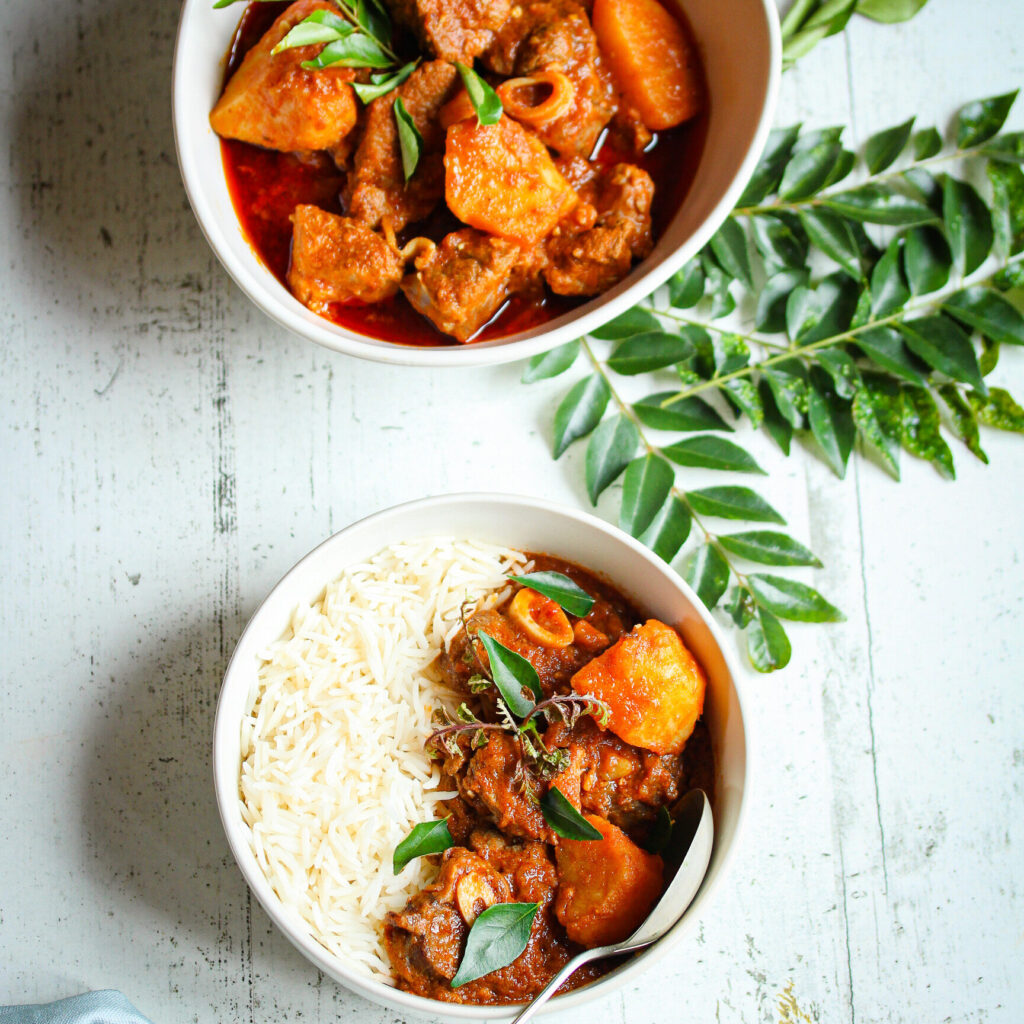
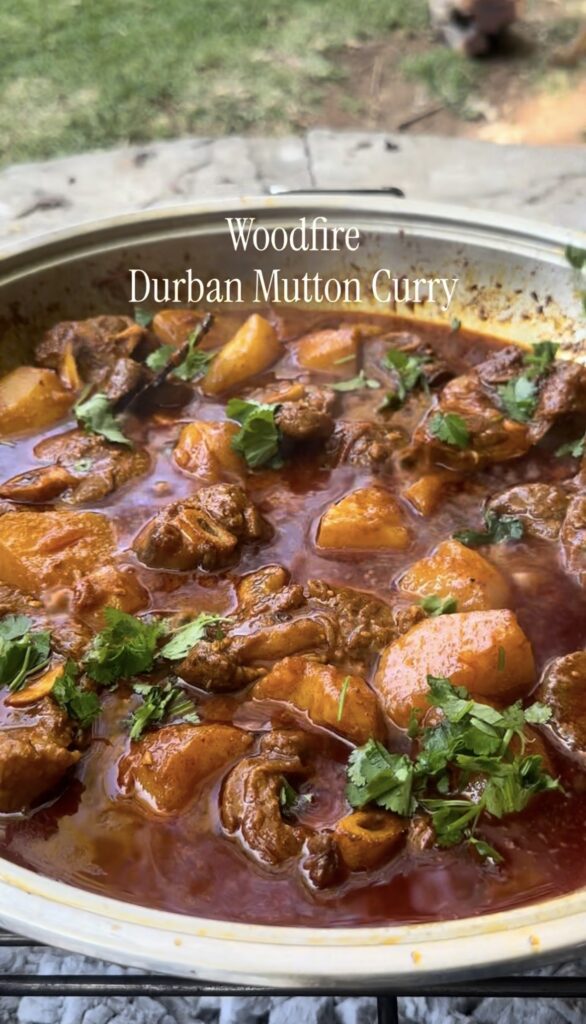
A proper Durban mutton curry should have tender meat, soft potatoes and a rich masala gravy that has had enough time to develop properly.
Not watery.
Not a pot of meat with raw-tasting curry powder floating around it.
And definitely not something where all the ingredients are thrown into the pot at once.
The flavour is built in stages.
That is what this recipe is really about.
The whole spices flavour the oil. The onions are allowed to colour. The ginger and garlic cook out. The masala is gently fried without burning. The tomato paste cooks into that base. Then the meat goes in and is allowed to release its own juices before we start adding lots of water.
It takes a little patience, but once you understand those stages, you can use the same principles across so many Durban curries.
Durban curry developed within South Africa's Indian community and is known for its bold spice, chilli heat, curry leaves, potatoes and deeply flavoured gravy.
There is no single recipe used by every Durban Indian family.
Some use fresh tomatoes.
Some use tomato paste.
Some use more whole spices than others.
Some curries are fiery red while others are darker and more deeply braised.
And everybody seems to have an opinion about how much masala is enough. 😂
What they generally share is the idea of building the curry base properly before expecting the meat and potatoes to do the rest of the work.
This is where the terminology can confuse people outside South Africa.
Technically:
Lamb comes from a younger sheep and is generally more tender.
Mutton comes from an older sheep and usually has a stronger flavour and needs longer cooking.
But in many South African Indian homes, particularly in Durban, mutton curry is the familiar name for this style of curry even when lamb is the meat being used.
You will even see South African recipes described as both “Durban mutton curry” and “Durban lamb curry”.
I usually use lamb because it is what is readily available to us and it becomes beautifully tender in this curry.
If you are using actual mutton, expect it to need longer cooking.
People sometimes think the secret to a good curry is simply using more spice.
It isn't.
You can put half the spice cupboard into a pot and still end up with a flat curry if you have not cooked those ingredients properly.
A good curry is built.
For this one, the order matters:
Once you understand that sequence, Durban curry starts making much more sense.
I begin with oil and a combination of:
The hot oil helps release the flavour from the whole spices before anything else goes into the pot.
You only need a short time here.
You are not trying to burn or deeply toast them.
As soon as they become fragrant, the onions can go in.
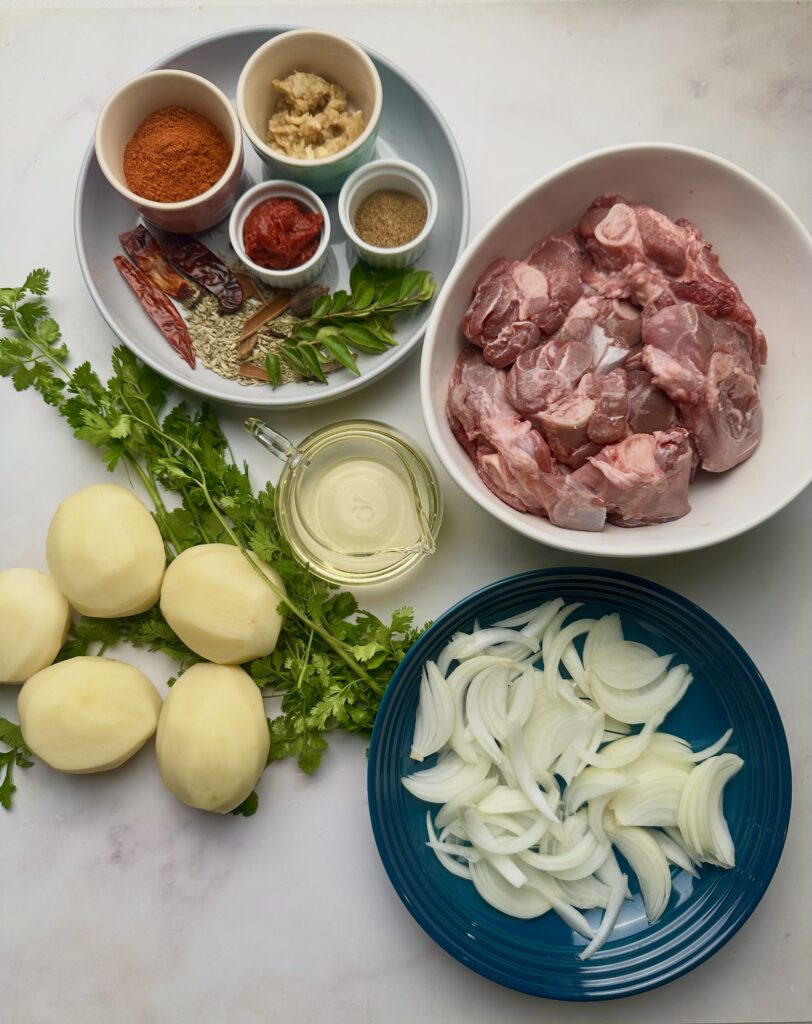
Fennel seeds, or soomph, have a slightly sweet, aromatic flavour that works beautifully with rich meats like lamb.
It is one of those background flavours you may not immediately identify in the finished curry, but you notice when it is missing.
The same applies to black cardamom.
Black elachi is much smokier and stronger than green cardamom, so one pod is usually enough to give the curry depth without overpowering it.
This is one of the most important parts of the recipe.
The sliced onion needs time to soften and become properly golden.
You are building sweetness and depth here.
Pale, barely cooked onions will not give you the same curry.
I cook the onions with the whole spices and curry leaves until they take on good colour before adding the salt and crushed ginger and garlic.
You don't need them burnt or deeply caramelised.
You want them golden, soft and beginning to break down into the base of the curry.
Once the onions are ready, add the crushed ginger and garlic.
Cook it for about a minute.
That short cooking time removes the raw edge without allowing the garlic to burn.
Burnt garlic can make the entire curry bitter, so keep an eye on your heat.
This is probably one of the most useful things I can teach somebody learning to make Durban curry.
Masala burns easily.
Once you add your masala, coriander powder, paprika and cumin, lower the heat.
Add a small splash of water and mix everything through the onions.
That little bit of water buys you time.
It allows the spices to cook and release their flavour without catching immediately on the bottom of the pot.
What you do not want is dry curry powder sitting in screaming-hot oil until it turns dark and bitter.
Cook it gently.
Add another dash of water if necessary.
This stage only takes a few minutes, but it makes a huge difference.
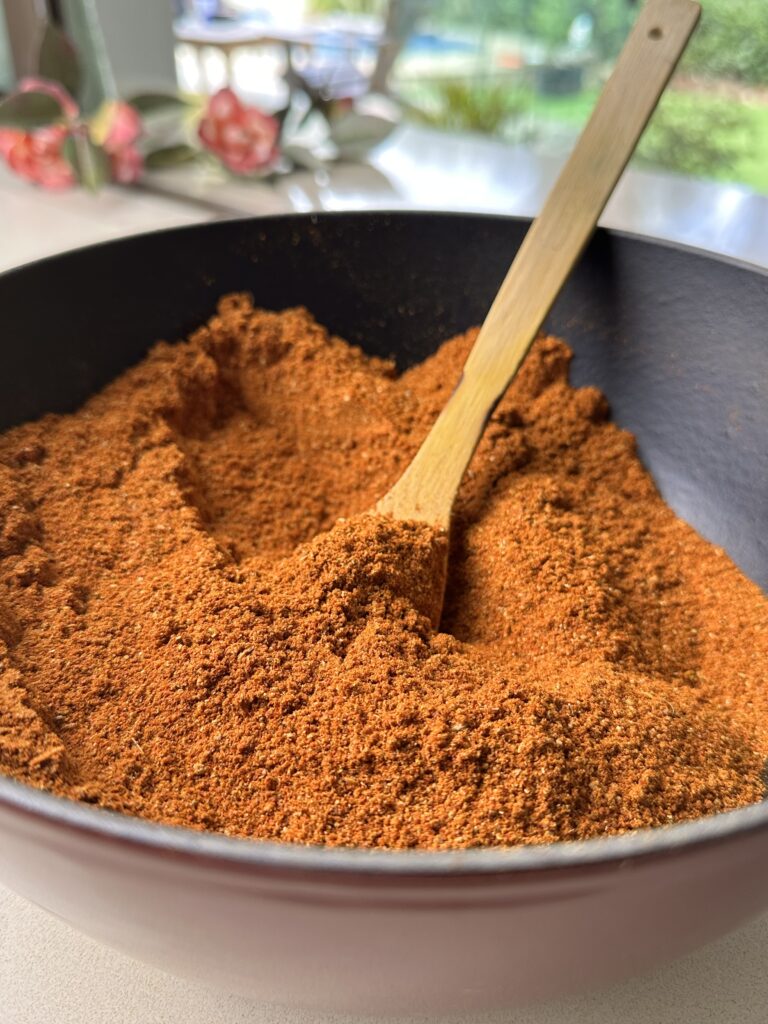
For this curry, I use around 3 to 4 tablespoons of masala.
You can use more if you like a very hot curry.
But remember that masalas vary.
Some blends are much hotter than others.
If you're using my homemade Durban Curry Powder, you already know the strength of your blend and can adjust accordingly.
If you're using a different masala for the first time, start slightly more cautiously.
You can always increase the heat in your next curry.
You cannot remove four tablespoons of very hot masala once it is in the pot. 😂
I use around 2 tablespoons of tomato paste in this curry rather than a large quantity of fresh tomato.
The tomato paste gives the curry concentrated tomato flavour without adding too much liquid.
But it still needs to be cooked.
Once the spices have had a chance to fry gently, add the tomato paste and mix it thoroughly into the onion and masala.
Let it cook for a few minutes.
If it starts catching, add another small dash of water.
You want the tomato paste to become part of the masala base rather than tasting like tomato paste was added at the end.
This is another important step.
Once your curry base is ready, add the meat.
Mix it thoroughly so every piece is coated in the masala.
Then leave it to cook.
The meat will begin releasing its own moisture.
That liquid combines with the onions, spices and tomato paste and creates the beginnings of your gravy.
This is why I don't immediately pour cups of water into the pot.
Let the meat give you something first.
If the curry starts sticking badly, add a little water.
But add only what you need.
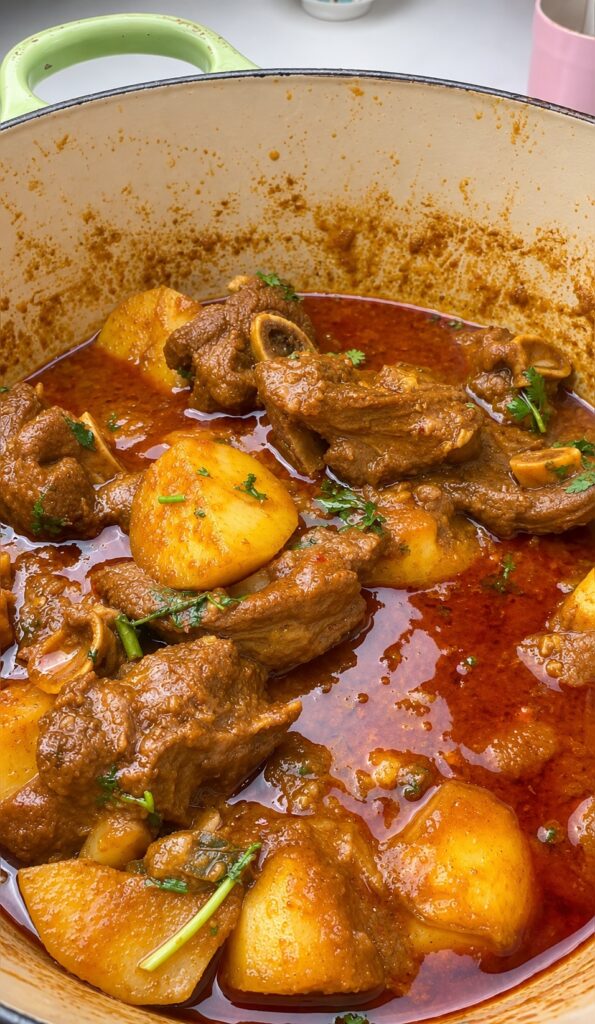
I generally let the meat cook for around 40 to 50 minutes, sometimes longer.
This is where recipes can only give you a guide.
Your cooking time will depend on:
At higher altitude, meat and potatoes can take longer to soften.
So do not stare at the clock and decide the curry must be ready because 45 minutes have passed.
Look at the meat.
Taste it.
Feel it.
When it is starting to soften, then add the potatoes.
Potatoes are essential in a good Durban mutton curry for me.
But they do not need the same cooking time as the lamb.
If you add them too early, you can end up with completely broken-down potatoes while the meat is still tough.
So I give the meat a head start.
Once it is beginning to soften, I add the cubed potatoes and toss them through the masala.
Then the water goes in.
The potatoes cook in the curry gravy and absorb all that flavour.
And that is why curry potatoes taste completely different from potatoes cooked separately and added later.
There is no magic number because every pot behaves differently.
The important thing is to add enough water to cook the meat and potatoes without drowning the curry.
Start conservatively.
You can always add more hot water.
What you want at the end is a rich gravy that coats the lamb and potatoes.
Not soup.
If the curry has too much liquid once everything is tender, remove the lid and let it simmer until the gravy reduces.
Place a large heavy-based pot over medium to medium-high heat.
Add enough oil to comfortably cover the base of the pot.
Add the fennel seeds, black elachi, dried red chillies, cloves, cinnamon sticks and one sprig of curry leaves.
Allow them to cook briefly until fragrant.
Add the sliced onion.
Cook until soft and golden.
Do not rush this stage because the onions form an important part of the curry base.
Add coarse salt to taste followed by the crushed ginger and garlic.
Cook for approximately 1 minute.
Lower the heat.
Add the masala, coriander powder, paprika and cumin powder.
Add a small splash of water immediately and mix well.
Cook gently for a few minutes, adding another dash of water if necessary to prevent the spices from burning.
Add the tomato paste.
Mix it thoroughly into the onions and spices.
Cook for another few minutes, adding a little water if needed.
You should now have a thick, fragrant masala base.
Add the lamb pieces.
Mix really well so the meat is completely coated in the masala.
Cover and allow the meat to cook in its own juices.
Stir occasionally.
If it begins catching on the bottom of the pot, add a small amount of hot water.
Allow the meat to cook for approximately 40 to 50 minutes, or longer if necessary.
The exact time will depend on your meat.
Do not add the potatoes until the lamb has started becoming tender.
Add the cubed potatoes and toss them gently through the lamb and masala.
Add enough hot water to create the amount of gravy you need.
Add another sprig of curry leaves, a little more cumin powder and some chopped dhania.
Cover and continue cooking until both the potatoes and lamb are tender.
Taste and adjust the salt.
If the gravy is too thin, simmer uncovered for a few minutes.
Finish with garam masala and plenty of freshly chopped dhania.
Allow the curry to stand for a few minutes before serving.
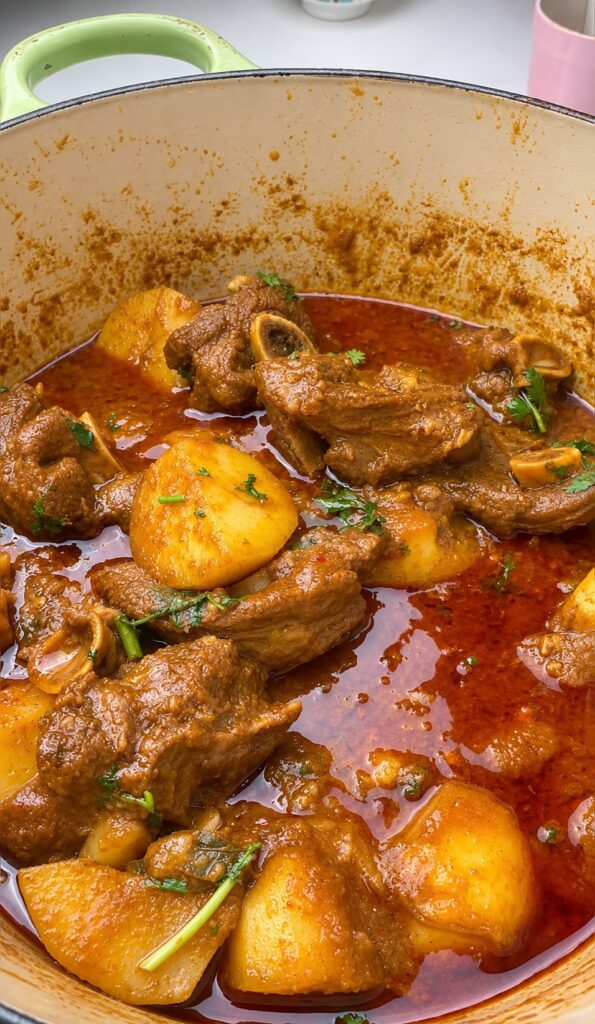
For me, it should be rich and thick enough to cling to the meat and potatoes while still giving you enough gravy for rice or bread.
A bunny chow needs gravy.
Rice needs gravy.
Roti definitely appreciates gravy. 😂
But there is a difference between gravy and water.
If you can see a thin layer of watery liquid separated from the masala, the curry probably needs more time.
Let it simmer.
As the potatoes cook, some starch also helps naturally thicken the gravy.
You start recognising this with experience.
The raw smell of curry powder disappears.
The spices smell deeper and more rounded.
The oil may begin separating slightly from the cooked masala.
And the onion, tomato and spice mixture starts looking like one cohesive base rather than separate ingredients.
That is what you are looking for.
This is also why I always say curry is something you learn with all your senses.
You look.
You smell.
You taste.
Eventually you stop relying entirely on minutes.
The usual culprit is burnt spice.
Masala, chilli powder and ground spices can burn very quickly.
That is why I lower the heat and use a little water when cooking the spices.
Burnt garlic can also make curry bitter.
Keep your heat controlled through those stages.
Hotter is not always better.
Usually because too much water was added too quickly.
Take the lid off and simmer the curry gently.
Give the gravy time to reduce.
Also remember that potatoes help thicken curry as they cook, so the gravy may look slightly loose when they first go in but thicken later.
Next time, add the water gradually.
You can always add.
You cannot easily take it back out.
It probably needs more time.
Different cuts cook at different rates.
Lamb shoulder, neck and other curry cuts with connective tissue benefit from slower cooking.
Do not add even more water and turn the heat up aggressively.
Keep it simmering gently and give the meat time.
If you're using actual mutton rather than lamb, expect an even longer cooking time.
Choose potatoes that will soften beautifully while still holding their shape reasonably well.
Cut them into fairly substantial pieces.
If the cubes are too small, they can completely disappear into the curry by the time the meat is ready.
And although one or two slightly broken potatoes help thicken the gravy, I still want to find potatoes in my curry. 😂
Absolutely.
In fact, curry is often even better the next day.
Once it cools and sits, all those flavours have more time to settle.
Reheat gently, adding a small amount of water only if the gravy has become too thick.
This curry works with:
And of course...
Bunny chow.
A good mutton curry makes an excellent bunny chow.
For a bunny, I prefer the curry with a generous amount of rich gravy.
The bread needs something to absorb.
But again, rich gravy.
Not curry-flavoured water.
Spoon the curry into the hollowed bread, making sure you get lamb, potatoes and plenty of gravy.
Then use the piece of bread you removed from the centre to start scooping.
No fancy cutlery required.
Yes.
Use less masala or choose a milder blend.
The important thing to understand is that reducing chilli should not mean reducing all the flavour.
You can still keep the fennel, cinnamon, cloves, black cardamom, curry leaves, coriander and cumin.
Heat and flavour are not the same thing.
Yes.
Every family has its own way of making curry.
You can use chopped or blended fresh tomatoes instead of tomato paste.
Just allow them enough time to cook down properly before adding the meat.
I use tomato paste in this version because I like the concentrated flavour and the control it gives me over the amount of liquid in the curry.
Garam masala is not doing the same job as your curry masala.
I use my curry masala earlier because it needs time to cook.
The garam masala goes in towards the end.
Think of it as a finishing spice.
It gives you another layer of aroma just before serving.
Then the fresh dhania goes over everything.
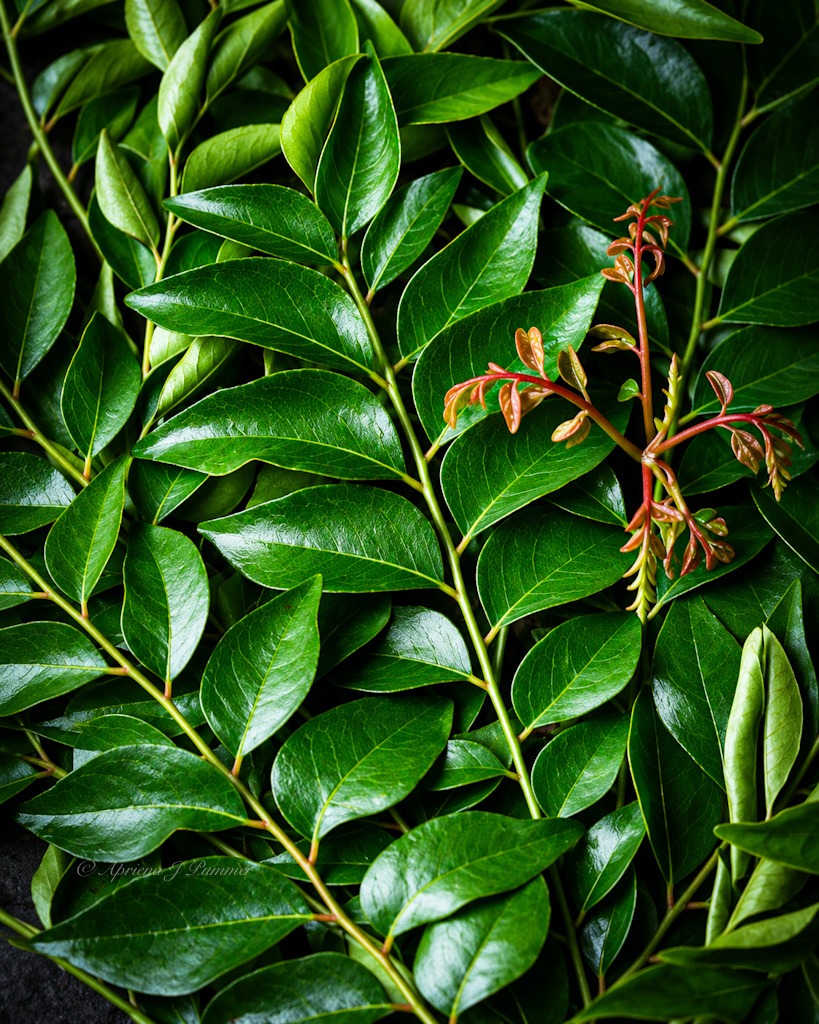
I use curry leaves at more than one stage.
Some go into the oil with the whole spices at the beginning.
Then I add another few later with the potatoes and gravy.
That keeps that distinctive curry leaf aroma present through the dish instead of disappearing completely during the long cooking time.
If there is one thing I want somebody learning from this recipe to take away, it is this:
Build your flavour before you build your gravy.
Let the whole spices flavour the oil.
Let the onions become golden.
Cook the ginger and garlic.
Cook the masala gently.
Cook the tomato paste.
Let the lamb release its juices.
Then add the water and potatoes.
Those first stages are what determine what your curry tastes like at the end.
A Durban mutton curry does not need to be complicated.
But it does need a little patience.
And once you understand how to build that base, you are no longer simply following a recipe.
You are learning how to cook curry.
Life is too short to eat bland food.


We love hearing from you, let us know which is your favourite curry.
Happy cooking
Pri
A rich, spicy and authentic Durban Mutton curry, slow cooked the South African way. Perfect with rice, roti or a bunny chow.
LAMB OR MUTTON:
In many South African Indian homes, this is called mutton curry even when lamb is used. I used 1 kg lamb for this recipe.
MASALA:
I use 3–4 tablespoons Durban masala. Adjust according to the heat and strength of your spice blend.
ONIONS:
Do not rush the onions. Cooking them until properly golden helps build sweetness and depth in the curry base.
GROUND SPICES:
Lower the heat before adding the masala and ground spices. Add a small splash of water to prevent the spices from burning.
TOMATO PASTE:
Cook the tomato paste into the masala for a few minutes before adding the meat.
MEAT:
Allow the lamb to release its own juices before adding lots of water. This helps build a richer gravy.
COOKING TIME:
Cooking time will vary depending on the cut and tenderness of the meat, the size of the pieces, your pot and your altitude.
POTATOES:
Add the potatoes only once the lamb has started to soften so they do not break down before the meat is tender.
WATER:
Add water gradually. You can always add more, but too much water can leave the curry thin and watery.
GRAVY:
The finished gravy should be rich and thick enough to coat the meat and potatoes while still giving you enough sauce for rice, roti or bunny chow.
GARAM MASALA:
Add garam masala at the end as a finishing spice rather than cooking it for a long time.
SERVING:
Serve with rice, roti, naan, fresh bread or brown bread. It is also excellent for bunny chow.


