


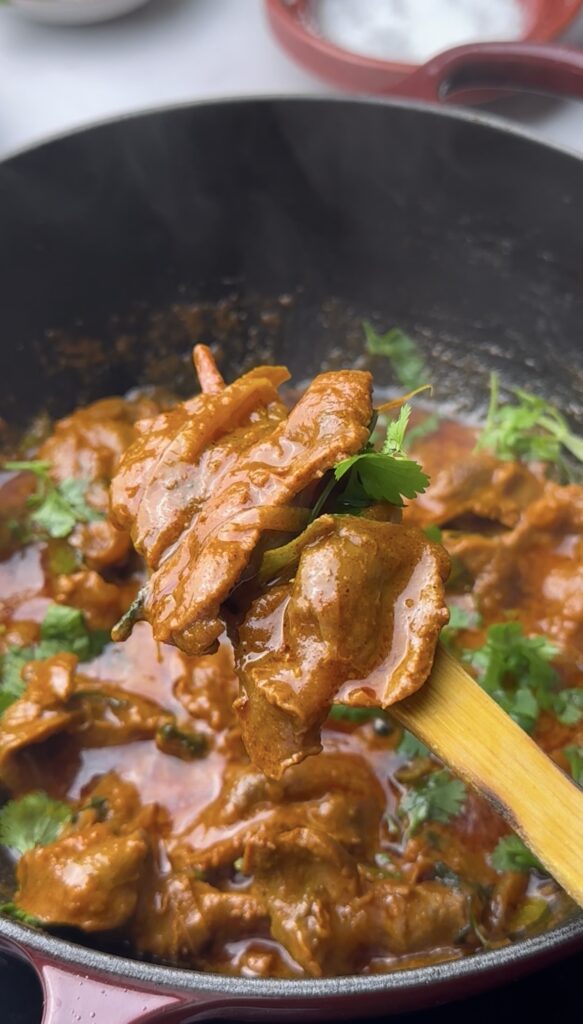
There is something especially comforting about a pot of dhal gosht bubbling away on the stove. It is rich, hearty, deeply satisfying and one of those dishes that feels like real home food. Usually, dhal gosht is made with lamb or mutton, but this is a chicken dhal gosht and that is exactly what makes it so special.
This is not the most traditional version, but it is a recipe with a story and those are often the best ones.
Back in the day, when my cousin and I were just starting out in the working world, living away from home and earning starter salaries, we did not always have the money for lamb or mutton. But we were craving dhal gosht so badly that we made our own version with what we had, chicken. What started out as a practical substitute quickly became a favourite of ours. And that is the beauty of home cooking sometimes. It is not always about following the strictest traditional route. Sometimes it is about making something comforting, delicious and full of feeling with what you have.
This chicken dhal gosht has all the warmth and heartiness you want from the dish, soft lentils, fragrant spices, tender chicken and a final vaghar poured over the top that takes the whole pot to another level.
Why You’ll Love This Chicken Dhal Gosht
- It is hearty and comforting – the dhal gives the dish body and richness while the chicken keeps it practical and easy to make.
- It is full of home-style flavour – fragrant spices, Durban curry powder, tomatoes and curry leaves create a deeply satisfying curry.
- It is a more affordable take on dhal gosht – perfect when you want those familiar flavours without using lamb or mutton.
- The dhal cooks into the curry itself – which gives the finished dish even more depth and flavour.
- The vaghar finishes it beautifully – adding aroma, warmth and a final burst of flavour.
The Story Behind This Chicken Dhal Gosht
This dish has real meaning for me. It takes me back to a time when my cousin and I were just beginning our adult lives, living away from home, working with starter salaries and trying to make meals that felt comforting and familiar without spending too much.
We were craving dhal gosht, but lamb and mutton were not always within reach back then, so we made our own version with chicken. It was not just a substitute, it became something we genuinely loved. It had all the warmth and comfort we wanted and over time it became a favourite in its own right.
That is one of the lovely things about cooking. Some of the best recipes are not always born from tradition alone, but from memory, circumstance and the desire to recreate a feeling of home.
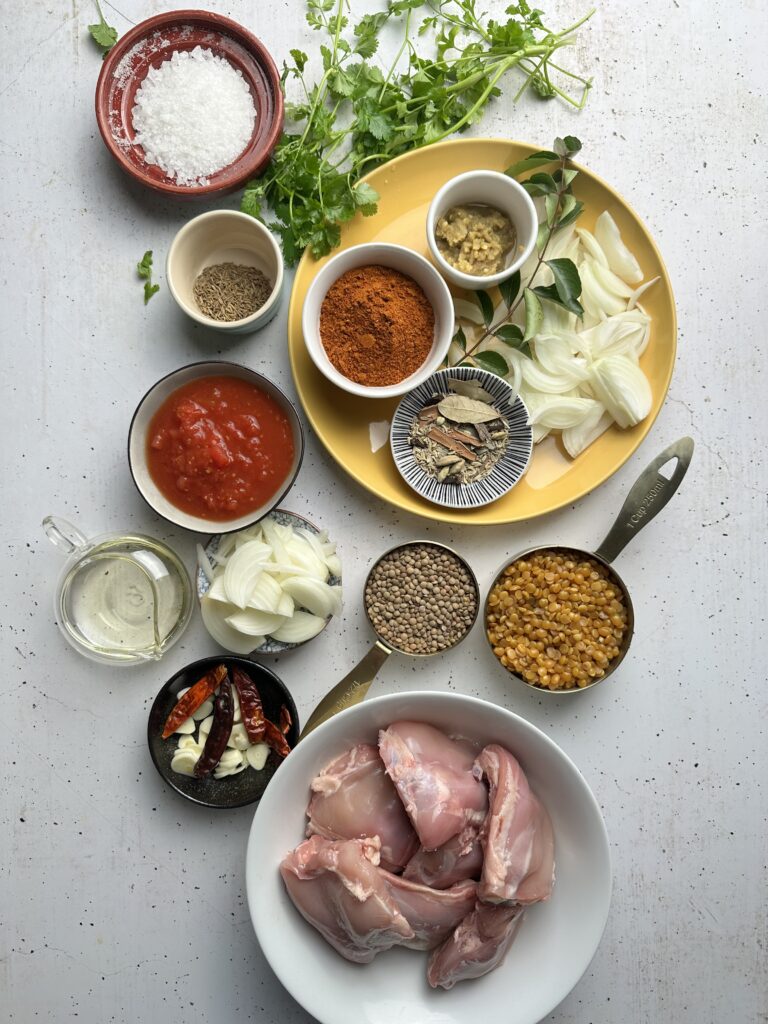
What Is Oil Dhall?
Oil dhall is a type of split lentil commonly used in many South African Indian homes. It cooks down beautifully and is especially loved in comforting dishes like dhal, soups and dhal gosht because it softens well and helps create that thick, hearty texture that makes a dish feel so satisfying.
In this chicken dhal gosht, the oil dhall works together with the brown lentils to give the curry body and richness. As it cooks, it begins to break down and blend into the masala, helping create that thick, comforting consistency that makes this dish so delicious.
It is one of those pantry staples that may seem simple, but it adds so much to a meal. It makes the curry feel more filling, more nourishing and more complete.
What Makes This Dish So Special?
The real magic of this recipe is the way the lentils and chicken cook together. The lentils add body, creaminess and comfort while the chicken keeps the dish familiar, easy and accessible. The spices are warming and fragrant and the Durban curry powder gives the curry its beautiful colour and depth.
A big part of what gives this dish its comforting texture is the oil dhall. Combined with the brown lentils, it creates a curry that feels thick, hearty and deeply satisfying. As the dhal finishes softening in the masala, it absorbs all the flavour from the spices, tomatoes, curry leaves and chicken, making the whole dish taste richer and more complete.
It is a dish that feels both practical and nostalgic at the same time. Born out of necessity, but delicious enough to become a favourite in its own right.
Why the Dhal Gets Boiled, Rinsed and Only Partially Softened
This is such an important step in the recipe and it is worth explaining properly because it makes a real difference to both the flavour and the final texture.
The oil dhall and brown lentils are first boiled briefly, then drained and rinsed before being cooked again in fresh water. That first boil helps bring up the foam and residue, which is what many people like to get rid of before continuing. Pouring off that first water and rinsing the lentils well helps make the dhal gentler and easier to digest, which is why this is such a useful old-school step.
But just as important is this: the dhal is not cooked until completely soft at this stage.
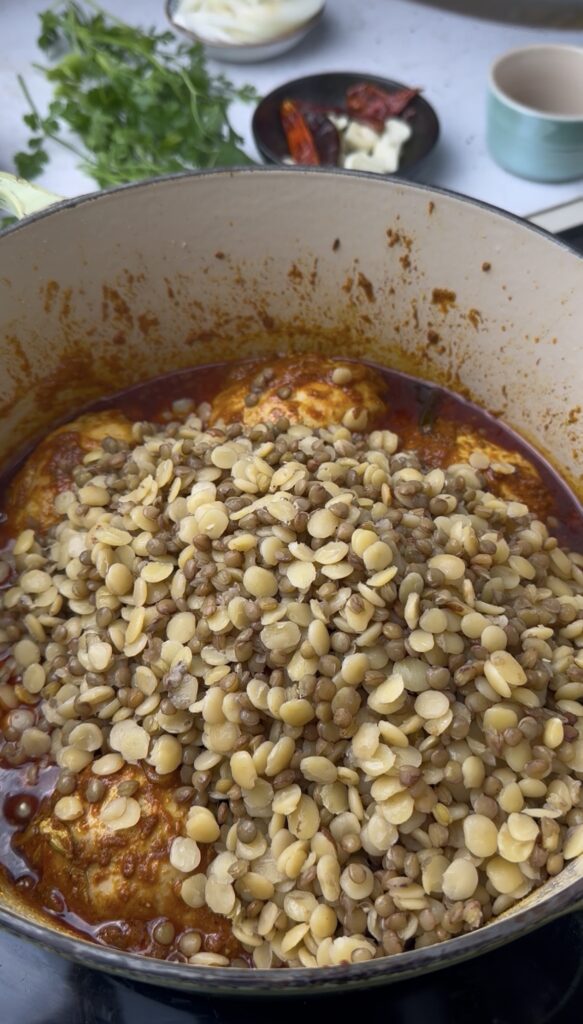
Instead, it is boiled only until it has started softening, then added to the chicken curry while still holding its shape a little. From there, it finishes cooking in the masala itself. This gives the dish much deeper flavour because the dhal does not just sit in the curry at the end, it actually cooks into it, absorbs the spices and becomes part of the body of the dish.
That is what gives this chicken dhal gosht its rich, hearty consistency. The dhal softens fully in the curry, thickens the sauce naturally and takes on all the flavour of the chicken, spices, tomatoes and curry leaves as it cooks.
I prefer not to cook the dhal completely before adding it to the chicken because finishing it in the curry gives it a much deeper flavour and a more comforting texture.
How to Make Chicken Dhal Gosht
This recipe starts with the dhal. The oil dhall and brown lentils are washed, drained and added to a pot of water to boil. After about 10 minutes, the water is poured off, the lentils are rinsed well and then returned to the stove with fresh water to continue boiling.
This first boil-and-rinse step helps get rid of the foamy water and makes the dhal gentler and easier to digest. But the dhal is not cooked until completely soft at this stage. Instead, it is only boiled until it has started softening.
That is because I prefer to add the dhal to the chicken while it is still slightly firm, so it can finish cooking in the curry itself. That way, it absorbs all the flavour from the masala and gives the final dish a deeper, richer taste.
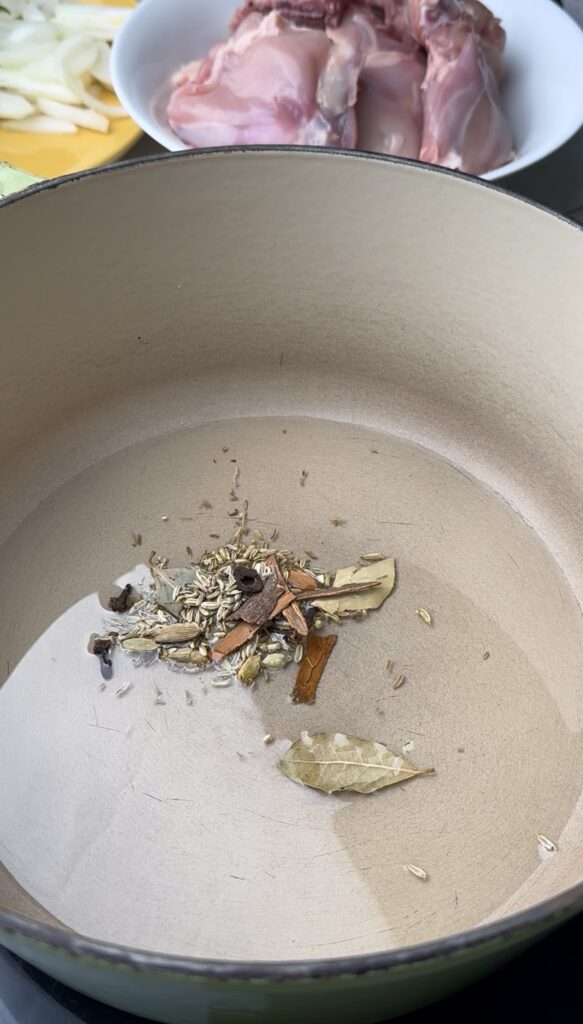
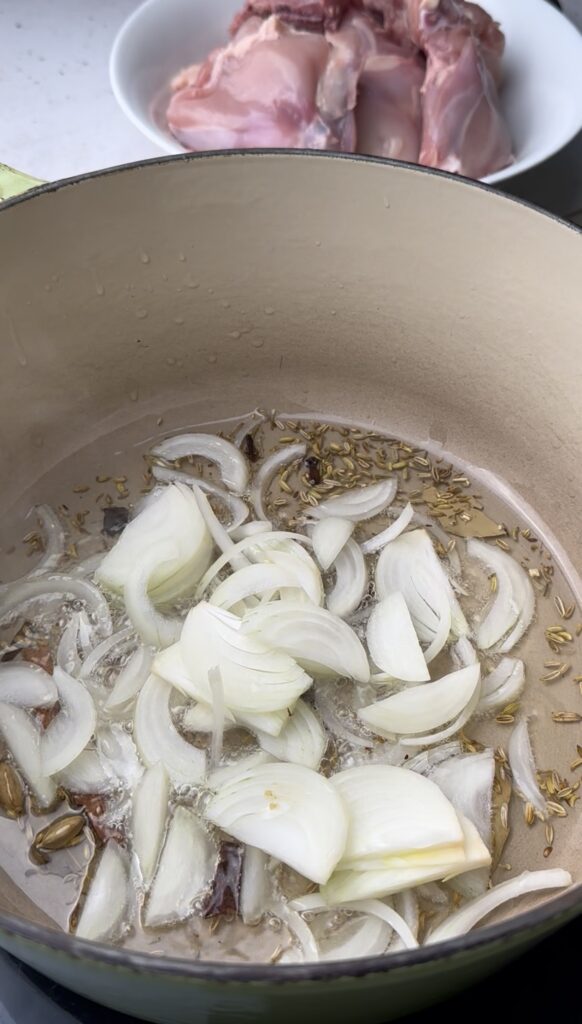
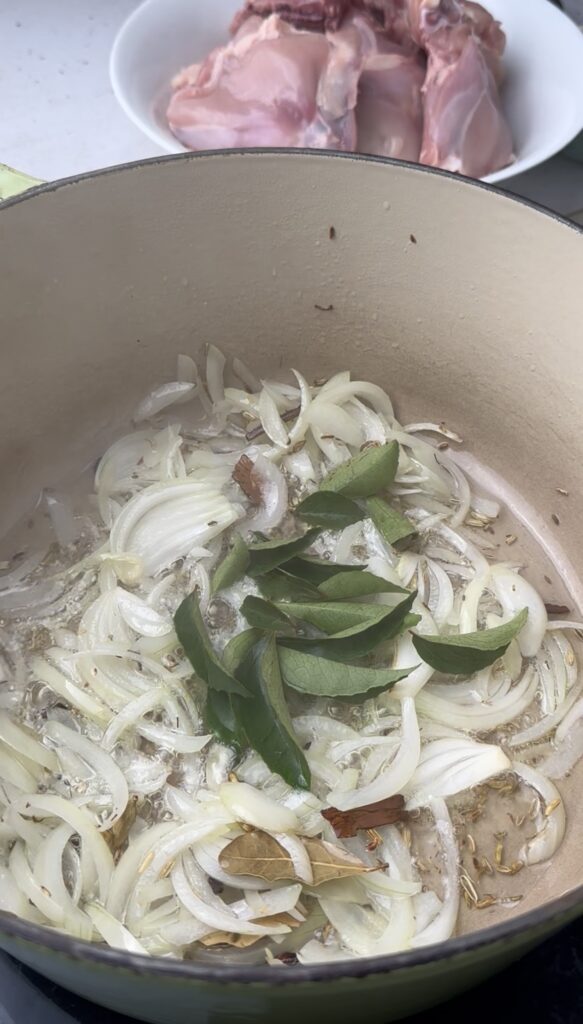
While the dhal is boiling, the curry base is started. Oil goes into a heavy-based pot along with the fennel seeds, cardamom pods, cloves, cinnamon sticks, bay leaves and curry leaves. As soon as those spices hit the oil, the whole kitchen starts filling with warmth and aroma. Then the sliced onions go in and fry until they begin to brown, creating the base of the dish.
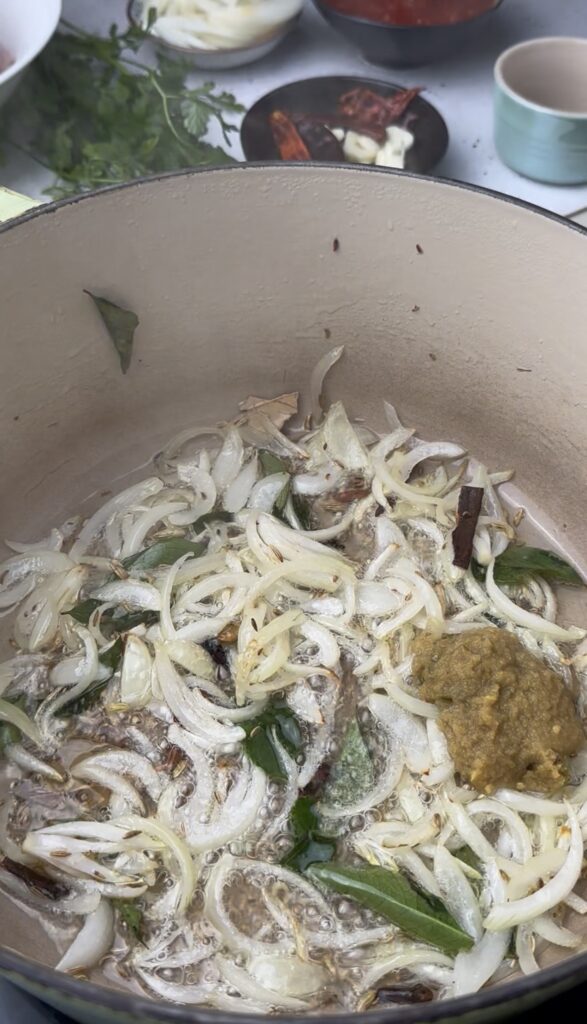
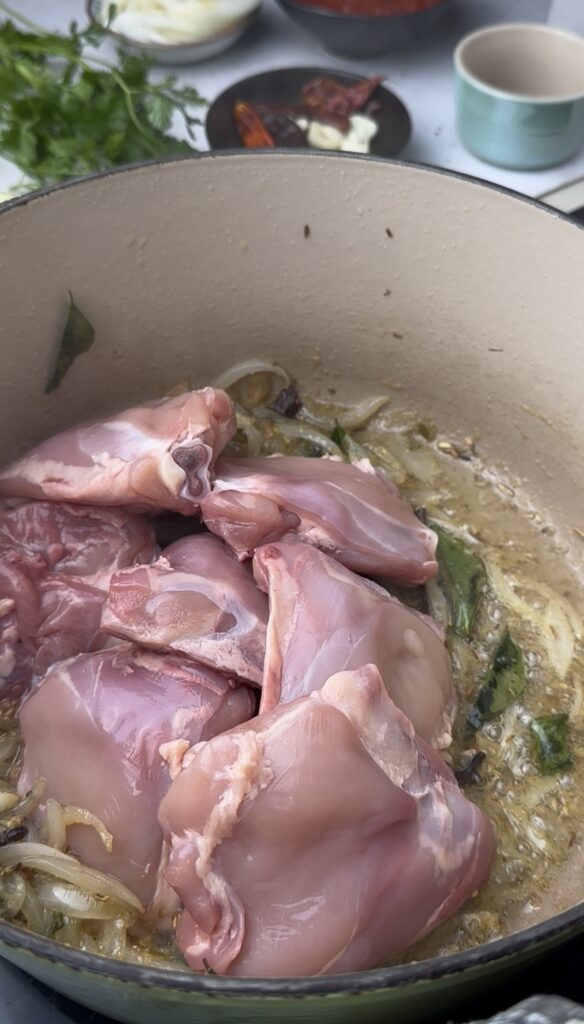
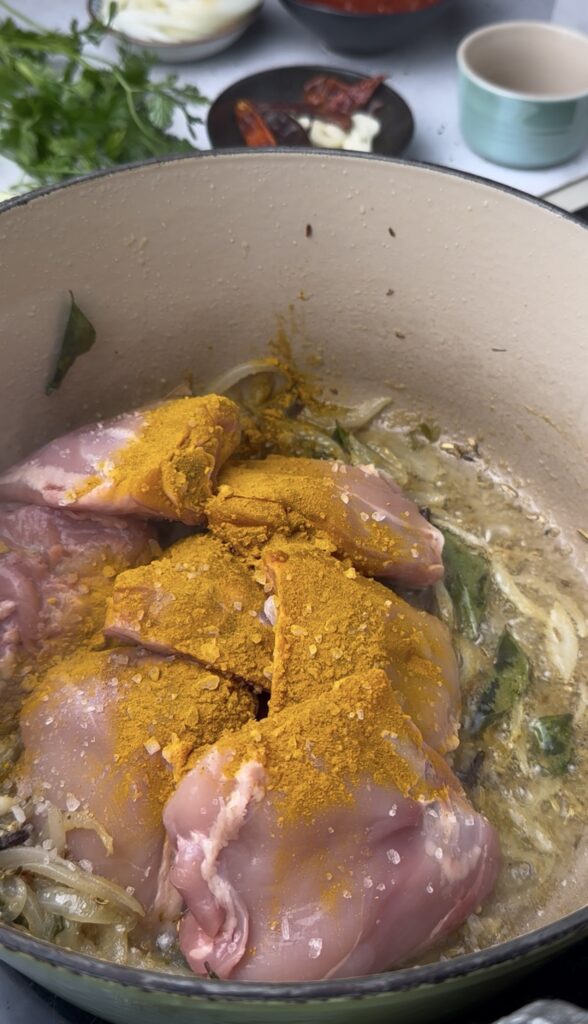
After that, the garlic and ginger paste is added, followed by the chicken, salt and turmeric. The chicken is allowed to cook for a few minutes before the Durban curry powder goes in. Once the spices have had a chance to cook properly, the chopped tomatoes are added and the masala is left to cook gently on low heat.
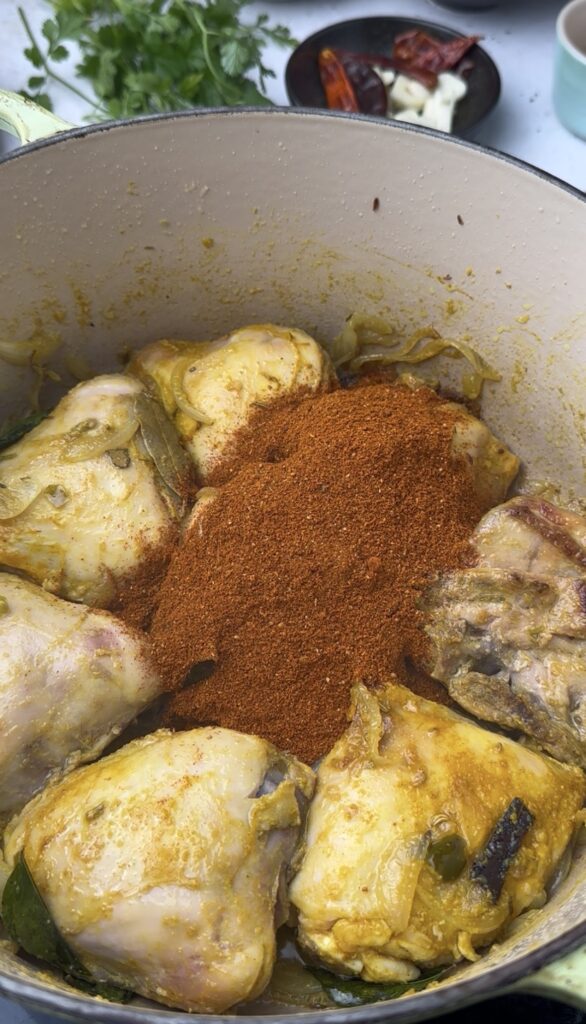
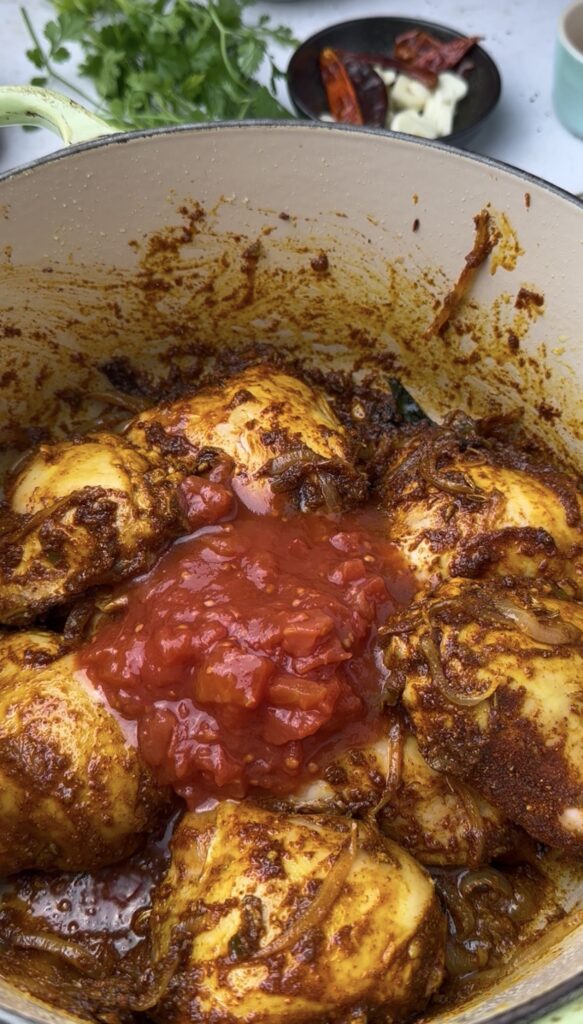
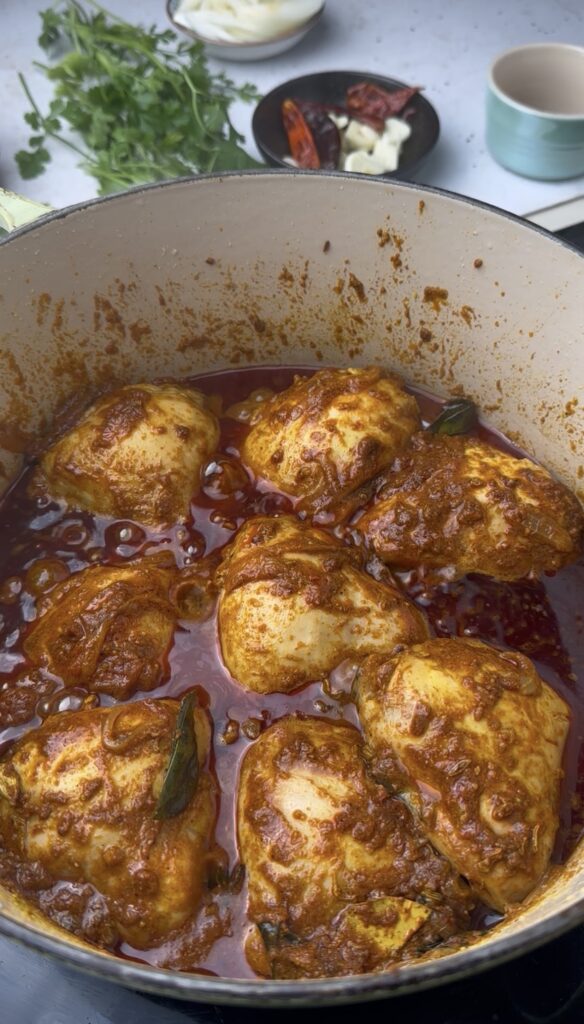
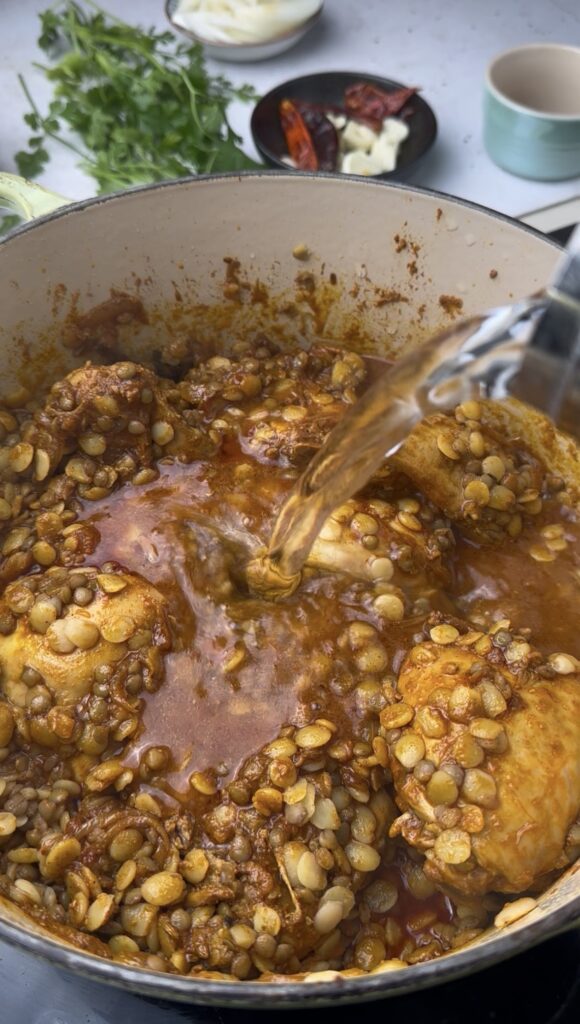
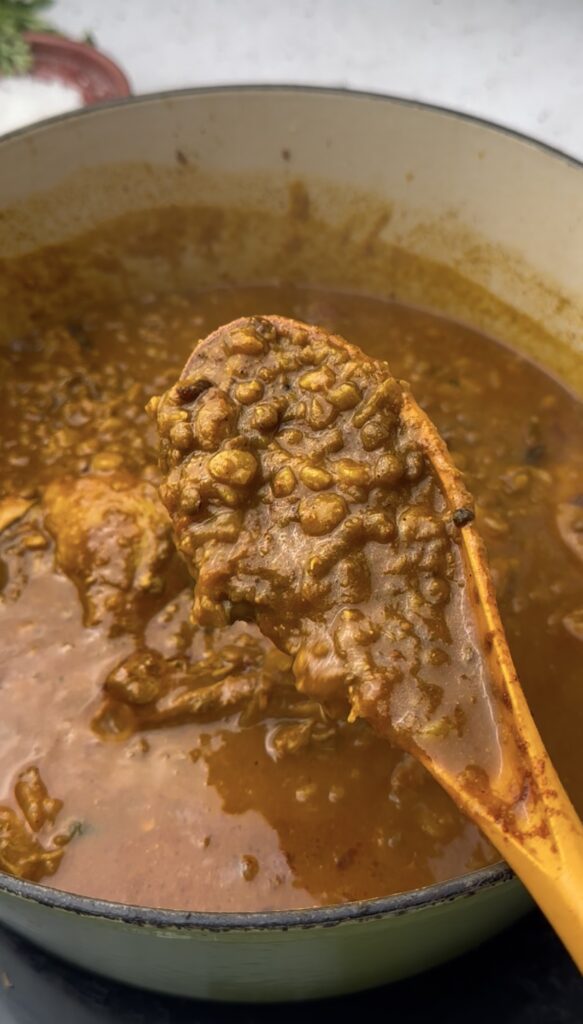
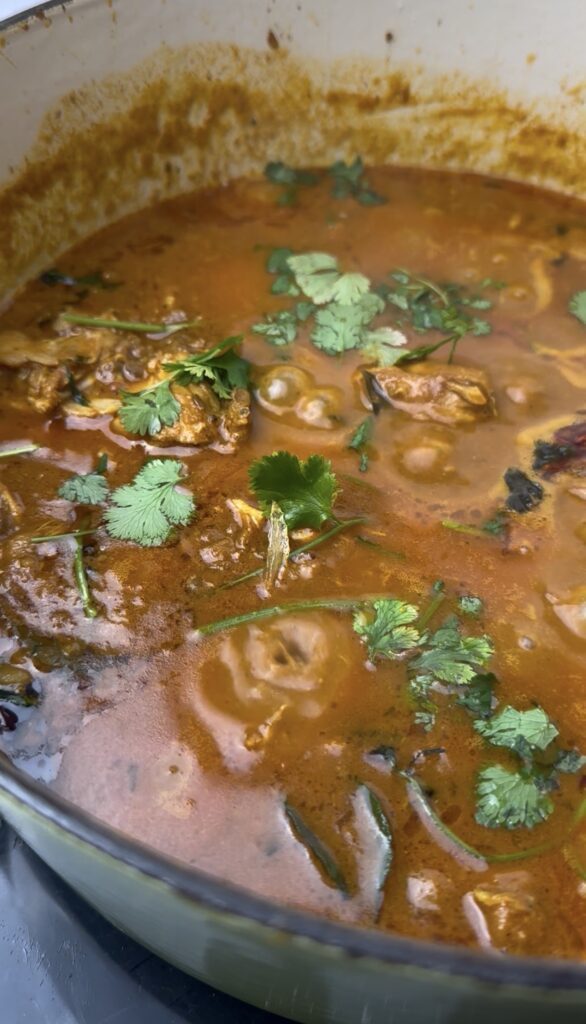
By this point, the dhal should be partially softened and ready to go in. It is drained and stirred into the chicken curry base until everything is well combined. A little water is added and the pot is left to cook gently until the dhal softens fully into the curry and the whole dish becomes thick, rich and deeply comforting.
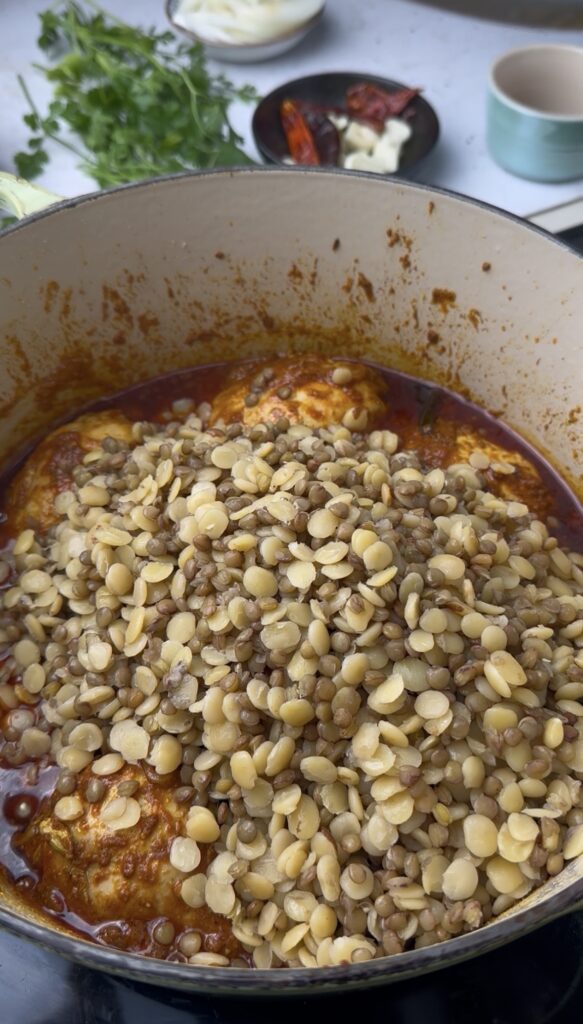
Then comes the final flourish: the vaghar.
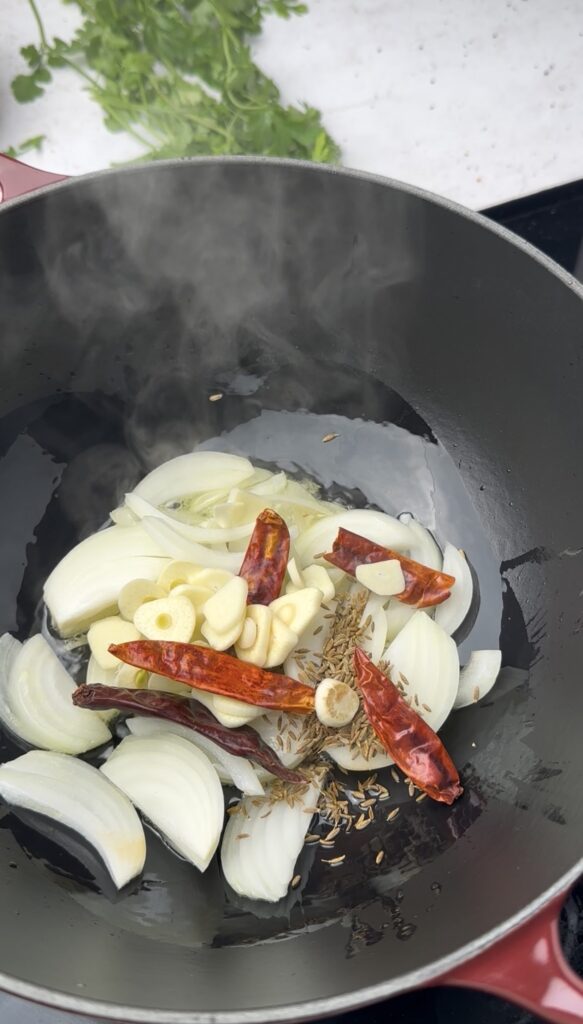
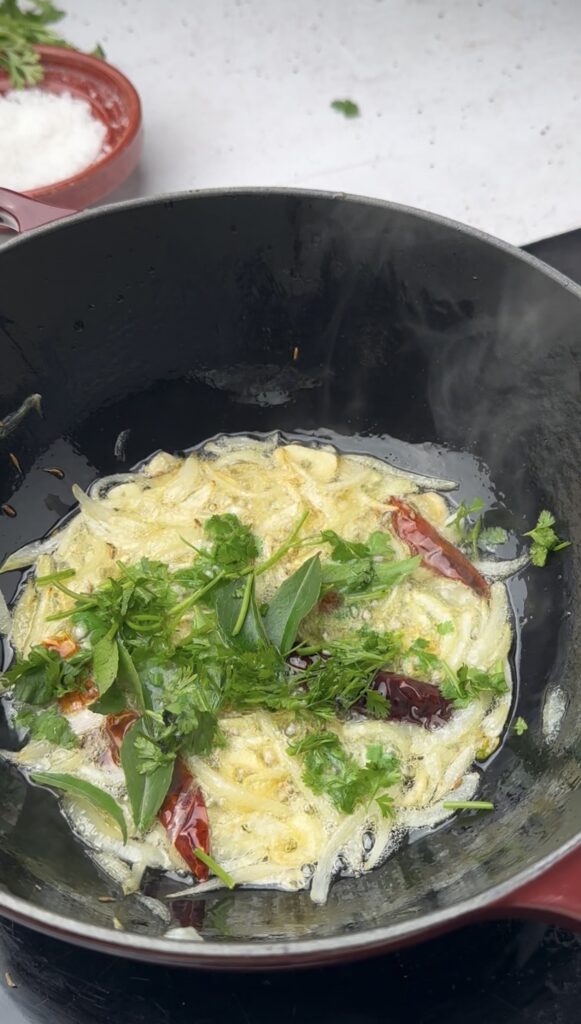
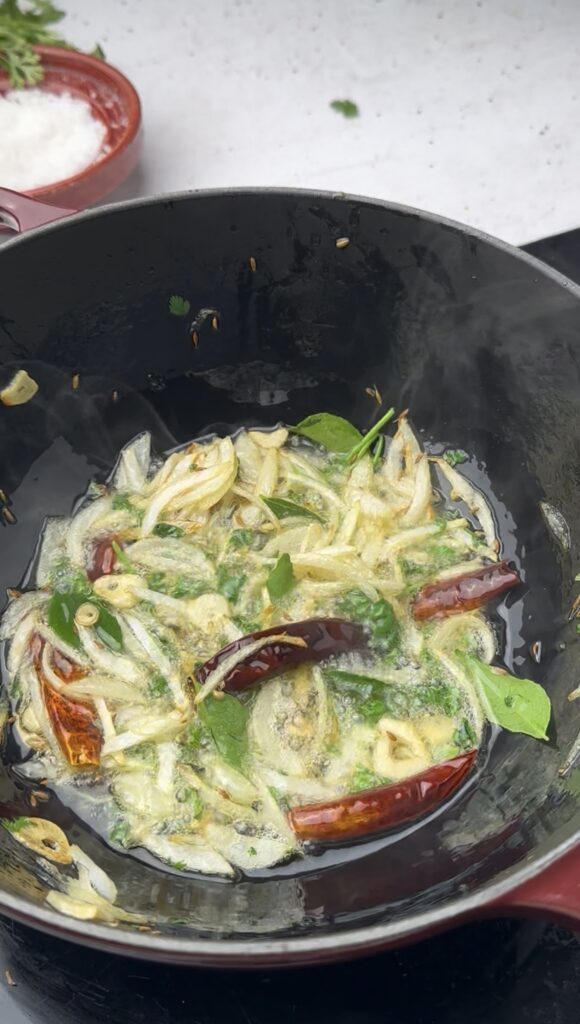
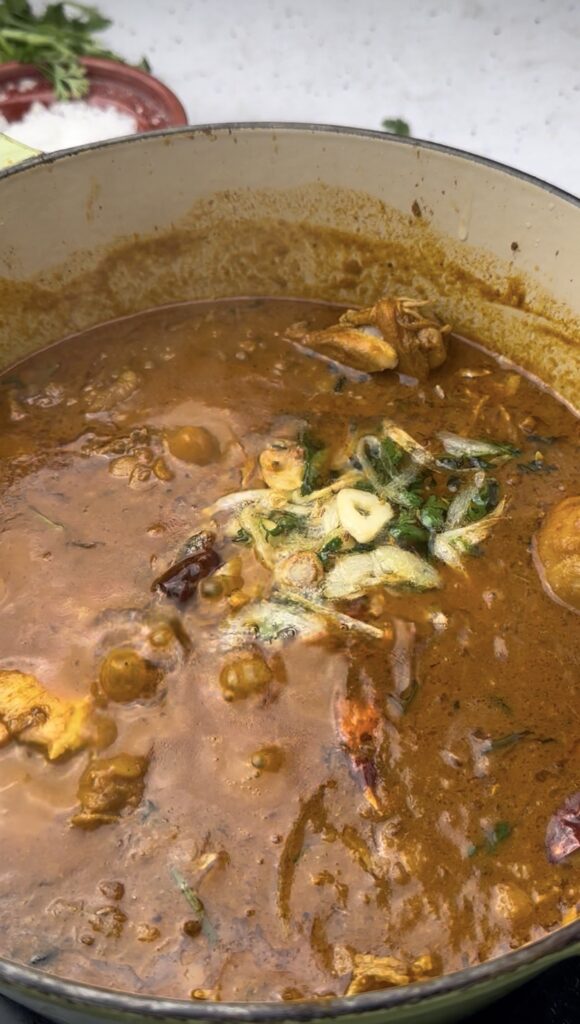
Ghee is heated in a separate pan and the onion, garlic, dried red chillies, curry leaves and dhania are added. They fry until fragrant and golden, and then that hot, aromatic vaghar is poured straight into the chicken dhal gosht. It is one of the most satisfying parts of the whole process. The smell alone tells you the dish is about to be something really special.
Step-by-Step: How to Cook Chicken Dhal Gosht
Step 1: Boil the dhal briefly
Wash and drain the oil dhall and brown lentils, then boil them in water for about 10 minutes.
Step 2: Drain and rinse
Pour off the first water and rinse the dhal well. This helps get rid of the foam and makes the lentils gentler and easier to digest.
Step 3: Boil again in fresh water
Return the dhal to the stove with fresh water and cook until it has started softening, but is not completely soft yet.
Step 4: Start the curry base
Heat oil in a heavy-based pot and add the fennel seeds, cardamom pods, cloves, cinnamon sticks, bay leaves and curry leaves.
Step 5: Add the onions
Add the sliced onions and cook until they begin to brown. This builds the base flavour of the curry.
Step 6: Add garlic and ginger
Stir in the garlic and ginger paste and cook for a minute.
Step 7: Add the chicken
Add the chicken, salt and turmeric and cook on medium heat for about 8 minutes.
Step 8: Add the curry powder and tomatoes
Add the Durban curry powder, cook briefly, then add the chopped tomatoes and allow the masala to cook gently on low heat.
Step 9: Add the partially softened dhal
Drain the dhal and stir it into the chicken masala. This is where it starts finishing its cooking in the curry, which gives it more flavour.
Step 10: Simmer until thick and comforting
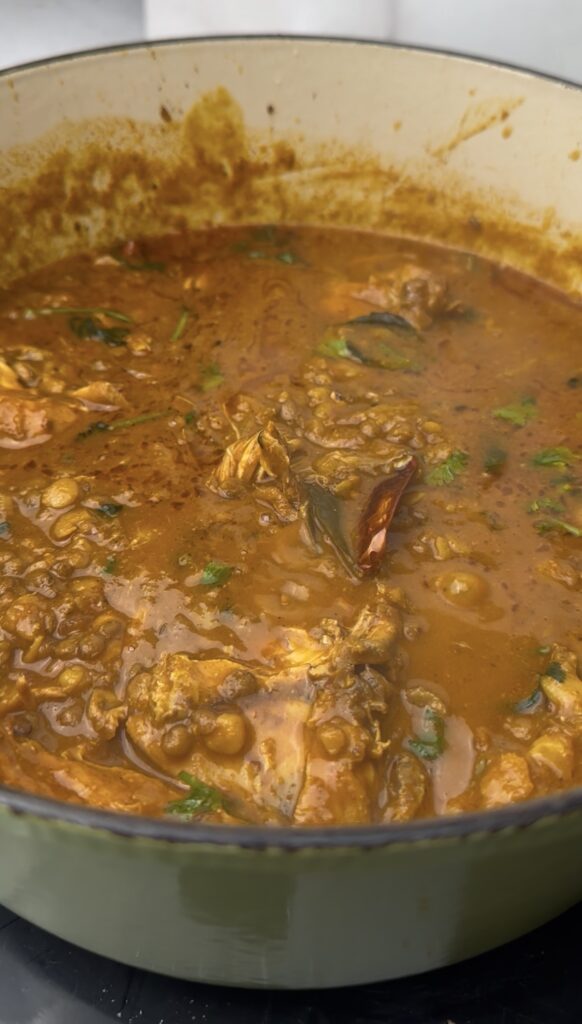
Add a cup of water and cook on medium to low heat for 30 to 45 minutes until the dhal has softened fully and the curry has thickened beautifully.
Step 11: Make the vaghar
Heat ghee in a separate pan and add the onion, sliced garlic, dried red chillies, curry leaves and chopped dhania. Cook until fragrant and the onions begin to brown.
Step 12: Finish the dish
Pour the hot vaghar over the chicken dhal gosht, mix well, garnish and serve hot.
Tips for the Best Chicken Dhal Gosht
- Do not skip the first boil and rinse of the dhal – it helps make the lentils gentler and easier to digest.
- Do not cook the dhal completely before adding it to the curry – it should still be slightly firm so it can finish cooking in the masala.
- Let the onions brown properly – this adds depth to the curry base.
- Cook the masala on low once the tomatoes go in – this helps build flavour without catching.
- Do not skip the vaghar – it adds a final layer of richness and aroma that makes the dish extra special.
What to Serve with Chicken Dhal Gosht
This chicken dhal gosht is delicious served with rice, roti, naan or even soft bread. Because it has such a rich, thick consistency, it works beautifully with simple sides that can soak up all that flavour.
It is the kind of meal that feels deeply nourishing and complete, especially on a cooler day or when you are craving something hearty and familiar.
Variations and Substitutions
- You can adjust the Durban curry powder depending on how hot you like the dish.
- Use chicken pieces you prefer if you do not want to use thighs.
- Add extra chopped dhania if you enjoy a fresher finish.
- Keep the dhal slightly firm before adding it to the chicken – that part of the method really helps build flavour.
Storage Tips
Store any leftover chicken dhal gosht in an airtight container in the fridge for up to 3 days. Reheat gently until piping hot throughout.
Like many dhal-based dishes, the flavour can deepen even more by the next day.
Frequently Asked Questions
Why do you boil and rinse the dhal first?
The first boil helps bring up the foam and residue. Draining and rinsing the dhal helps make it gentler and easier to digest.
Should the dhal be completely soft before adding it to the chicken?
No. It should be only partially softened. It finishes cooking in the curry so it can absorb more flavour and help thicken the dish naturally.
What is oil dhall?
Oil dhall is a split lentil commonly used in South African Indian cooking. It softens well and helps create a thick, hearty consistency in dishes like this.
Can I make dhal gosht with chicken?
Yes. Although dhal gosht is more commonly made with lamb or mutton, chicken works beautifully and creates a comforting, more affordable version of the dish.
What can I serve with chicken dhal gosht?
Rice, roti or soft bread all work beautifully.
Final Thoughts
This chicken dhal gosht may not be the most common version of the dish, but it is full of history, comfort and heart. It came from a time of making do, of craving familiar food while living away from home and of learning that some of the most special recipes are the ones created out of necessity.
What started as a more affordable version of dhal gosht became a favourite and it is easy to understand why. The partially softened dhal finishes cooking in the chicken curry, the masala is warm and deeply flavoured and the final vaghar brings everything together in the most comforting way.
It is a dish with a story and those are often the recipes that stay with us longest.
Other recipes you might like, click on the image to get the recipe.
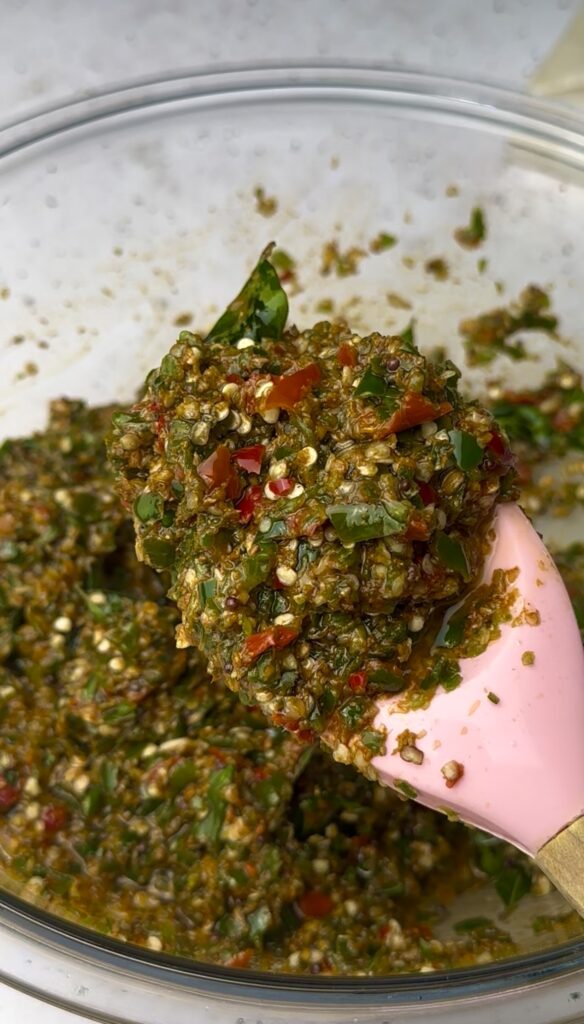
Chicken Dhal Gosht Recipe | Easy Dal Gosht
This chicken dhal gosht is a hearty, home-style curry made with chicken, oil dhall, brown lentils, Durban curry powder and a final garlic-chilli vaghar. The dhal is only partially softened before being added to the curry so it can finish cooking in the masala for deeper flavour.
Ingredients
Instructions
-
Combine the oil dhall and brown lentils, wash well and drain.
-
Add them to a pot with water and boil for 10 minutes.
-
After 10 minutes, remove from the heat, pour out the water and rinse well.
-
Add fresh water and return to the stove.
-
Boil again until the dhal has started softening, about 30 minutes or so. Do not cook it until completely soft.
-
While the dhal is boiling, start the curry base.
-
In a heavy-based pot over medium heat, add the oil and whole spices.
-
Fry for a minute, then add the sliced onion and curry leaves.
-
Cook for about 5 minutes until the onion starts to brown.
-
Add the garlic and ginger paste and cook for 1 minute.
-
Add the chicken, salt and turmeric powder.
-
Cook on medium heat for about 8 minutes.
-
Add the Durban curry powder.
-
Mix well and cook for 2 minutes.
-
Add the chopped tomatoes, mix and cook on low for about 10 minutes. Add only a little water if needed.
-
Drain the partially softened dhal and add it to the chicken curry.
-
Mix well until incorporated.
-
Adjust the seasoning if needed.
-
Add 1 cup water and cook on medium to low heat for 30 to 45 minutes until the dhal has softened fully and the curry is thick and hearty.
-
To make the vaghar, heat the ghee in a small pan.
-
Add the onion, sliced garlic, dried red chillies, curry leaves and chopped dhania.
-
Cook until fragrant and the onion begins to brown.
-
Pour the hot vaghar into the chicken dhal gosht.
-
Mix well, garnish and serve hot.
Note
Notes
- Do not cook the dhal completely before adding it to the chicken curry. It should still be slightly firm so it can finish cooking in the masala and absorb more flavour.
- The first boil and rinse helps remove the foamy water and makes the dhal gentler and easier to digest.
- Add only a little extra water if needed while the tomato masala is cooking.
- The vaghar at the end adds an extra layer of aroma and flavour, so do not skip it.


