


This Easy Vegetable Biryani is my simple, home-style version of one of my favourite vegetarian meals.
And yes, I know “easy biryani” sounds slightly contradictory because biryani is never exactly a throw-everything-in-one-pot situation.
But this version takes out a few of the extra steps while still keeping everything I love about biryani: fragrant rice, spiced vegetables, golden potatoes, fried onions, mint, dhania and that final steam in the oven that brings everything together.
This is not a strictly traditional vegetable biryani. I usually add lentils, cabbage and cauliflower too, but for this simpler version I left the lentils out and used peas instead.
No lentils means no extra boiling, draining and another pot to wash.
If you prefer, you can absolutely replace the peas with cooked brown lentils.
The sweetcorn was also a first for me in biryani, but I loved the little pops of sweetness it added against the masala and fried onions.
Why You’ll Love This Easy Vegetable Biryani
- It is a simpler home-style version of vegetable biryani.
- There are no lentils to cook separately.
- The vegetables are easy to find.
- The potatoes are golden and full of flavour.
- Fried onions, mint and dhania add proper biryani flavour.
- You can easily change the vegetables.
- It is perfect for a vegetarian family meal.

What Makes This Biryani Different?
This recipe is deliberately kept simple.
I use carrots, green beans, peas and sweetcorn, along with potatoes and fragrant rice.
My fuller vegetable biryani would often include cabbage, cauliflower and lentils too, but this version is all about making the process a little easier without losing the flavour.
The lentils are completely optional.
If you want a version closer to the one I usually make, replace the peas with about one cup of cooked brown lentils.
The Vegetables
For this version I use:
- Carrots
- Green beans
- Frozen peas
- Frozen sweetcorn
The peas and sweetcorn go in towards the end because they cook very quickly.
The carrots and green beans need more time, so they are added earlier and cooked in the masala until just tender.
You can also add cauliflower, cabbage or other vegetables you enjoy.
The Sweetcorn Was a First
I do not usually add sweetcorn to biryani, but I tried it in this version and really liked what it added.
It gives the biryani little bursts of sweetness that work surprisingly well with the spices and fried onions.
If sweetcorn is not your thing, simply leave it out.

Use a Good Biryani Masala
The biryani masala does a lot of the heavy lifting in this recipe.
I use my homemade biryani masala, which I like to keep ready in my spice cupboard for dishes like this.
If you already make your own biryani masala, use the blend you love.
A good masala gives the vegetable mixture depth without needing an endless list of individual spices.
Click here to get my Biryani Masala recipe.

How to Make Easy Vegetable Biryani
1. Prepare the Rice
Wash and drain the rice well.
Add the rice to a pot with turmeric, cloves, cinnamon sticks and salt.
Boil until the rice is only about three-quarters cooked.
Do not cook it completely because it will finish cooking in the oven.
Drain and set aside.
2. Prepare the Potatoes
Peel and cube the potatoes.
Season with turmeric and salt.
Steam until they are just beginning to soften.
Heat oil in a pan and fry the potatoes until lightly golden.
Remove and set aside.
3. Fry the Onions
Add the sliced onions to the same oil.
Cook until deep golden brown.
Remove about three-quarters of the onions and keep them aside for layering.
Leave the remaining onions in the pan.
4. Build the Masala
Add the ginger and garlic to the remaining onions.
Cook for about 30 seconds.
Add the biryani masala, Durban masala and turmeric.
Mix well.
Add the tomato paste and about a quarter cup of water.
Cook for a few minutes until the spices and tomato paste are well combined.
5. Add the Yoghurt
Lower the heat.
Add the yoghurt a little at a time, mixing well after each addition.
Season with salt and black pepper.
Add the chopped mint and half the chopped dhania.
6. Cook the Vegetables
Add the carrots and green beans.
Mix well and cook for approximately 20 minutes, stirring occasionally.
Add the peas and sweetcorn and cook for a further 5 minutes.
The vegetable mixture should be flavourful and moist, but not watery.
How to Layer the Biryani
Once the vegetables are cooked, you can start layering.
Keep the vegetable mixture in the ovenproof pot if you are using one.
Arrange the potatoes over the vegetables.
Scatter over half of the reserved fried onions.
Add the partially cooked rice in an even layer.
Top with the remaining fried onions, chopped mint and chopped dhania.
Dot the top with butter or ghee.
Add approximately half to three-quarters of a cup of hot water, depending on how moist the vegetable masala is.
If the filling is already quite saucy, use less water.
If it has cooked down quite dry, use a little more.

Steam the Biryani in the Oven
Cover the pot tightly with a lid or foil.
Place in a preheated oven at 180°C.
Steam for approximately 35 to 45 minutes until the rice is fully cooked and everything is fragrant and steaming hot.
Remove from the oven and allow the biryani to stand for about 10 minutes before serving.
When serving, gently lift the rice and vegetables rather than stirring everything aggressively together.
Can I Add Lentils?
Yes.
If you prefer a more traditional-style vegetable biryani, replace the peas with about one cup of cooked brown lentils.
Cook the lentils separately until just tender, drain well and add them towards the end of cooking the vegetables.
I left them out of this version purely to keep things simpler.
Sometimes one less pot to wash is reason enough. 😂
Other Vegetables You Can Add
This recipe is very easy to adapt.
You can also use:
- Cauliflower
- Cabbage
- Broccoli
- Butternut
- Extra peas
- Extra green beans
Just keep in mind that different vegetables cook at different speeds.
Add firmer vegetables earlier and quick-cooking vegetables towards the end.
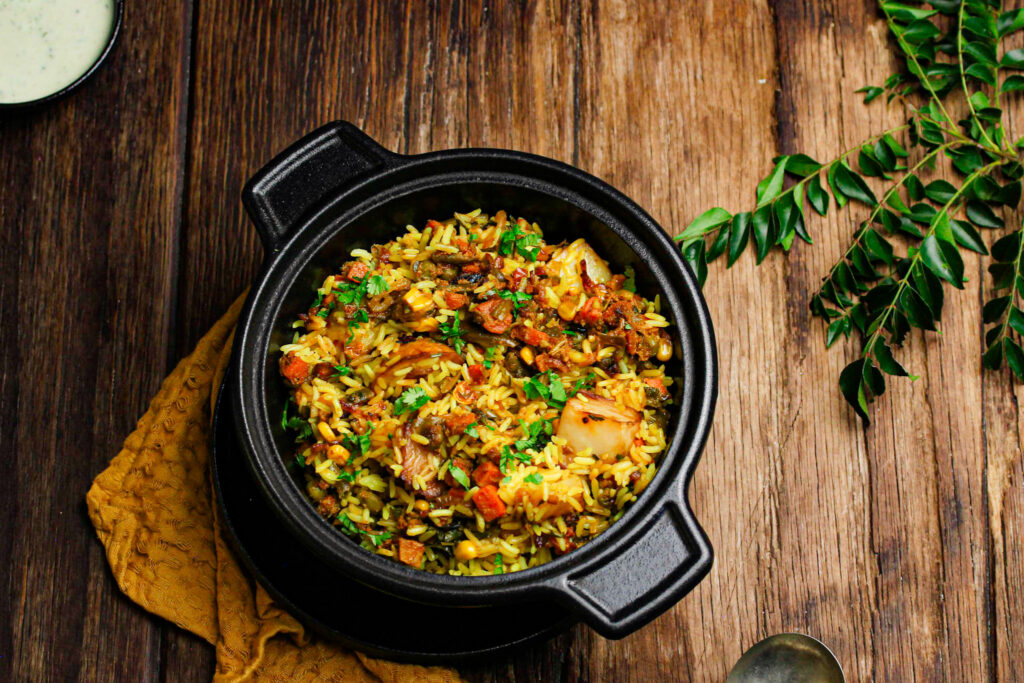
What to Serve with Vegetable Biryani
I love serving this vegetable biryani with:
- Raita
- Dhall
- Grated carrot salad
Together, they make a really satisfying vegetarian meal.
Can I Make Vegetable Biryani Ahead?
Yes.
You can prepare the vegetable masala, potatoes and rice ahead of time.
Layer everything when you are ready to bake.
If the components are cold from the fridge, allow a little extra oven time.
Storage and Reheating
Store leftovers in an airtight container in the fridge.
Reheat thoroughly until piping hot.
A small splash of water before reheating helps stop the rice from drying out.
A Simple Home-Style Biryani
This is not the most traditional vegetable biryani I make, and that is exactly the point.
It is my simpler version for the days when I want all the comfort and flavour of biryani without adding every extra step.
The rice is fragrant, the vegetables are full of masala, the potatoes are golden and the fried onions, mint and dhania bring everything together.
And if skipping the lentils means one less pot to wash, I am completely fine with that.
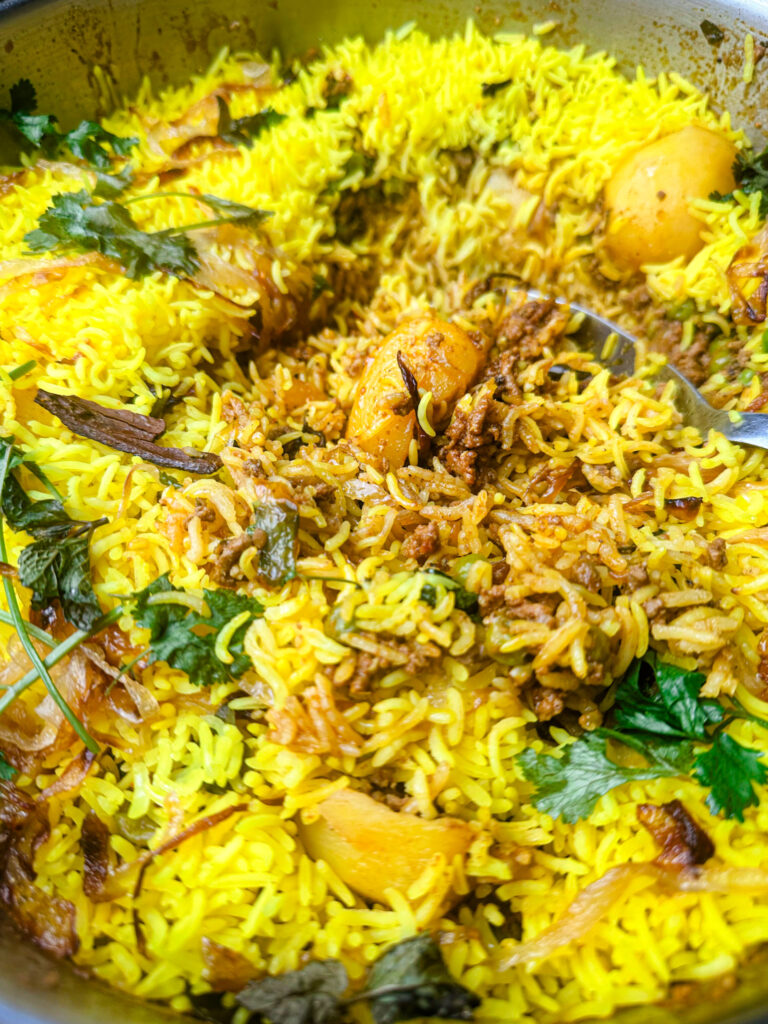
You may also like. Click on the image to get the recipe.


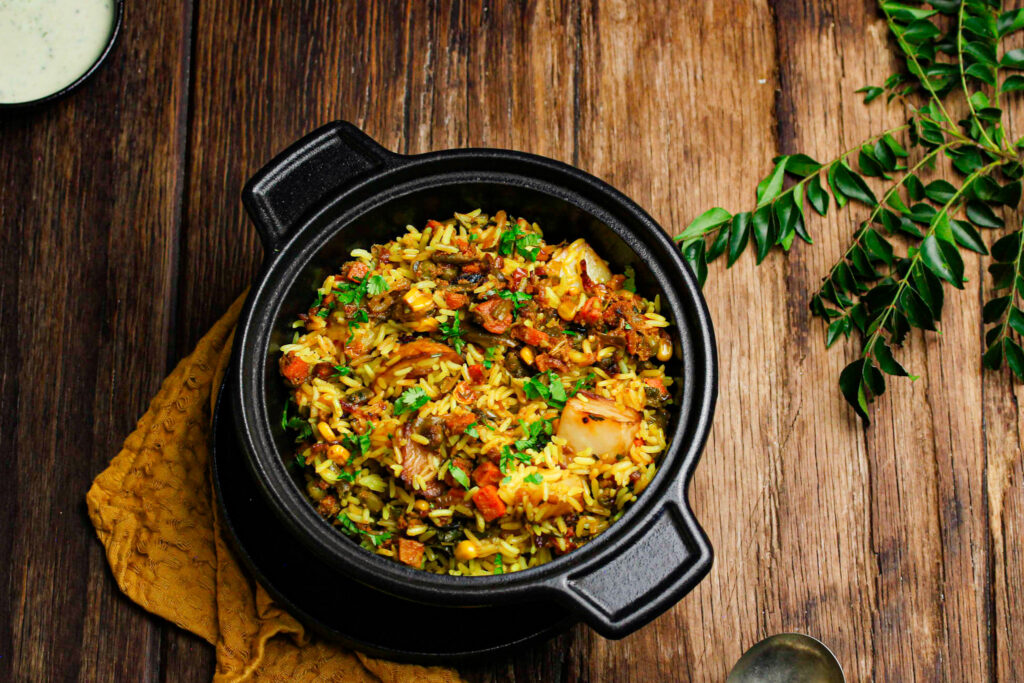
Easy Vegetable Biryani
A simple home-style vegetable biryani with fragrant rice, spiced vegetables, golden potatoes, fried onions, mint and dhania. An easy vegetarian version with optional lentils.
Ingredients
Instructions
-
Wash and drain the rice.
-
Place the rice in a pot with the turmeric, cloves, cinnamon sticks and salt.
-
Boil until approximately three-quarters cooked.
-
Drain and set aside.
-
Season the cubed potatoes with turmeric and salt.
-
Steam until just beginning to soften.
-
Heat oil in a large ovenproof pot or pan and fry the potatoes until lightly golden.
-
Remove and set aside.
-
Add the sliced onions to the same oil.
-
Fry until deep golden brown.
-
Remove about three-quarters of the onions and set aside for layering.
-
Leave the remaining onions in the pan.
-
Add the ginger and garlic paste and cook for about 30 seconds.
-
Add the biryani masala, Durban masala and turmeric.
-
Mix well.
-
Add the tomato paste and ¼ cup water.
-
Cook for a few minutes until well combined.
-
Reduce the heat.
-
Add the yoghurt a little at a time, mixing well after each addition.
-
Season with salt and black pepper.
-
Add the chopped mint and half the chopped dhania.
-
Add the carrots and green beans.
-
Mix well and cook for approximately 20 minutes.
-
Add the frozen peas and sweetcorn.
-
Cook for a further 5 minutes.
-
Preheat the oven to 180°C.
-
Arrange the fried potatoes over the vegetable masala.
-
Scatter over half of the reserved fried onions.
-
Add the partially cooked rice in an even layer.
-
Top with the remaining fried onions, extra mint and dhania.
-
Dot the top with butter or ghee.
-
Pour over ½-¾ cup hot water, depending on how moist the vegetable mixture is.
-
Cover tightly with a lid or foil.
-
Bake for approximately 35-45 minutes until the rice is fully cooked.
-
Remove from the oven and allow to rest for about 10 minutes.
-
Gently lift the rice and vegetables when serving.
-
Serve with raita, dhall and grated carrot salad.
Note
LENTILS:
This is my simple version and does not include lentils. If you prefer, replace the peas with about 1 cup cooked brown lentils.
VEGETABLES:
I used carrots, green beans, peas and sweetcorn. Cabbage and cauliflower are also lovely additions and are vegetables I often use in biryani.
SWEETCORN:
Sweetcorn was a first for me in biryani, but I loved the little sweetness it added. Leave it out if you prefer.
RICE:
Do not fully cook the rice before layering. It should be about three-quarters cooked so it can finish steaming in the oven.
POTATOES:
Steam the potatoes only until slightly softened before frying. They will continue cooking in the oven.
YOGHURT:
Add the yoghurt gradually over low heat and mix well after each addition.
WATER:
Use ½-¾ cup hot water depending on how moist your vegetable masala is. Use less if the filling is already saucy.
BIRYANI MASALA:
Homemade biryani masala works beautifully in this recipe and can be prepared ahead.
MAKE AHEAD:
The vegetable masala, potatoes and rice can be prepared ahead and layered before baking.

